SpaceX Launches GSAT-20: India’s Satellite Gets a Boost
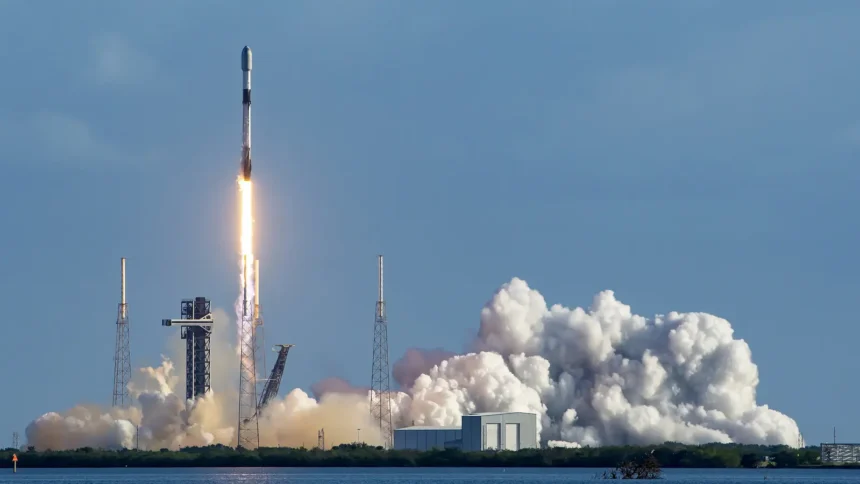
In a groundbreaking partnership between India’s space agency ISRO and Elon Musk’s SpaceX, the GSAT-20 communication satellite was successfully launched into space. The Falcon 9 rocket lifted off from Cape Canaveral, Florida, carrying the 4,700 kg GSAT-20 satellite on Tuesday, marking a significant milestone for both organizations. The launch not only strengthens India’s communication infrastructure but also paves the way for enhanced in-flight internet services, opening up new possibilities for connectivity across the nation.
This mission marks a big step in the growing relationship between ISRO and SpaceX, which has seen India turn to private players like SpaceX for help with heavy satellite launches. So, what’s special about the GSAT-20 and why does it matter for India’s future?
Why GSAT-20 Matters: Key Features and Benefits
The GSAT-20 satellite is designed to significantly improve India’s telecommunication services. Here are some of its key features:
- High-Capacity Communication: GSAT-20 is equipped with a Ka-band high-throughput payload, which will boost the country’s ability to provide high-speed internet and communication services, particularly in remote and underserved areas of India.
- 14-Year Mission Lifespan: This satellite is built to last for 14 years, making it a long-term asset for India’s telecommunication infrastructure.
- In-Flight Connectivity: GSAT-20 will also play a crucial role in providing in-flight internet services. With new regulatory changes allowing in-flight connectivity within Indian airspace, this satellite will enable passengers to stay connected while traveling, making air travel in India more convenient and modern.
SpaceX and ISRO: A New Chapter in India’s Space Exploration
While ISRO has launched over 430 foreign satellites to date, this mission marks a shift in the way India approaches satellite launches. The GSAT-20 is one of the heaviest payloads ISRO has ever launched, weighing in at 4,700 kg. The weight of the satellite exceeded the capabilities of India’s own LVM-3 launch vehicle, which has a maximum payload capacity of 4,000 kg to Geosynchronous Transfer Orbit (GTO).
Faced with this limitation, ISRO turned to SpaceX for help. This collaboration marks a first for India, as New Space India Limited (NSIL), ISRO’s commercial arm, partnered with SpaceX in January 2023. The GSAT-20 launch became the first major satellite launch under this new partnership.
Why ISRO Chose SpaceX Over Other Options
India’s decision to work with SpaceX was driven by several factors:
- Launch Vehicle Limitations: ISRO’s own launch vehicles, like the LVM-3, cannot handle such heavy payloads, making SpaceX’s Falcon 9 rocket a more viable option for launching the GSAT-20.
- Global Geopolitical Factors: Traditionally, India relied on European space company Arianespace for heavy payload launches, but with Arianespace facing delays and geopolitical tensions limiting access to Russian and Chinese launch vehicles, SpaceX has emerged as a reliable, cost-effective alternative.
- Growing Demand for Satellite Launches: With the increasing demand for high-capacity communication satellites, SpaceX is becoming a go-to provider for many countries and organizations. India, with its expanding space ambitions, has joined the ranks of nations relying on private space companies for key missions.
What’s Next for SpaceX and ISRO?
The successful launch of GSAT-20 is just the beginning of what could be a long-term collaboration between SpaceX and ISRO. India has ambitious plans for expanding its satellite and space exploration efforts, and with SpaceX’s proven track record, the two companies are likely to work together on more launches in the future.
This partnership also signals a shift in India’s space strategy, as the country increasingly turns to the private sector for its satellite launch needs. The private space race is heating up globally, and SpaceX is positioning itself as a major player in this rapidly growing industry. For India, collaborating with SpaceX opens up new possibilities for faster, more reliable, and cost-efficient space missions.
Moreover, GSAT-20 will likely play a significant role in boosting India’s digital infrastructure. With a focus on providing high-speed internet to rural and remote regions, the satellite will help India achieve its goal of digital inclusion, ensuring that even the most isolated parts of the country are connected to the global information network.
The Future of In-Flight Connectivity in India
In-flight connectivity is another area where GSAT-20 will make a significant impact. India recently introduced new regulations that allow in-flight internet services within its airspace. This means that passengers flying within India can now enjoy seamless internet connectivity during their flights. GSAT-20 will be the key enabler of this service, providing the necessary satellite infrastructure to make in-flight Wi-Fi a reality for Indian travelers.
As air travel continues to grow in India, the ability to stay connected during flights will become a crucial service for passengers. From business travelers needing to stay connected with their teams to tourists wanting to share their experiences in real time, the demand for in-flight internet is expected to soar. GSAT-20 will help meet this demand, making SpaceX and ISRO’s collaboration even more significant for the future of Indian aviation.
Conclusion: A New Era for India’s Space Ambitions
The successful launch of the GSAT-20 communication satellite by SpaceX is not just a win for India—it’s a glimpse into the future of global space exploration. With SpaceX now playing a critical role in India’s satellite launch strategy, we are likely to see more collaborations between the two entities in the coming years.
As the satellite begins its mission to improve India’s communication infrastructure and enable in-flight connectivity, it will also strengthen the bond between ISRO and SpaceX, laying the foundation for future space endeavors. Whether it’s connecting remote areas or keeping passengers online at 35,000 feet, GSAT-20 is set to make a big impact on India’s digital and communication landscape.