The Growing Speculation About Ayatollah Khamenei’s Health
Rumors about the health of Iran’s Supreme Leader Ayatollah Ali Khamenei have sparked intense global interest and speculation, especially given the current tensions between Iran and Israel. The 85-year-old cleric, who has been in power since 1989, is at the center of swirling rumors that suggest he might be seriously ill or even comatose, although there’s been no official confirmation from Iranian authorities.
Despite the widespread reports, including some unverified claims that Khamenei might be dead, there has been no clear statement from Iran’s government on the matter. To counter the growing speculation, the Supreme Leader published a photo of himself with an Iranian ambassador, hoping to downplay the rumors. However, this move has done little to quiet the gossip, as many see it as an attempt to cover up the truth.
News outlets, including Ynet News and The New York Times, have reported that Khamenei is indeed suffering from a serious illness, but details remain scarce. Adding to the confusion, Tal Hagin, an expert on misinformation, noted that some of the images circulating online were actually taken in 2014, not recently, further clouding the truth.
With no official word from the Iranian government, the uncertainty surrounding Khamenei’s health continues to fuel speculation. But alongside this, another pressing question is emerging: Who will succeed him if he is unable to continue in power?
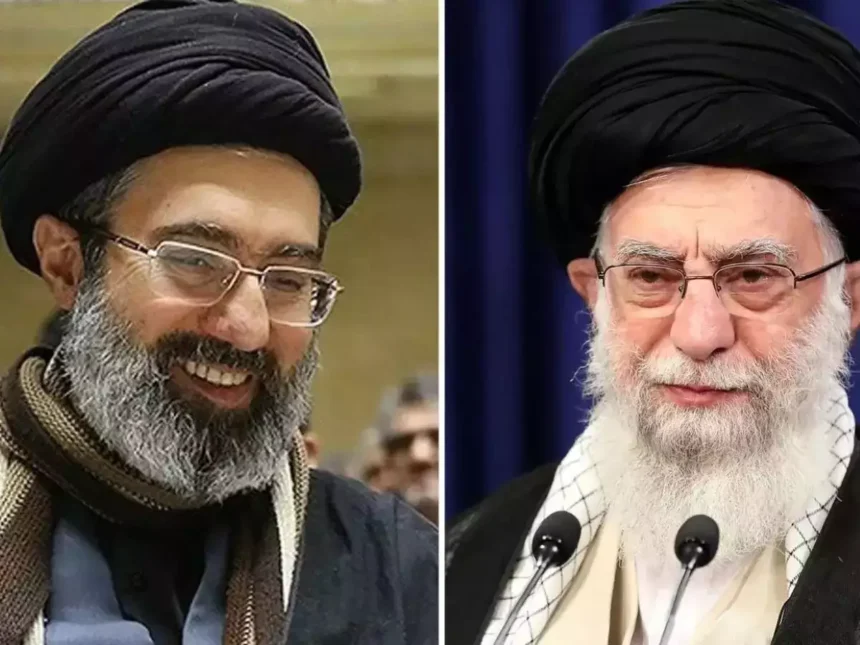
Mojtaba Khamenei: The Likely Successor
As rumors swirl about Khamenei’s health, attention is turning to his possible successor. Speculation about the future of Iran’s leadership has been growing for some time, with many analysts pointing to Mojtaba Khamenei, the Supreme Leader’s second son, as the most likely candidate.
According to reports from Ynet News, quoting Iran International, Khamenei reportedly chose Mojtaba as his successor in a secretive meeting of the Assembly of Experts held on September 26. This emergency session, called by the Supreme Leader himself, was said to have been a dramatic and urgent attempt to finalize his succession plan.
The move caught many by surprise. The Assembly of Experts, a body of 88 clerics responsible for electing the Supreme Leader, was reportedly under intense pressure to quickly agree on a successor. Despite some members expressing resistance to Mojtaba’s candidacy, the decision was ultimately pushed through, with some accounts suggesting that Khamenei’s representatives used threats to ensure unanimity.
This behind-the-scenes maneuvering has raised alarms about the future political landscape in Iran, especially if Mojtaba takes the reins. If the rumors are true, Iran may be heading into a new era of leadership—one that could have significant implications for both domestic policy and international relations.
Why Is Khamenei’s Succession So Important?
The question of who will succeed Ayatollah Khamenei is not just a matter of national politics but also international interest, given Iran’s central role in the Middle East. The Supreme Leader is the ultimate authority in Iran, holding significant influence over not only political matters but also religious decisions, foreign policy, and military strategies.
Given the current tensions between Iran and Israel, along with Iran’s ongoing nuclear ambitions, the timing of Khamenei’s potential succession couldn’t be more crucial. A smooth transition of power could help maintain stability, but a controversial or contested leadership change could create uncertainty and possibly even instability both within Iran and in its relations with other countries.
If Mojtaba Khamenei indeed becomes the next Supreme Leader, his leadership style and policies will be closely scrutinized. Many expect that Mojtaba, who is often seen as a more hardline figure, could push Iran’s policies in a more conservative direction. His father’s legacy has already shaped much of Iran’s internal and foreign policy, and many are wondering whether Mojtaba will continue along the same lines or chart his own path.
What Does This Mean for Iran’s Future?
While the health rumors surrounding Khamenei have yet to be confirmed, the possibility of his succession is now a matter of intense speculation. If Mojtaba is indeed chosen as the next Supreme Leader, Iran could see a shift in how the country is governed. The future of Iran will depend not only on the individual in charge but also on the broader political forces at play.
Iran has a deeply complex political system, with power shared between the Supreme Leader, the president, the parliament, and the Islamic Revolutionary Guard Corps (IRGC). The process of selecting a new leader is influenced by these various factions, and the choice of Mojtaba could be seen as an attempt by the clerical establishment to maintain a unified, hardline leadership.
The larger question is how Mojtaba Khamenei’s potential rise to power would affect the broader region. Iran’s relationships with countries like Israel, the United States, and Saudi Arabia are already fraught with tension, and a new Supreme Leader could either escalate or de-escalate these tensions. The future direction of Iran’s nuclear program and its influence in places like Syria and Lebanon would also be critical areas to watch.
Uncertainty and Tensions in the Middle East
In the Middle East, any major shift in leadership in Iran has the potential to change the balance of power in the region. While the Iranian government remains tight-lipped about the rumors of Khamenei’s health and Mojtaba’s succession, this silence itself speaks volumes. The uncertainty over the leadership of one of the region’s most powerful nations only adds to the growing instability in the Middle East.
As of now, the rumors about Khamenei’s health remain unconfirmed, and the official Iranian narrative continues to insist that there’s no truth to the reports. However, with tensions high and a potential leadership transition on the horizon, the world is watching closely to see how events unfold.
Conclusion: The Future of Iran Hangs in the Balance
While we don’t yet know the truth about Ayatollah Khamenei’s health, the speculation surrounding his condition and the question of succession have already raised important questions about the future of Iran. If Mojtaba Khamenei is indeed positioned to succeed his father, it could mark the beginning of a new era for Iran, one that may have profound implications for the country’s political direction and its relations with the rest of the world.
As more details emerge—and as Iran’s leadership navigates this critical juncture—the future of the country and the region hangs in the balance.