


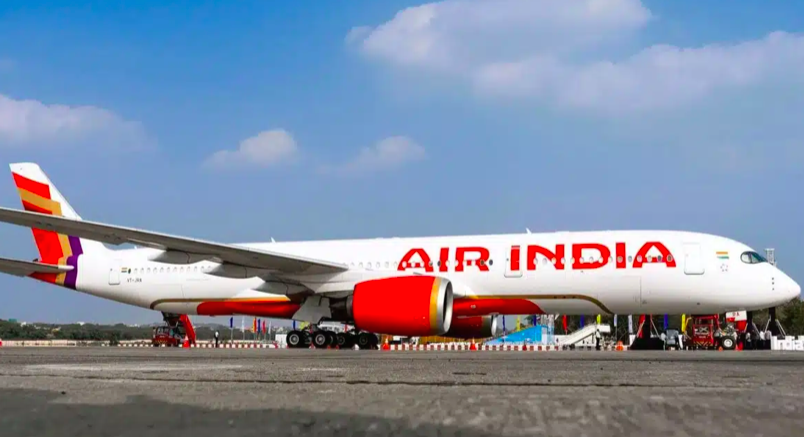
Following one of India’s most deadly air tragedies in recent years, the Directorate General of Civil Aviation (DGCA) has given an important safety notice to all air carriers flying Boeing planes. The directive requires that fuel control switches be inspected immediately on all Boeing aircraft operating in India after the fatal crash of Air India Flight 171 in June 2025 that cost 260 lives.
The action highlights the increasingly voiced concerns about the integrity of Boeing’s fuel control systems, particularly following preliminary evidence that the crash might have resulted from the accidental movement of the aircraft’s fuel control switches.
A Catastrophic Failure Raises Alarms
Air India Flight 171, a Boeing 787 Dreamliner traveling to London, crashed shortly after taking off from Mumbai International Airport. The preliminary conclusions of the Aircraft Accident Investigation Bureau (AAIB) are bleak. The investigators discovered that the fuel control switches on the plane were inadvertently shifted from the “run” to the “cut-off” position shortly after lift-off, resulting in an unprecedented loss of engine thrust.
The cockpit voice recorder recorded a chilling conversation between the pilots. One pilot asked why the engines had run out of fuel, and the other refuted ordering any such thing. The weighty conversation has been the foundation of the initial investigation, though the AAIB has sought to stress that the report is not meant to assign blame but rather to know where it went wrong.
DGCA’s Mandate and FAA Advisory
Based on the report, the DGCA ordered Indian carriers using Boeing aircraft to carry out immediate checks of the fuel control switch locking mechanism of their fleet. The checks have to be finished within July 21 and the results should be forwarded to the regulator without delay.
This directive is in line with a 2018 advisory by the Federal Aviation Administration (FAA), which had also suggested the same checks. Although the FAA advisory was non-mandatory, it had cautioned against the potential for the fuel switches being installed without full engagement of their locking mechanisms—opening them to accidental operation.
In the case of Flight 171, officials reported that these very same checks were never performed by Air India, something that might have been a key oversight leading to the deadly crash. Because of this, what was initially a suggestion has now become strict policy in India.
Pilot Community Stands in Solidarity
In the face of increasing public criticism, the Indian Commercial Pilots’ Association (ICPA) came to the defense of the Flight 171 crew in a public statement. According to the association, the pilots flew per their training, and their choices should not be judged with hindsight or speculation.
“The crew of Flight 171 experienced an unprecedented technical anomaly. Any implication of pilot error here is premature and possibly harmful,” the ICPA stated. Their position reflects a greater problem in aviation—sustaining fairness alongside accountability in crash investigations.
FAA Holds Its Ground
In response to the events, the U.S. FAA reconfirmed its earlier stance: the fuel control switches per se are not unsafe. The 2018 advisory was released following reports that the switches may be installed in a manner that is not properly locked but later was not labeled as a critical design flaw.
Nevertheless, the FAA recognized the event and said that it is paying close attention to the investigation in India. A spokesperson explained, “We endorse any additional steps that enhance operational dependability, and we will examine all of the results as they are released.”
Global Ripple Effects
The effect of the Air India crash does not stop at Indian aviation alone. South Korea is also poised to make similar checks mandatory for all its Boeing planes, according to reports. South Korean aviation authorities have opened independent examinations to ascertain whether locking systems in their aircraft are safe.
Other nations, especially those with vast Boeing fleets, are likely to emulate it. The global reaction highlights how interconnected and watchful the airline sector needs to be regarding plane safety.
The Boeing 787 Dreamliner, previously hailed as being fuel-efficient and technologically advanced, is currently under heightened scrutiny. For Boeing, an organization already grappling with a string of image


