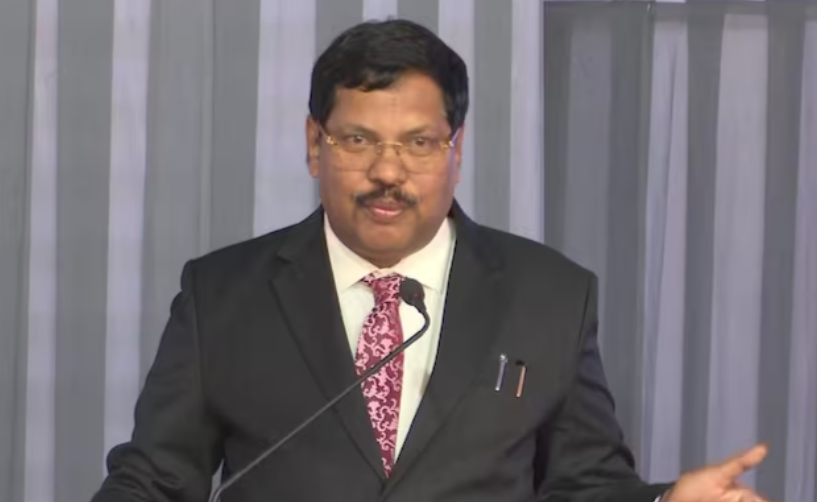
Justice Bhushan Ramkrishna Gavai will be going up to hold the office of the 52nd Chief Justice of India (CJI) on May 14, 2025, as the serving CJI Justice Sanjiv Khanna will retire. While this elevation carries with it particularity due to its compliance with the seniority convention, this promotion also means something more profoundly in terms of representation and philosophical thought in the country’s most important court.
A Journey Grounded in Resilience and Representation
Born on November 24, 1960, in Amravati, Maharashtra, Justice Gavai’s ascension to the pinnacle of the judiciary is reflective of India’s changing democratic ethos. He comes from a family strongly impacted by Dr. B.R. Ambedkar’s ideals. His father, R.S. Gavai, was a well-known leader of the Republican Party of India and a Member of Parliament and Governor. Justice Gavai has frequently attributed Dr. Ambedkar for his own path, saying, “It is solely due to Dr B R Ambedkar’s efforts that someone like me, who studied in a semi-slum area at a municipal school could attain this position”.
Legal Career and Judicial Tenure
Justice Gavai joined as an advocate in 1985 and started his practice at the Nagpur Bench of the Bombay High Court. His legal skills also made him a judge of the Bombay High Court in 2003 and served for 16 years. In May 2019, he was appointed to the Supreme Court of India.
Throughout his tenure, Justice Gavai has been part of several landmark judgments. Notably, he co-authored a decision condemning the demolition of properties of accused individuals without due process, emphasizing that such actions are unconstitutional and that officers responsible could face contempt proceedings and be held personally liable for restitution .
Significance of His Appointment
Justice Gavai’s soon-to-be-appointment as CJI is historically relevant. He will only be the second Chief Justice of India belonging to the Scheduled Caste community, after Justice K.G. Balakrishnan. This is a milestone moment for the judiciary’s path towards inclusivity and representation.
His CJI tenure, though short—May 14 to November 23, 2025—is at a critical moment. The judiciary is grappling with pendency of cases, access to justice, and upholding public trust. Justice Gavai’s tenure is expected to inject a fresh emphasis on these concerns, guided by his dedication to constitutional values and social justice.
Roles Beyond the Bench
Aside from his judicial work, Justice Gavai has also made contributions to legal education and access to justice. He is the Chancellor of Maharashtra National Law University, Nagpur, and was appointed as the Executive Chairman of the National Legal Services Authority (NALSA) in November 2024. As such, he has played a key role in advancing legal aid and ensuring that marginalized communities have access to legal resources.
As Justice Gavai is soon to take charge of India’s highest judicial post, his background is an inspiring tale and testimony to the transformatory energies of the Constitution. His helm is likely to keep the sail of justice high, upholding the ideals of equality, fairness, and acceptance, strengthening the judiciary as the watchdog of constitutional rights.
Justice B.R. Gavai’s appointment as Chief Justice of India is not a mere ceremonial shift; it marks the evolution of a judiciary working to mirror the diverse texture of the country. His short tenure is likely to leave an indelible mark on the legal environment, upholding the cause of justice to all.