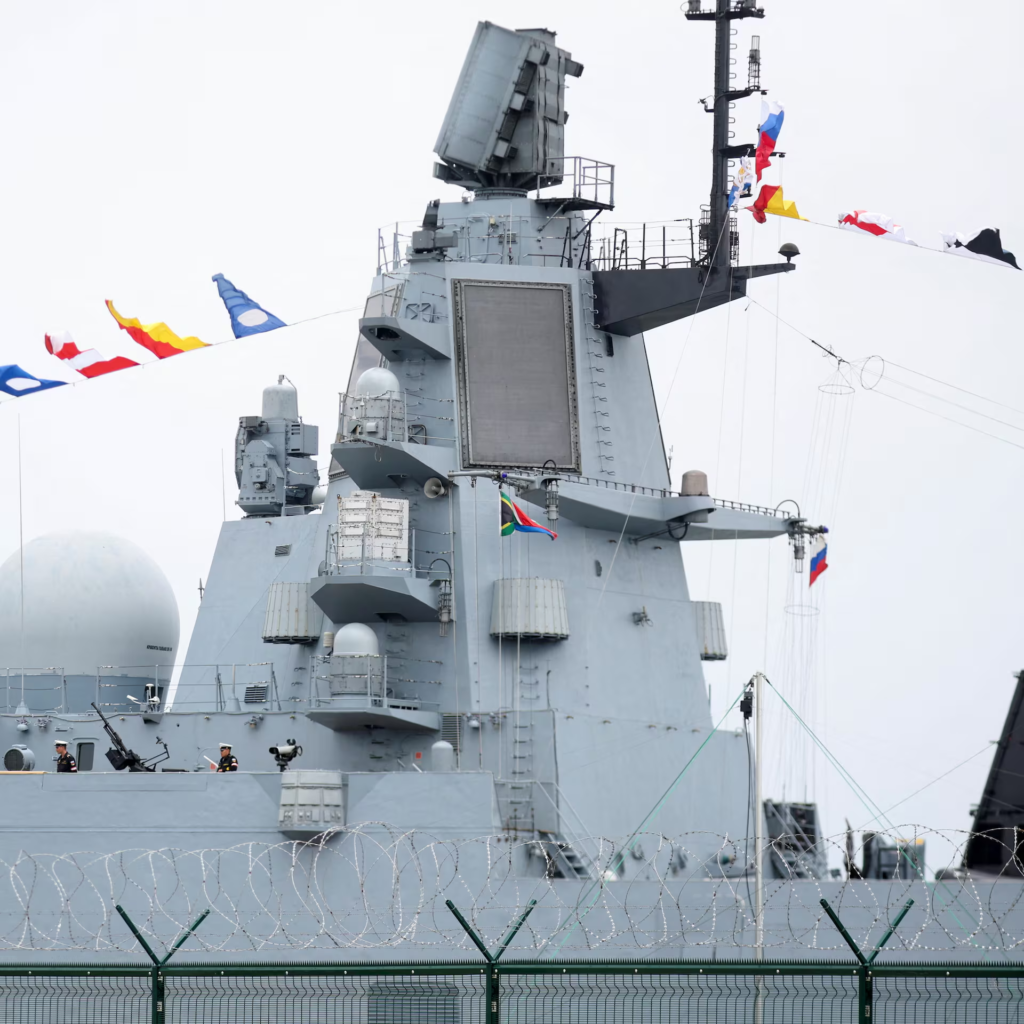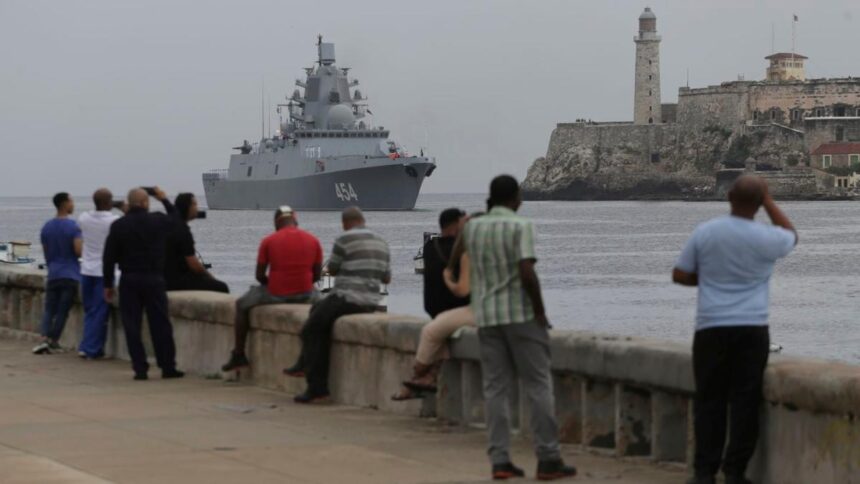
The recent landing of four Russian Navy ships in Cuba has been downplayed by the Pentagon, which claims that American officials were informed and actively followed their voyage to a port in Havana. Pentagon spokesman Sabrina Singh described the incident as ordinary during a press briefing, pointing out that it had happened before. She nevertheless verified that American military forces kept a careful eye on the Russian ships as they got closer to Cuban territorial seas.

“We’ve been tracking the Russians’ plans for this,” Singh told reporters on Wednesday. The Russian ships’ transit to Cuba was closely watched by a coalition of warships from the U.S., Canada, and France, including notable vessels like the USS Donald Cook and USS Delbert Black destroyers, the U.S. Coast Guard Cutter Stone, the Canadian frigate HMCS Ville de Quebec, and a French Lafayette-class frigate.
“These types of port calls are not uncommon, and we’ve seen similar visits under different administrations,” Singh emphasized. She reiterated that monitoring foreign vessels near U.S. territorial waters, which extend 12 nautical miles from the coastline, is standard practice for the U.S. Navy.
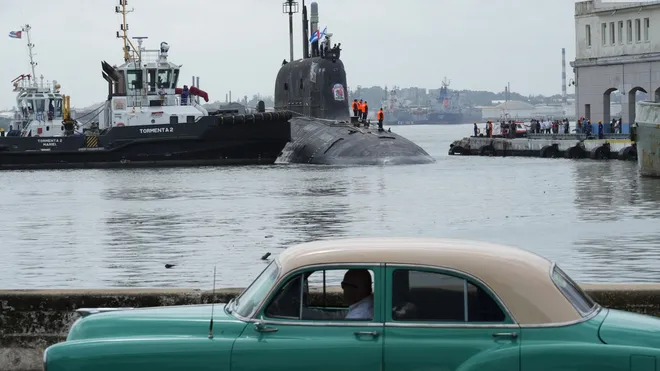
According to U.S. officials, the Russian ships maintained a distance from American coastlines as they traversed the Atlantic Ocean towards Cuba. The Defense Ministry of Russia openly confirmed the port call in Havana, listing the participating ships: the frigate “Admiral Gorshkov,” the nuclear-powered submarine “Kazan,” the sea supply tanker “Akademik Pashin,” and the ocean rescue tug “Nikolai Chiker.”
Geopolitical eyebrows are raised by the landing of Russian navy vessels in Cuba, notwithstanding the Pentagon’s efforts to minimize their significance. From the Cold War onward, Cuba has been a strategic area of interest when tensions between the United States and Russia have been high. Although it is within international conventions, the proximity of Russian military forces near the United States highlights ongoing global power dynamics and strategic goals.
Observers note that such naval visits can serve multiple purposes beyond mere port calls, including symbolic displays of international alliances, operational readiness demonstrations, and geopolitical messaging. The presence of advanced Russian military hardware, such as nuclear-powered submarines, adds a layer of strategic significance, reinforcing Russia’s maritime capabilities and its ability to project power beyond its immediate borders.
The reaction from the U.S. and its allies has been measured, emphasizing routine monitoring and respecting international maritime laws. However, the careful observation of Russian naval movements highlights broader concerns about military activities near sensitive regions. For instance, the Caribbean Sea, with its proximity to the U.S. mainland and historical significance, remains a focal point for strategic calculations by major powers.
In response to questions about the purpose of the Russian ships’ visit, both military and diplomatic perspectives suggest a combination of routine military exercises, diplomatic engagements, and strategic posturing. These actions are not isolated but are part of broader efforts by Russia to assert its influence in regions traditionally within the U.S. sphere of influence.
The U.S. stance, articulated through Pentagon statements, seeks to balance vigilance with a measured response. While the presence of Russian naval vessels near Cuba may raise eyebrows, it falls within accepted norms of international maritime law, where freedom of navigation and port calls are customary. This adherence to norms underscores the diplomatic dance between major powers, where military maneuvers are carefully calibrated against broader diplomatic and strategic considerations.

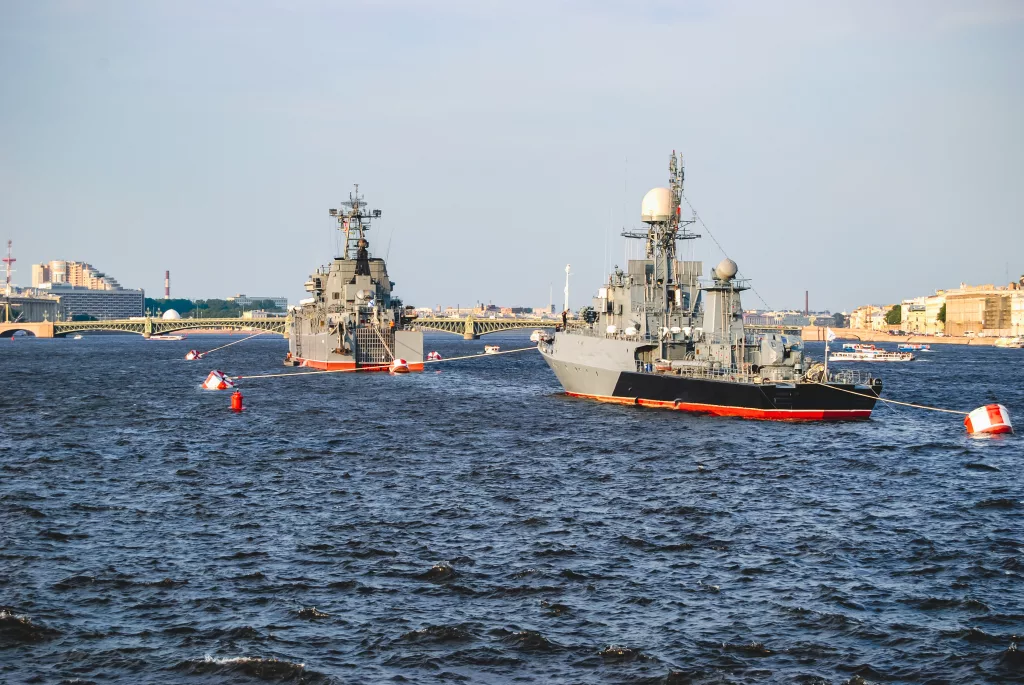
Publicly, both the U.S. and Russia maintain diplomatic channels to manage such incidents, preventing escalations that could lead to heightened tensions or misunderstandings. The role of military monitoring by U.S. naval assets, alongside international allies like Canada and France, serves as a visible deterrent while reaffirming collective security commitments within NATO and allied frameworks.
The situation also highlights the evolving nature of military and diplomatic engagements in the 21st century, where technological advancements and geopolitical rivalries intersect. The deployment of sophisticated naval assets like nuclear submarines underscores the evolving capabilities of global military powers, necessitating constant adaptation and vigilance in strategic planning and response.
Looking ahead, the incident serves as a reminder of the delicate balance in international relations, where symbolic gestures and operational realities coalesce in complex ways. As Russia continues to assert its presence in strategic regions, including the Caribbean, the response from the U.S. and its allies will likely continue to emphasize deterrence, diplomacy, and adherence to established norms of international law and maritime behavior.