



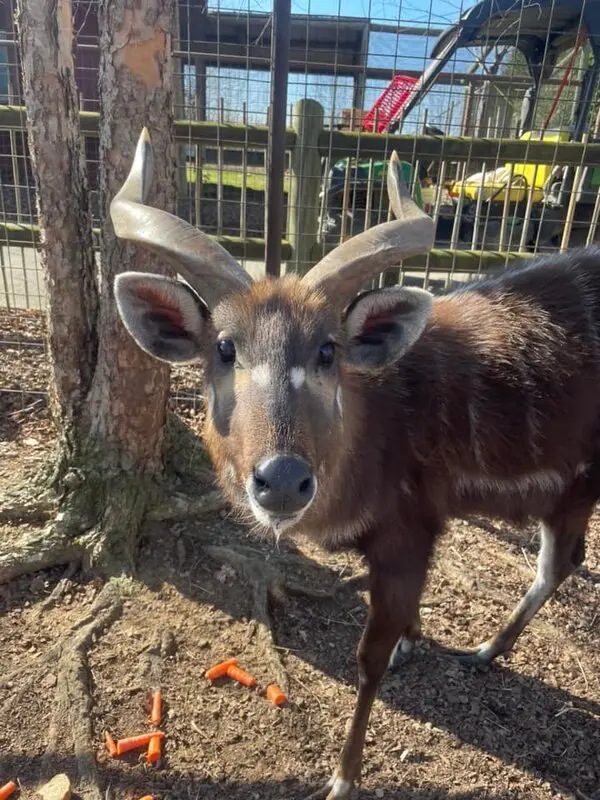
A beloved antelope tragically choked to death on the plastic cap of a snack pouch over the weekend, according to an announcement by a Tennessee zoo. Lief, a 7-year-old sitatunga antelope, died on Saturday after ingesting the cap from a squeezable fruit sauce pouch, which the zoo explicitly forbids on its premises. This unfortunate event has brought attention to the importance of adhering to zoo regulations designed to protect animal welfare.
The sitatunga antelope, known for its graceful appearance and adaptability to swampy habitats, can live up to around 22 years in human care, as noted by the Smithsonian’s National Zoo. This makes Lief’s death particularly heartbreaking, as he still had many years ahead of him. The zoo’s statement highlighted the dangers of certain packaging to its animals, specifically mentioning why squeezable pouches are banned within the zoo grounds.

Some ask why we don’t allow squeezable pouches into the zoo. The reason is simple — the packaging is dangerous to our animals. The post elaborated that from an animal’s perspective, the lids of these pouches might look like food, posing a severe risk. Despite the zoo’s policy and efforts to enforce it, including bag searches, some visitors manage to smuggle these prohibited items inside. This incident underscores the critical importance of adhering to zoo regulations designed to protect animal welfare.
The zoo reassured visitors that they are welcome to enjoy their squeezable pouches and other snacks in designated picnic areas outside the zoo and can re-enter the zoo multiple times throughout their visit. This accommodation aims to ensure both visitor convenience and animal safety. The Facebook announcement prompted an outpouring of grief and outrage from the zoo’s community. Many commenters expressed frustration and sadness that rule-breaking led to such a tragic outcome.
In response to one comment, the zoo mentioned that it doesn’t expect anyone to take responsibility for Lief’s death, reflecting a broader concern about accountability and respect for zoo regulations. Another commenter shared their experience of witnessing adults throwing human food and trash into animal enclosures. Brights Zoo responded by urging visitors to report such behavior immediately. If we know when it happens, we can get staff there immediately to remove the objects, and with a description of the guests, we can help them quickly find the exit of the zoo. This proactive approach aims to mitigate risks and ensure a safe environment for all animals housed at the zoo.
Brights Zoo, located in Limestone, Tennessee, about 85 miles northeast of Knoxville, is a private, family-owned establishment that houses both rare and endangered species, along with more common but exotic creatures. The zoo’s mission emphasizes conservation and education, making the loss of Lief particularly poignant for both the zoo staff and its visitors. The zoo’s location in a serene setting provides a refuge for many animals, offering them a safe habitat away from their natural predators and environmental threats.

However, incidents like Lief’s death highlight the ongoing challenges zoos face in balancing public access with the safety and well-being of their animal inhabitants. Zoos often implement strict rules to protect their animals, and the incident at Brights Zoo serves as a stark reminder of why such regulations are necessary. The tragic death of Lief the antelope is a call to action for all zoo visitors to respect and follow the guidelines set by these institutions. It also underscores the importance of continued education and awareness about the impact human actions can have on wildlife, even in controlled environments like zoos.
Moving forward, Brights Zoo and similar institutions may need to revisit their enforcement strategies and visitor education programs to prevent such heartbreaking incidents from happening again. Enhanced surveillance, stricter bag checks, and increased staff presence in vulnerable areas could be potential measures to ensure that all visitors comply with the rules designed to protect the animals.


