Modi’s Masterstroke: Reviving BIMSTEC as South Asia’s Power Bloc
How PM Modi Revived BIMSTEC Into a Thriving Regional Powerhouse
What Is BIMSTEC and Why Does It Matter?
The Bay of Bengal Initiative for Multi-Sectoral Technical and Economic Cooperation (BIMSTEC) is a regional organization established in 1997 to enhance cooperation among South and Southeast Asian countries. The group comprises seven nations: Bangladesh, Bhutan, India, Myanmar, Nepal, Sri Lanka, and Thailand.
Despite its early promise, BIMSTEC had remained largely inactive until 2016, when Indian Prime Minister Narendra Modi gave it a fresh push. Now, the organization plays a key role in shaping the region’s strategic, economic, and security landscape.
The Modi Effect: A Strategic Turnaround
The 2016 Goa Retreat – A Turning Point
BIMSTEC’s revival can be traced back to 2016, when PM Modi invited leaders of member countries to a special Leaders’ Retreat in Goa. This move replaced the planned SAARC summit and signaled India’s pivot to more productive regional groupings.
A Clear Vision: Neighbourhood First and Act East
Through initiatives like Neighbourhood First, Act East, the MAHASAGAR vision, and a focus on the Indo-Pacific, PM Modi has given BIMSTEC the strategic importance it needed. These policies emphasized stronger ties with India’s eastern neighbors and promoted connectivity and regional integration.
India’s Leadership Role in BIMSTEC
India has played a central role in shaping the group’s direction:
- Security and Trade: India heads two of BIMSTEC’s most crucial pillars.
- Diplomatic Leadership: Appointed Indra Mani Pandey as BIMSTEC’s Secretary General.
- Financial Support: Granted $1 million to the Secretariat for capacity building.
- Infrastructure: Hosts the BIMSTEC Energy Centre in Bengaluru to facilitate power grid integration.
Division of Leadership
Each country in BIMSTEC now leads a specific area:
- India: Security and Trade
- Bangladesh: Investment and Development
- Bhutan: Environment and Climate Change
- Myanmar: Agriculture and Food Security
- Nepal: People-to-People Contact
- Sri Lanka: Science, Technology, and Innovation
- Thailand: Connectivity
Major Milestones Under Modi’s Watch
Adoption of BIMSTEC Charter (2024)
This charter formalized the structure and legal identity of BIMSTEC, giving it greater global recognition.
Key Diplomatic Events Hosted by India
- Foreign Ministers’ Meeting (July 2024): In India.
- Informal Meeting at UNGA (Sept 2024): New York.
These events helped elevate BIMSTEC’s visibility on the international stage.
Strengthening Regional Security
India has focused on building a robust legal framework for the region to combat terrorism, violent extremism, and transnational crime. This includes coordinated legal efforts and shared intelligence initiatives.
Connectivity & Energy Cooperation
India’s focus on infrastructure includes facilitating energy cooperation via the BIMSTEC Energy Centre in Bengaluru. This supports regional power sharing and grid connectivity.
Promoting People-to-People Ties
Recent events have also helped BIMSTEC go beyond government-level cooperation:
- Youth Summit
- Cultural Troupe Participation
- Climate Change Conference
- Aquatic Championship
- Business Summit
These activities foster people-to-people ties, youth engagement, and cross-border understanding.
What to Expect from the 6th BIMSTEC Summit
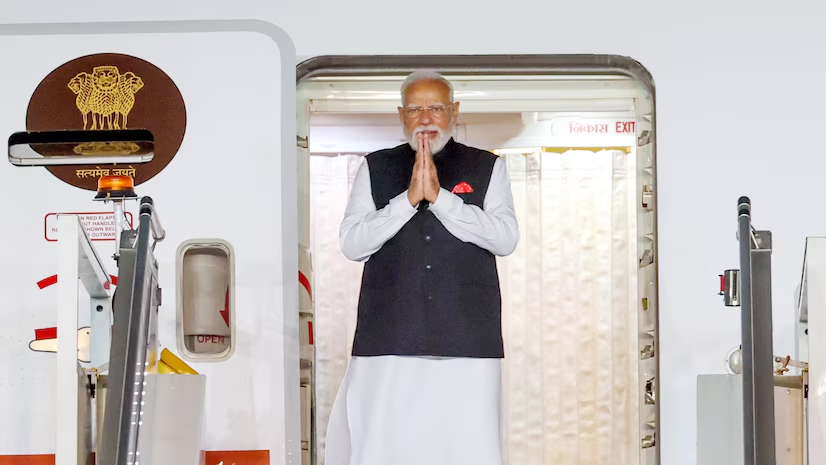
As PM Modi attends the 6th BIMSTEC Summit in Bangkok under the theme “Prosperous, Resilient, and Open BIMSTEC”, major announcements are expected. These could include:
- New projects for regional trade facilitation
- Greater digital and physical connectivity
- Further commitment to maritime security
BIMSTEC’s Rising Global Role
Under PM Modi’s leadership, BIMSTEC has transformed from a dormant forum into a dynamic force for regional cooperation. By combining economic growth with security frameworks and people-to-people engagement, the organization is poised to play a vital role in shaping South and Southeast Asia’s future.
As the world watches, BIMSTEC’s evolution stands as a testament to India’s rising diplomatic and strategic influence in the region.