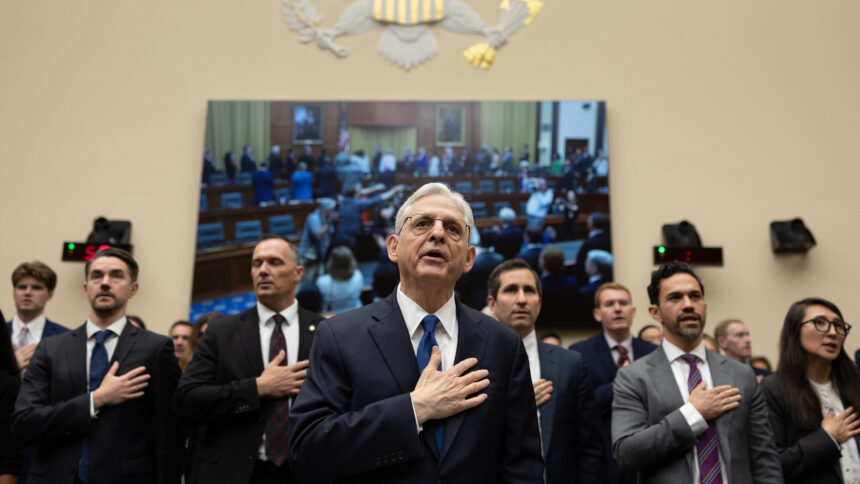
House Republicans passed a resolution on Wednesday afternoon to hold Attorney General Merrick Garland in contempt of Congress. This resolution was a response to Garland’s refusal to provide audio recordings of President Joe Biden’s interview with special counsel Robert Hur concerning his handling of classified documents. The final vote was 216 to 207, with Rep. David Joyce of Ohio being the only Republican to vote against the contempt resolution. Speaker Mike Johnson emphasized that this decision was crucial for maintaining the integrity of congressional oversight.
Garland’s refusal to comply with the subpoena has sparked significant controversy. He expressed deep disappointment, accusing the House of turning a serious congressional authority into a partisan weapon. Garland stated that the vote disregarded the constitutional separation of powers and the Justice Department’s need to protect its investigations. He pledged to stand up for the Department, its employees, and its mission to defend democracy, asserting that the Justice Department will not be intimidated by political influence.
Despite the Justice Department providing a transcript of Hur’s interview with Biden, House Republicans insisted that the audio tapes were essential for their impeachment investigation into the president. Johnson argued that the audio tapes were necessary to verify the accuracy of the transcripts, accusing the White House of heavily editing the President’s statements. Johnson asserted that having both the transcript and the audio was a simple matter of transparency and accountability.
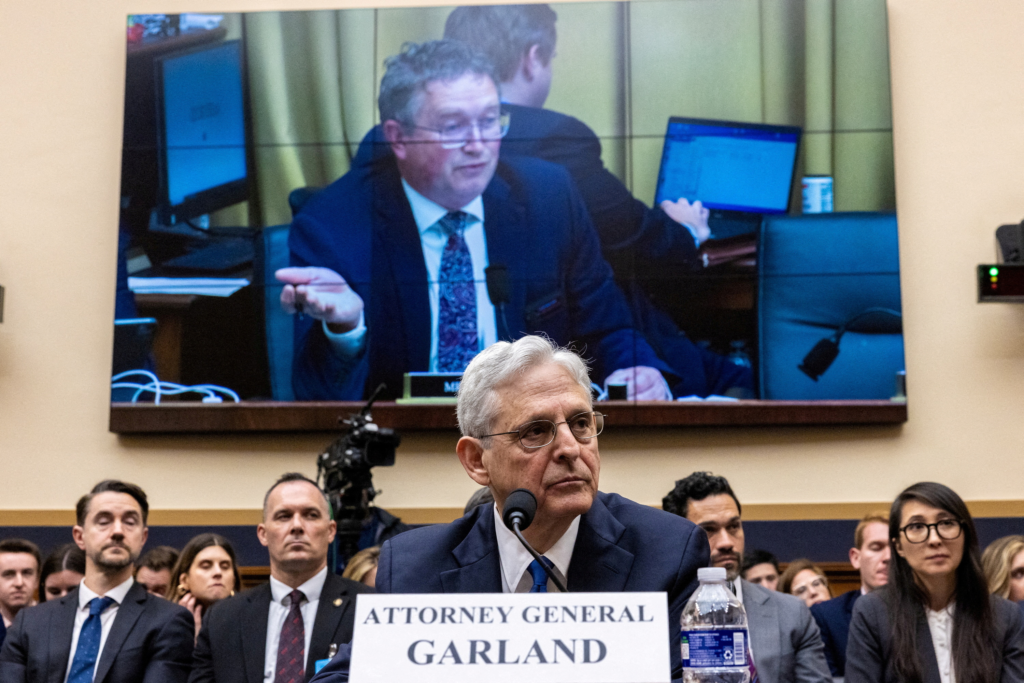
The resolution directs the House speaker to refer the case to the U.S. Attorney for the District of Columbia for potential criminal prosecution. This move marks a significant escalation in the ongoing conflict between House Republicans and the Biden administration over access to investigative materials. Last week, Garland defended his decision before the House Judiciary Committee, citing executive privilege claimed by President Biden. He maintained that his actions were in line with protecting the integrity of ongoing investigations and upholding the principles of the Justice Department.
The standoff between Congress and the Justice Department underscores the ongoing tension between the legislative and executive branches over access to sensitive materials. The resolution and subsequent referral for criminal prosecution could lead to a protracted legal battle, further complicating the relationship between the Biden administration and House Republicans. This conflict is part of a broader effort by House Republicans to assert their oversight authority and pursue investigations into the Biden administration.
This move reflects the highly charged political environment in Washington, where partisan battles often spill over into institutional conflicts. As this situation develops, it will be crucial to monitor how it impacts the broader political landscape and the functioning of government oversight mechanisms. The outcome of this conflict could have significant implications for the balance of power between Congress and the executive branch, as well as for the precedent it sets for future disputes over access to investigative materials.
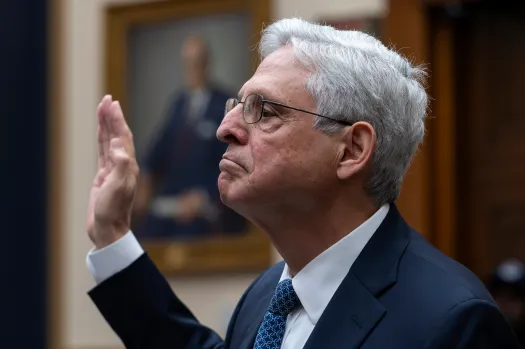
Both sides remain entrenched in their positions, with House Republicans pushing for greater transparency and accountability, while the Justice Department and the White House defend their prerogatives and the confidentiality of sensitive investigations. This confrontation serves as a reminder of the complexities and challenges inherent in the American system of checks and balances, where each branch of government must navigate its responsibilities and powers in relation to the others.
Speaker Mike Johnson emphasized that the integrity of congressional oversight processes and responsibilities must be maintained. Johnson’s assertion that Congress, not the Executive Branch, should determine what materials are needed for investigations highlights the importance of compliance with lawful Congressional subpoenas. He argued that there are consequences for refusing to comply, emphasizing the necessity of holding individuals accountable.
Garland’s response highlighted the Justice Department’s need to protect its investigations and the substantial amount of information already provided to the Committees. He reiterated his commitment to defending the Department of Justice and its mission to protect democracy. Garland’s assertion that he will not be intimidated and that the Justice Department will continue to do its job free from political influence underscores his determination to uphold the principles of the Justice Department.
Despite the provision of a transcript of Hur’s interview with Biden, House Republicans’ insistence on the audio tapes underscores their pursuit of thorough oversight. Johnson’s argument that the audio tapes are necessary to verify the accuracy of the transcripts reflects concerns about the potential for edited statements. The demand for both the transcript and the audio is framed as a matter of transparency and accountability.

The referral of the case to the U.S. Attorney for the District of Columbia for potential criminal prosecution represents a significant escalation in the conflict between House Republicans and the Biden administration. This move could lead to a prolonged legal battle, complicating the relationship between the two branches of government. The broader effort by House Republicans to assert their oversight authority and investigate the Biden administration is part of a larger political struggle in Washington.