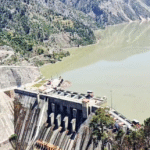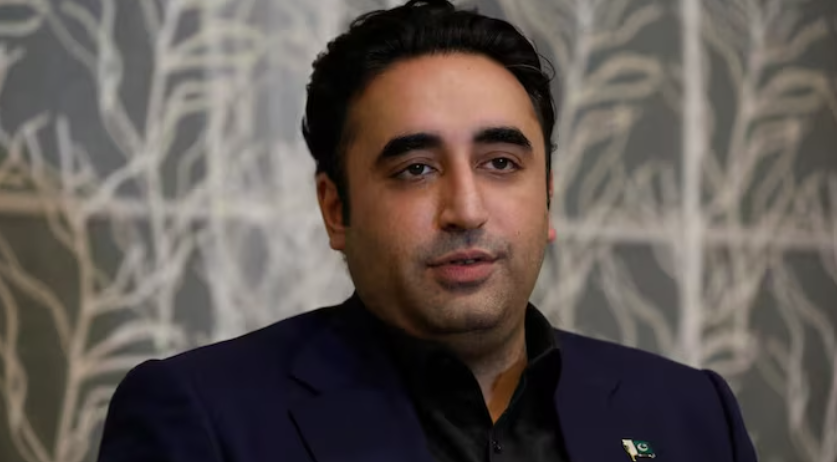
In an alarming escalation of rhetoric between India and Pakistan, Pakistan Peoples Party (PPP) chairman Bilawal Bhutto-Zardari issued a fierce warning to India following New Delhi’s move to suspend the Indus Waters Treaty. Speaking at a public rally on Friday, Bhutto-Zardari declared, “The Indus is ours and will remain ours. Either our water will flow through it, or their blood will.”
His incendiary comments followed India’s retaliatory measures in the wake of the deadly Pahalgam terror attack that killed several people. In what was seen broadly as a tit-for-tat measure, the Indian government suspended major provisions of the Indus Waters Treaty, a landmark 1960 pact facilitated by the World Bank regulating the use of waters from six rivers shared by India and Pakistan.
The Indus Waters Treaty has been one of the only lasting symbols of India-Pakistan cooperation for decades, surviving even during several wars and periods of increased tension. Its possible suspension represents a turning point and might fuel an already combustible regional environment.
Bilawal Bhutto-Zardari’s comments have stirred passions in Pakistan, where water security is an existential issue. The Indus River system is the lifeline of Pakistan’s agricultural sector and sustains nearly 90% of its population. Bhutto-Zardari positioned Pakistan as the “true custodian” of the Indus civilisation, drawing on historical, cultural, and emotional sentiments that run deep in Pakistani identity.
“The Indus is not a river. It is the lifeblood of our civilization, the wellspring of our existence, the nursery of our history,” Bhutto roared to a sea of adoring supporters. “If India believes it can weaponize water against us, it is seriously deluded.”
Pakistan’s response has been rapid and indignant. The Islamabad government has called India’s actions “an act of water terrorism” and threatened to resist any unilateral attempts to modify the treaty. Pakistan also plans to seek international intervention from bodies such as the United Nations and the International Court of Justice to block India from modifying the status quo.
At the same time, Indian authorities have defended their move on the grounds that it is an appropriate reaction to Pakistan’s persistence in sponsoring acts of terrorism in India. The sources within India’s government indicated that the Indus Waters Treaty grants India strong rights over the eastern rivers and that it did not exhaust all of them. They believe India is merely regaining its rightful claims without violating the treaty.
However, the optics of “turning off the taps” to Pakistan have added an emotional dimension to an already sensitive relationship. Water, like blood, evokes visceral emotions, and Bhutto-Zardari’s stark warning about “water or blood” taps directly into a collective sense of vulnerability and defiance among Pakistanis.
Experts warn that any attempt to unilaterally modify the treaty would be disastrous. “The Indus Waters Treaty has been a keystone of peace in an otherwise contentious relationship,” said Dr. Ayesha Siddiqua, a respected security analyst. “Messing with it is likely to unleash a Pandora’s box that might destabilize the whole region.”
Environmentalists also warn that water would have disastrous humanitarian implications for millions of people relying on the Indus basin on both sides of the border. Decreased water flow would ruin agriculture, exacerbate food security, and fuel migration and social instability.
Despite growing tensions, some voices have been urging restraint. Some Indian strategic minds have spoken of a measured response, cautioning that isolating Pakistan might lead to volatile and catastrophic consequences. In Pakistan as well, opposition politicians have asked the government to pursue diplomatic talks to solve the water issue instead of resorting to incendiary rhetoric.
But for now, Bilawal Bhutto-Zardari’s combative stance reflects a broader mood of national outrage and resistance. It also marks a critical moment for Bhutto himself, who has been seeking to reinvigorate the PPP and position himself as a leading national figure. His speech has elevated him to the center of Pakistan’s political discourse, rallying nationalist sentiment at a time when the country feels increasingly besieged.
The Indus Waters Treaty crisis is happening at a sensitive time in South Asia. India and Pakistan both face issues of internal strain — economic strain, political turmoil, and internal threats to security. Under such circumstances, brinkmanship on critical resources such as water can rapidly get out of hand.
As both governments take a tougher stance, the future of the Indus Waters Treaty — and for that matter, the stability of the region — remains in jeopardy. Will calm heads prevail, or will nationalist zeal push the two nuclear-powered neighbors into yet another perilous confrontation?
For the moment, the words of Bilawal Bhutto-Zardari ring forebodingly over the plains of Punjab and the Kashmir valleys: “Either our water will flow, or their blood will.” The world waits with bated breath as a river — and a precarious peace — reach a historic juncture.