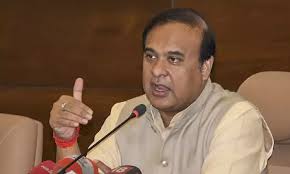
Balochistan’s Struggle for Freedom Is Unbreakable, Says Himanta Biswa Sarma
Balochistan Movement Is a Symbol of Freedom, Says Himanta Biswa Sarma
In a strong statement supporting the Baloch people, Assam Chief Minister Himanta Biswa Sarma described the Balochistan freedom movement as a symbol of an indigenous people’s long struggle for dignity, rights, and self-rule.
Posting on X (formerly Twitter) on Sunday, Sarma traced the history of the movement and praised the resilience of the Baloch people in the face of hardship and oppression.
The Historical Roots of the Balochistan Movement
A Bid for Sovereignty After 1947
The story of Balochistan’s fight for freedom dates back to the end of British colonial rule in 1947–1948. At that time, the princely state of Kalat, covering much of today’s Balochistan region, wanted to remain independent rather than merge with the newly created state of Pakistan.
However, despite initial talks about autonomy, Balochistan was forcibly annexed by Pakistan in March 1948, Sarma highlighted.
This move triggered deep resentment among the Baloch people — resentment that has fueled their ongoing demands for justice, dignity, and self-determination for more than seven decades.
Continued Struggles: Uprisings Through the Decades
According to Sarma, the feeling of betrayal was not a one-time incident. Over the years, Balochistan has witnessed multiple uprisings:
-
In 1958
-
In 1962
-
In 1973
-
And again in the early 2000s
Each of these uprisings reflected the Baloch people’s anger over political disenfranchisement, economic marginalization, and cultural suppression by Pakistan’s central government.
Rich in Resources but Poor in Development
Despite being one of Pakistan’s most resource-rich provinces, Balochistan remains one of its least developed areas.
Sarma pointed out that while the land is abundant in natural resources like gas, minerals, and metals, the Baloch people have suffered systematic exploitation and lack of development for decades.
This economic imbalance has only deepened the sense of injustice and strengthened the call for autonomy.
The Turning Point: The Killing of Nawab Akbar Bugti
One of the most painful moments in the history of the Baloch struggle was the killing of Nawab Akbar Bugti in 2006.
Bugti was a respected tribal leader who had long advocated for Baloch rights. His death, under controversial circumstances, reignited demands for:
-
Self-determination
-
Justice
-
Respect for the Baloch people’s rights
Sarma emphasized that this incident marked a “particularly painful chapter” and breathed new life into the freedom movement.
Himanta Biswa Sarma’s Message to the World
By highlighting the Balochistan movement, Sarma brought attention to a cause that often gets overlooked internationally.
He praised the unbroken spirit of the Baloch people, calling their struggle a symbol of the universal aspiration for dignity and freedom.
In a world where indigenous movements are gaining more attention, Sarma’s support adds a powerful political voice to the Baloch cause.
Himanta Biswa Sarma’s remarks are a reminder that the Balochistan freedom movement is more than just a regional issue — it is part of the global struggle for human rights, self-rule, and respect for indigenous cultures.
Despite decades of hardships, the Baloch people continue to fight for their future with courage, resilience, and an unyielding demand for justice.
As Sarma rightly said, their movement stands as a timeless symbol of freedom.