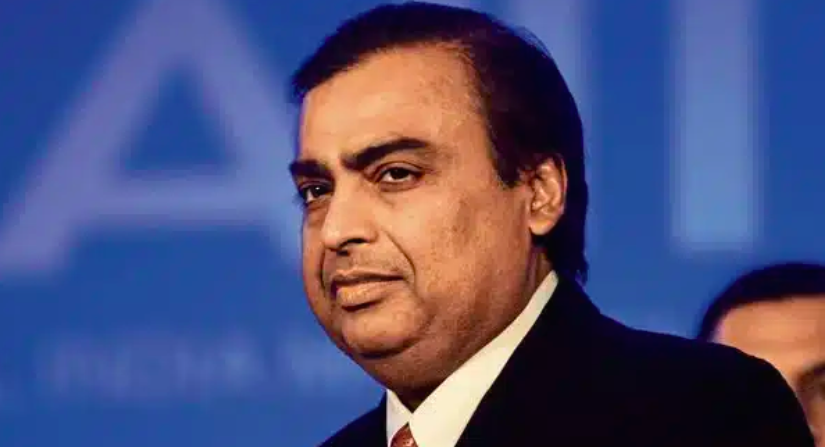
Mukesh Ambani, the billionaire industrialist who steered Reliance Industries from petrochemicals to digital dominance, addressed a packed audience of business leaders at the annual India Business Summit. “The biggest risk corporates face today is the risk of irrelevance in a world that is changing faster than ever,” Ambani said during his keynote speech. “If you’re not building new capabilities and not disrupting yourself, someone else will.”
Ambani’s insight comes at a time when Indian corporations are navigating seismic shifts in technology, consumer behaviour, and regulatory policies. With the advent of artificial intelligence, automation, and digital platforms, legacy businesses are being forced to rethink their strategies or risk falling behind nimbler, tech-savvy competitors.
Embracing Innovation: Ambani’s Roadmap for Corporate Resilience
Ambani pointed to his own company’s journey as an example of successful transformation. Once primarily an energy and refining giant, Reliance Industries redefined itself as a digital conglomerate with the launch of Jio, India’s largest telecom network, and a series of high-profile ventures in e-commerce, green energy, and financial services.
“Innovation is not just a department—it must be the DNA of the organization,” Ambani said. He emphasized the importance of investing in research and development, talent, and digital capabilities. “Survival will favour those who adapt quickly, not necessarily those who are the biggest today.”
Statistics Highlight the Pace of Disruption
According to a 2023 McKinsey report, over 60% of Indian CEOs view technological disruption as a top threat to their business. In the last decade, nearly 40% of companies listed on the BSE Sensex have been replaced due to their inability to keep pace with change.
“Indian corporations have traditionally relied on time-tested models,” notes Dr. Meera Shankar, professor of corporate strategy at IIM Ahmedabad. “But with the rise of digital-first competitors, the comfort zones have vanished, and the playbook is being rewritten.”
The Human Factor: Upskilling and Culture Change Are Essential
Beyond hard investments in technology, Ambani stressed the need for continuous workforce upskilling and cultural change. “We need to empower our people to think digitally,” he said, warning that a resistant mindset is as much a risk as technological lag.
Industry observers echo this sentiment, stressing the importance of learning agility. “Businesses that foster a culture of experimentation and learning are far more resilient,” says Rohan Ganapathy, CEO of Skyroot Aerospace. “That’s no longer just a ‘nice to have’ but mission-critical.”
Regulatory Shifts and Globalization Add to Corporate Risks
While technological disruption tops the list of Ambani’s concerns, he also pointed to regulatory changes and global uncertainties as significant challenges. With India’s government pushing for self-reliance and greater regulation of data privacy and digital business, companies must remain agile in compliance.
“India is becoming a major player in the global economy, but that also exposes our businesses to international shocks and evolving rules,” Ambani noted. Reliance’s own foray into global markets, including green hydrogen and tech joint ventures, underscores the importance of understanding cross-border risks.
Multiple Perspectives on Navigating Risk
Not all industry leaders see disruption through the same lens. N. Chandrasekaran, Chairman of Tata Sons, recently argued that sustainability and environmental compliance represent equal, if not greater, existential risks to Indian corporates. “Climate action, resource scarcity, and social license to operate will define tomorrow’s winners,” he remarked at a competing summit.
Meanwhile, startup founders view the speed of regulation—rather than technology—as the thornier issue. “For many fintech or AI startups, the rules change faster than the technology itself,” observes Aditi Sharma, co-founder of a leading edtech platform.