


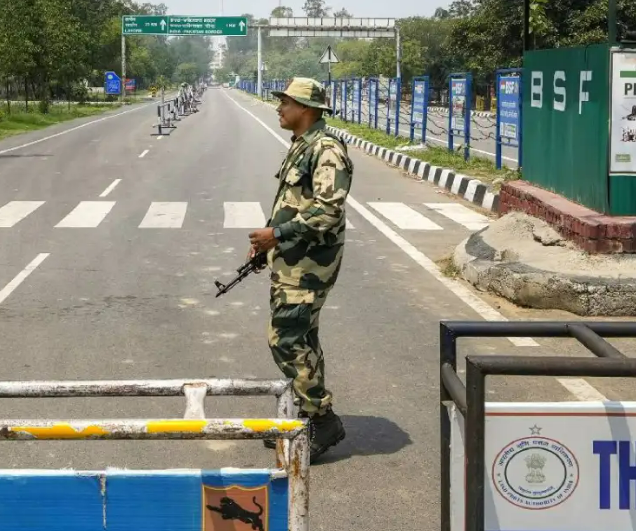
In a key breakthrough, military commanders from India and Pakistan are due to meet on Monday to discuss the finer details of the United States-brokered ceasefire accord. The weekend announcement by President Donald Trump of the ceasefire brought an end to days of furious fighting in which both countries traded heavy artillery fire and air attacks, threatening the outbreak of full-scale war.
Ceasefire Agreement and Early Reactions
The ceasefire is a turning point in the historic conflict between India and Pakistan, particularly in the light of the recent upsurge that was on the verge of getting out of hand. The two countries have agreed to call off hostilities after almost four days of intense combat, although tensions are still high. Both sides have reiterated their determination to uphold the ceasefire but are still on high alert, prepared to react should there be any violations.
In a welcome move after the ceasefire, India has reopened 32 airports that were shut temporarily for security reasons. The strategic shutdown of the airports had disrupted civilian air traffic, adding to the charged atmosphere between the nuclear-armed neighbors. The two countries have been at war for decades, with the disputed Kashmir region being a flashpoint for conflict. Both India and Pakistan claim the territory in entirety but control it in parts, and they have been involved in two wars over the land.
The recent upsurge in violence also increased apprehensions of a looming war, as both nations seemed to be preparing for a larger conflict. Nevertheless, the ceasefire presents a fleeting moment of opportunity for de-escalation and possible peace negotiations.
Details of Recent Hostilities
The latest confrontation between Pakistan and India saw both nations blaming the other for aggressive activities. India said it conducted airstrikes against nine sites across Pakistan and Pakistan-administered Kashmir, in response to an April 22 militant attack that killed 26 individuals in India-administered Kashmir. India blamed the attack on a group based in Pakistan, although Islamabad dismissed the accusation.
As the confrontation deepened, both countries continued to boast of military gains. India asserted that it had caused severe harm by striking Pakistani Air Force bases, where Indian aircraft had been lost in their numbers. Meanwhile, Pakistan authenticated that certain Indian projectiles had impacted its air force bases but countered India’s allegation of having brought down its airplanes. The tension sparked a war of words where both parties produced contradictory information concerning the fate of their pilots. India confirmed that all its pilots were back home, while Pakistan refuted claims of detaining an Indian pilot.
The military exchanges, such as air battles and rocket shelling, heightened the already volatile relations between the nations. As both sides displayed their firepower, anxiety of large-scale escalation to an all-out war hung in the balance.
Claims of Military Engagements
Both India and Pakistan have continued to claim military triumph in the aftermath of the ceasefire deal. India’s Defence Ministry asserted that the Indian forces had struck nine camps of militants operating inside Pakistan as well as Pakistan-administered Kashmir. Indian officials said more than 100 militants had been killed in these attacks. Pakistan, though, had its own rebuttal in terms of military gains, claiming it had attacked 26 Indian military installations and flown drones over New Delhi.
While India defended the Pakistani projectiles being on Indian territory, it refused to make any comments regarding the suggestions of drone flights over the capital. Pakistan also asserted that it had destroyed five Indian aircraft, three of the French Rafales, but India has not admitted these claims. The opposing reports of military actions between the two countries left the situation uncertain, with each side posing their own version of events.
The International Community’s Role
With Indian and Pakistani military commanders set to sit down for negotiations, the international community watches anxiously, anticipating a final solution that will usher in long-term peace in the region. The United States, which had been instrumental in facilitating the ceasefire, has reaffirmed the need to ease tensions between the two countries. Both India and Pakistan’s nuclear status gives further impetus to the global quest for diplomacy because any war between the two will have profound ramifications, not only for the subcontinent but also for the rest of the world.
Although the ceasefire is a temporary break from the violence, only time will tell whether this halt in hostilities will translate into a more lasting peace treaty or if the tensions will flare up once more. The result of the negotiations between the military commanders will be decisive in deciding the fate of relations between the two countries.
A Chance for Peace?
For the moment, both India and Pakistan appear determined not to precipitate further violence, but with their volatile history, the road to peace is going to be extremely difficult. The ceasefire may offer the time for the two nations to consider the human toll of the conflict and rethink their policies. But as long as both stand in a high state of military preparedness, the path for negotiations is slim.
The next few days will be critical as the world waits to see if this tenuous ceasefire holds or if the deep-seated tensions between India and Pakistan will again fuel a potentially lethal conflict. The global community, while optimistic, is guardedly optimistic about the potential for peace in this part of the world.


