Mandana Karimi Slams Boman Irani Over Iran Comment, Sparks Online Debate
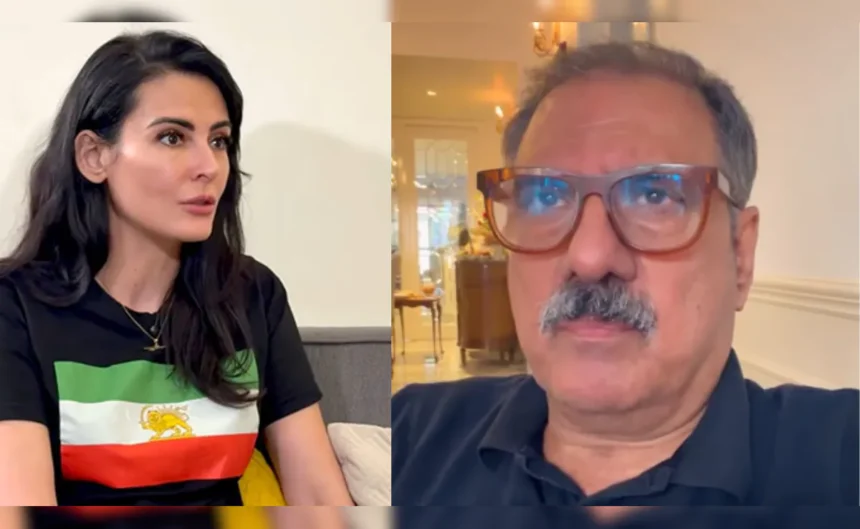
A recent social media exchange between Mandana Karimi and Boman Irani has caught widespread attention, turning a humorous video into a serious and emotional debate.
What started as satire quickly escalated into a discussion about identity, responsibility, and speaking up during global crises.
The Viral Video That Started It All
Boman Irani’s Take on Global Politics
Boman Irani recently shared a light-hearted video on Instagram, poking fun at Donald Trump amid the ongoing tensions in the Middle East.
In the video, he joked that Trump wanted to meet “Iranis” for peace talks and humorously included himself, along with Smriti Irani and Aruna Irani, in that list.
He added a comedic twist by saying he would host Trump at his home in Mumbai’s Dadar Parsi Colony and serve him traditional Parsi dishes like dhansak and custard—while also joking about the need for a gas cylinder amid fuel concerns.
The video was meant purely as satire and quickly gained attention for its humor.
Mandana Karimi’s Strong Reaction
Calling Out the Timing
Mandana Karimi, who was born in Tehran and has been vocal about issues related to Iran, did not find the humor appropriate.
She responded in the comments with a strong and emotional message, questioning the timing of Boman’s remarks.
According to her, while the video focused on humor and global politics, it overlooked years of suffering faced by people in Iran.
She pointed out that:
- Iranians have faced arrests, executions, and oppression
- Many families have been affected over the years
- Voices speaking out earlier were often ignored
Her main concern was not the joke itself, but what she saw as selective attention.
A Personal Connection to Iran
“I’ve Lived Through It”
Mandana also shared her personal experiences to explain why the issue matters deeply to her.
She revealed that:
- She was born and raised in Iran
- She lived under the current regime for 18 years
- She has personally experienced arrest and violations
She emphasized that her perspective comes from lived experience, not just observation.
Her family, she added, still resides in Iran, making the situation even more personal.
The Parsi Identity Angle
A Controversial Argument
One of the most debated parts of Mandana’s comment was her reference to Boman Irani’s Parsi roots.
She pointed out that the Parsi community historically traces its origins to Iran and suggested that this connection carries a responsibility to speak up.
She questioned why voices from the community were not as vocal earlier, especially during periods of intense struggle in Iran.
This particular argument sparked mixed reactions online, with many users debating whether cultural or historical roots create an obligation to comment on political issues.
Internet Reacts: Divided Opinions
Support and Criticism
The exchange quickly went viral, drawing reactions from across social media.
Some users supported Boman Irani, saying:
- The video was clearly satire
- Humor should not be taken out of context
- Not every public figure is required to comment on every issue
Others sided with Mandana, agreeing that:
- Serious issues should not be reduced to humor
- Public figures have influence and responsibility
- Timing matters when speaking about sensitive topics
There were also voices criticizing Mandana, suggesting that people living outside Iran may not fully represent the current ground reality.
Mandana Doubles Down
Addressing Critics
As the debate grew, Mandana responded to critics by clarifying her stance.
She said her frustration stems from what she sees as hypocrisy—ignoring human rights issues for years, but speaking up when global politics or economic concerns, like fuel prices, come into play.
Her message remained consistent:
The issue is not about one video, but about when and why people choose to speak.
The Power and Risk of Social Media
When Humor Meets Reality
This incident highlights how quickly content can shift in meaning depending on context.
What was intended as a humorous take on global politics turned into a serious discussion about:
- Human rights
- Cultural identity
- Public responsibility
Social media amplifies both humor and criticism, often blurring the line between entertainment and real-world issues.
A Larger Conversation Beyond the Clash
Who Gets to Speak—and When?
At its core, this debate raises important questions:
- Should celebrities speak out on global issues?
- Is silence equal to indifference?
- Does cultural heritage create responsibility?
- Can humor coexist with serious topics?
There are no simple answers, which is why such debates often become polarizing.
Final Thoughts
The exchange between Mandana Karimi and Boman Irani is more than just a celebrity disagreement. It reflects the complexities of discussing global conflicts in a digital age.
On one side is satire, a tool often used to simplify and cope with complex issues. On the other is lived experience, which brings emotional weight and urgency.
Both perspectives highlight an important reality: conversations about global crises are never just political—they are deeply personal for many.
As the Middle East situation continues to evolve, discussions like these are likely to grow louder, reminding us of the fine balance between expression, sensitivity, and responsibility.