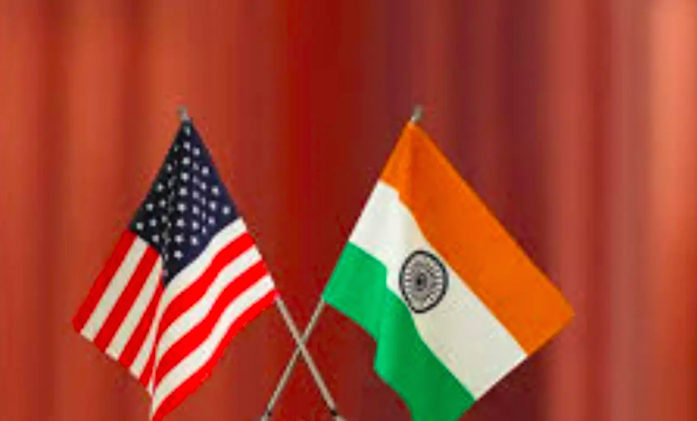
With the clock running down to an August 1 deadline for fresh U.S. tariffs, a senior Indian delegation from the Commerce and Industry Ministry arrived in Washington, D.C., to hold four days of intense negotiations. The mission: to clinch an interim bilateral trade agreement (BTA) that could redefine India-US economic ties and avert fresh trade barriers.
With markets around the world on tenterhooks and both economies looking for stable, long-term expansion, the success of these negotiations could be a turning point. For India, it’s a matter of getting good terms to help protect domestic industries, while for the U.S., it’s an opportunity to tighten relations with one of the world’s fastest-growing economies.
Structured Start to Strategic Talks
The Indian team, spearheaded in the first instance by middle-ranking officials, has already started agenda-setting with the Americans. The negotiations will pick pace midweek with the arrival of Chief Negotiator and Commerce Ministry Special Secretary Rajesh Aggarwal, who will be in charge of higher-level talks.
This staged movement is a sign of careful planning: to set the foundation on process matters and disputed areas before the top officials intervene for decisions that break through. It also indicates India’s determination to steer the negotiations step by step, rather than making last-minute concessions and losing leverage.
Tariffs on the Table
One of the most pressing issues is the renegotiation of suggested U.S. tariffs. Earlier this year, the Trump administration laid out a 26% tariff on targeted Indian products—a rate that raised alarm in New Delhi. But in a sign of good will, Washington is now said to be willing to peg that rate below 20%, a potential olive branch that could encourage India’s cooperation.
Though this does not eliminate trade friction completely, it marks a move towards negotiating rather than confronting. For India, even modest reductions in tariffs can safeguard billions of export value, especially for industries like textiles, pharmaceuticals, and information technology services.
Agriculture and Automobiles Take Center Stage
Of the issues that are sticking, agriculture and automobiles are proving to be the most difficult areas of negotiation.
The U.S. has long been eager to gain access to India’s dairy and poultry markets. Indian policymakers have been wary, though, citing food safety concerns, religious sensitivities, and the economic effect on small farmers. Demonstrations from Indian dairy cooperatives are already already mounting as word of possible concessions spreads.
On the automotive side, India is resisting high U.S. tariffs on electric cars and parts, and also negotiating lower American duties on Indian-built vehicles. With both countries charging ahead on electric motoring and green energy shifts, coordinating car policies might provide a long-term strategic payoff.
Vision 2030: A $500 Billion Trade Dream
In spite of the tension, both nations are determined to increase bilateral trade. The trade volume as of now is about $191 billion, and the two leaders have pledged together to increase the figure to $500 billion by 2030. To reach the ambitious figure, the two will have to move beyond stopgap agreements and negotiate a long-term, full-range Bilateral Trade Agreement (BTA).
In that regard, Indian authorities have conducted comprehensive consultations with the Office of the U.S. Trade Representative (USTR), seeking to balance issues relating to market access, intellectual property rights, digital trade regulations, and mobility in the services sector.
For American businesses, India’s massive and young consumer market is ever more desirable, particularly in areas such as e-commerce, clean tech, and manufacturing. Indian tech, pharma, and textile companies, on the other hand, see the U.S. as a critical one for scaling internationally.
Political Stakes and Global Relevance
This week’s trade negotiations are not just about commerce—they’re geopolitics as well. With the U.S.-China trade war still simmering and global supply chains in flux, Washington views India as an Asian counterweight to China. At the same time, India is looking to diversify its trade dependencies and establish itself as a global economic power.
The timing is also critical. With American elections looming and India entering budgetary planning season, both countries are under pressure to deliver victory for their domestic constituents. A successful agreement could be a priority area of economic diplomacy and cement the India-U.S. strategic relationship.