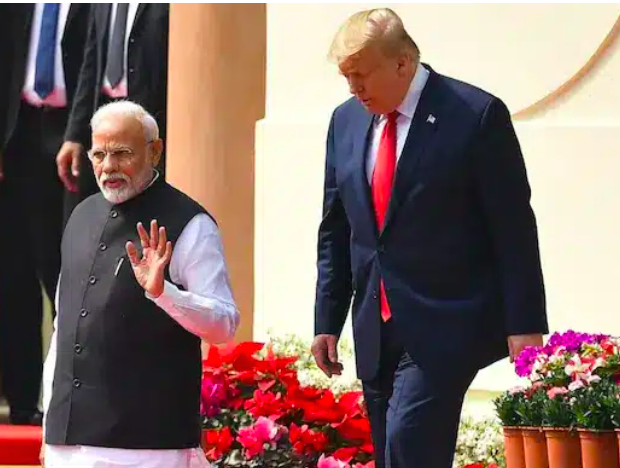
During his speech to the Federation of Indian Associations, Trump noted, “India and the United States have never been closer, but just wait—the next phase will be something very special. Stay tuned, because big developments are coming.” While short on specifics, Trump’s remarks were met with applause from a largely Indian-American audience, signaling the growing electoral importance of the community.
Sources close to the Trump campaign suggest that the “big developments” could reference renewed trade negotiations, enhanced defense cooperation, and streamlined business visa policies, consistent with themes of the previous Trump administration. Trump, who hosted Prime Minister Narendra Modi at the historic “Howdy Modi” event in 2019, has long touted a personal rapport with Indian leaders.
Key Policy Areas Expected to Evolve
Trade and Economic Ties
Under Trump’s first term, US-India trade flirted with historic highs, but persistent irritants—such as tariffs on US agricultural goods and India’s digital tax—led to partial tensions. Early debates around a “mini” trade deal failed to reach finalization before the 2020 election.
Experts believe a second Trump administration might push for “reciprocal” trade, echoing his America First doctrine. Dr. Alyssa Ayres, a senior fellow for India, Pakistan, and South Asia at the Council on Foreign Relations, told Reuters, “Any Trump foreign policy will be highly transactional. If any trade announcement is made, it will likely focus on US export opportunities and tightening enforcement of previous deals.”
Defense and Security Cooperation
India has steadily increased its arms purchases from the US, currently its second-largest defense supplier after Russia. Trump emphasized shared Indo-Pacific security interests during his term, including expanded joint military exercises and co-development initiatives.
“Should Trump return to the White House, expect a strong alignment on China containment strategies and defense technology transfers,” said Lisa Curtis, former senior official at the US National Security Council. New multi-billion dollar defense contracts could be on the table, analysts say.
Visas and Immigration
Indian-American lobbying groups are hopeful that Trump’s “developments” could include a relaxation of H1-B visa restrictions imposed during the pandemic. With an estimated 70% of H1-B recipients being Indian nationals, this remains a key issue for the diaspora.
However, Trump’s known tough stance on immigration has some observers skeptical. Krish O’Mara Vignarajah, a leading immigration advocate, commented to the Associated Press, “History shows Trump’s rhetoric can be supportive, but actual policies often tighten visa rules for Indian professionals.” Watchers are waiting to see if his messaging signals a pivot.
Diaspora and Political Implications
The Indian-American community, numbering over 4.5 million, is among the wealthiest and fastest-growing demographic groups in the US. They hold outsized influence in key swing states such as Texas, Georgia, and Michigan. In recent cycles, both major parties have ramped up outreach, and Trump’s pledges to deepen ties could be aimed at expanding his support base.
“It’s politically astute. Indian-Americans are increasingly active donors and voters, and Trump likely wants to capitalize on that,” said Dr. Milan Vaishnav, Director of the South Asia Program at the Carnegie Endowment for International Peace.
India’s Cautious Optimism
Officials in New Delhi welcomed Trump’s remarks as a sign of continued bipartisan support for US-India ties. A senior Indian government official, speaking on background to The Hindu, said, “While we look forward to more details, our expectation is to work with any future US administration to bolster the comprehensive global strategic partnership.”
However, the official noted that India would prioritize “predictability and stability” after a turbulent period of US policy swings in recent years.