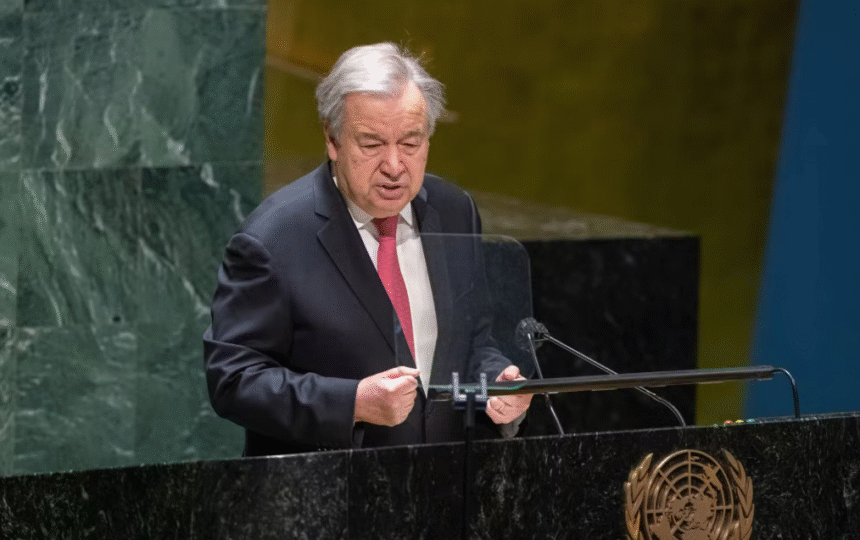
Speaking at a press conference on Thursday, the Deputy Secretary-General emphasized that “the world stands at a defining moment where collective action is no longer optional—it is an obligation.” The statement comes amid a surge of complex, interlocking challenges, including the ongoing war in Ukraine, deteriorating humanitarian situations in Gaza and Sudan, and the worsening effects of climate change witnessed from South Asia to the Americas.
“Millions are caught in the crossfire of conflicts not of their making, and climate shocks are erasing decades of development progress,” the Deputy Secretary-General said. “The decisions we make now will define the future for generations to come.”
Mounting Challenges: Geopolitical Tensions and Humanitarian Emergencies
The statement detailed multiple flashpoints presenting grave concern for UN leaders. Continued hostilities in Ukraine have displaced upwards of 10 million people since 2022 (UNHCR). In Gaza, the humanitarian situation has been described as “catastrophic,” with the latest UN report noting that more than 50% of the population is facing acute food insecurity.
Meanwhile, African nations including Sudan and the Democratic Republic of Congo continue to experience protracted conflict, leading to major refugee outflows and straining regional resources. Elsewhere, the Horn of Africa faces one of the worst droughts in decades, impacting roughly 36 million people.
“We are witnessing a perfect storm of crises—conflict, climate, food insecurity, and displacement—converging on a scale that threatens peace and stability worldwide,” the Deputy Secretary-General added.
Climate Crisis: Accelerating Global Threats
A significant component of the Deputy Secretary-General’s statement highlighted the urgency of the climate crisis. The world’s five hottest years on record have all occurred since 2015, and UN climate scientists warn that global temperatures could cross the 1.5°C threshold in the next decade without rapid emission reductions (IPCC, 2023).
Floods, wildfires, and record-breaking heatwaves have intensified food shortages and disrupted livelihoods for millions. According to the World Food Programme, climate shocks contributed to nearly 100 million people facing acute hunger in 2023 alone.
The Need for Stronger International Cooperation
The Deputy Secretary-General’s address centered on the theme of multilateralism. Citing the need for enhanced funding, diplomatic engagement, and policy innovation, the statement echoed calls by Secretary-General António Guterres for a renewed global social contract.
“Solutions exist, but they require everyone—governments, civil society, the private sector—to step up together. No nation can solve these crises alone,” the Deputy Secretary-General asserted.
Experts note that international coordination is essential to overcoming current gridlock in global institutions. Dr. Helen Parker, a senior policy fellow at the Brookings Institution, told Reuters: “Collective action is needed now more than ever. The challenges ahead surpass the capacity of any single government or organization.”
Funding Gaps and the Role of Development Aid
Another key message focused on severe shortfalls in humanitarian and development aid. According to the UN’s latest humanitarian appeal, less than 40% of the $54 billion required for global relief operations in 2024 has been funded as of June. The Deputy Secretary-General appealed directly to donor governments, warning of the consequences of inaction.
“If we fail to act swiftly and decisively, further instability, suffering, and mass displacement are not just possible but probable,” the statement read.
International Responses and Diverging Perspectives
While the Deputy Secretary-General’s remarks were broadly welcomed by humanitarian organizations, some representatives of member states emphasized differing priorities. Government officials from several major economies expressed concerns about “aid fatigue” and domestic political pressures.
Still, the consensus among many UN member nations is that today’s crises are “borderless” and demand urgent, coordinated responses.
Looking Ahead: Upcoming Global Summits
The statement serves as a prelude to high-level meetings this autumn, including the annual UN General Assembly and the Summit of the Future, which aim to generate political momentum for multilateral solutions. Observers say the coming months will be critical for determining whether world leaders can translate rhetoric into action.