Asian stocks retreated on Friday, ending their longest winning streak since January. With investors mulling changing clues on US interest rates, sentiment in major markets was mixed. While Wall Street maintained its record-breaking run, spurred by technology giants, Asian markets lost steam with escalating caution. The move reflects the confusing interplay between world economic indicators, central bank policy cues, and geopolitical events that continue to drive market momentum.
Asian Markets Take Pause on Momentum
Following some consecutive sessions of gains, the principal Asian stock indexes fell on Friday. The Tokyo Nikkei 225 declined by 0.6% to close at 41,570.24, spurred by nervousness regarding weakening industrial production and a higher yen. Hong Kong’s Hang Seng Index fell by 0.7%, closing at 25,487.95, as China’s tech stocks continued to battle regulatory and earnings-related pressures.
The Shanghai Composite Index also slipped 0.2% to 3,597.77, a modest retreat with the lukewarm export data and softening consumer demand. Interestingly, South Korea’s KOSPI defied the trend with a modest increase, supported by chipmakers and exporters that gain from the depreciating won.
These losses capped a strong bull run in Asian equities, which had been driven by confidence in softening inflation, robust earnings, and strengthening trade flows earlier during July.
Wall Street Soars: S&P 500 Hits 10th Record in July
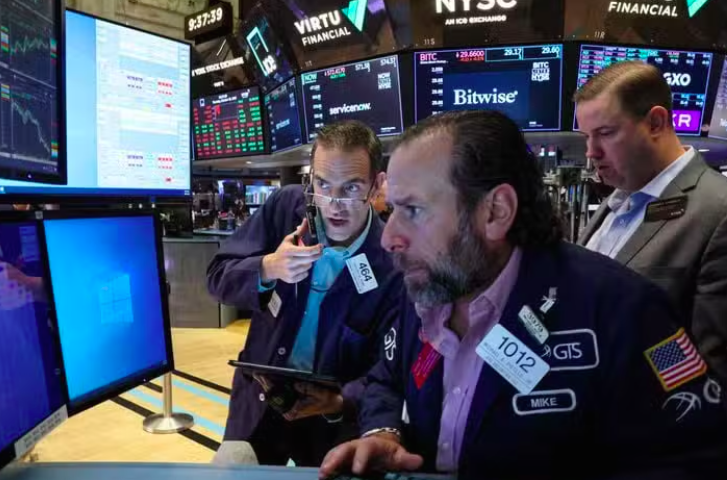
As Asia cooled down, US stock markets remained hot. The S&P 500 closed at 6,363.39 on Thursday, up 0.07% and marking its 10th record high in 19 trading sessions. The index’s steady strength is due in large part to the performance of tech giants Alphabet and Nvidia, which continue to surpass analyst estimates.
The Nasdaq Composite also edged higher by 0.18% to finish at 21,057.96, and the Dow Jones Industrial Average dropped 0.70% to settle at 44,694.09. The disconnect is indicative of wider sectoral trends, as high-growth and tech-oriented names perform better than more cyclical or industrial names.
Fed Rate Cut Hopes Dim as Jobless Claims Drop
One of the most important factors dampening investor sentiment worldwide is the US interest rate outlook. The US labor market data this week indicated jobless claims falling for a sixth consecutive week, a sign of sustained job strength. Traders, therefore, are reducing bets for aggressive Federal Reserve rate cutting.
Futures markets currently indicate an expectation that the Fed could make less than two rate reductions for the remainder of 2025—lowering previous estimates of three or four cuts. This revision has contributed to heightened volatility and sector-specific movements as investors reprice growth opportunities under potentially more restrictive monetary policy.
Tech Sector Still the Bright Spot
Even with rate uncertainty, the technology sector remains the anchor for world equity markets. Alphabet Inc.’s strong earnings report pushed its shares up, confirming investor optimism on ad rebound and growth driven by artificial intelligence. Nvidia, the market leader in AI chips, reached new price highs, boosting the overall market.
In addition, Intel Corp. provided an unexpected lift at the start of Friday by releasing higher-than-forecast revenue guidance, propelling US equity futures. The chipmaker’s positive forecast neutralized fears of a cyclical decline in semiconductors and indicated continued enterprise spending on digital infrastructure.
Nevertheless, not all analysts believe in unbroken gains. Major trading companies such as Goldman Sachs and Citadel Securities are encouraging clients to take hedging into consideration, cautioning that existing valuations are likely to be stretched and at risk of macroeconomic shocks.
Geopolitics in Focus: US-EU Trade Talks and Yen Strength
Bucking earnings and the central banks, geopolitical events are beginning to steal the limelight. With the United States and the European Union at the eleventh hour in talks to prevent another round of tariffs, investor anxiety is running high. A deadline later this week has markets in an over-the-top state of alert, as the absence of a deal may usher in another bout of trade disruptions.
Meanwhile, Japan’s recent free trade agreement with America has brought some relief to local investor worries, providing temporary respite. But the appreciating Japanese yen is causing headwinds for export-oriented industries, sending Tokyo’s stock index down even as overall optimism is boosted.
Currency Markets and Policy Stability
The US currency continued to rise this week, an indication of faith in the American economy and a rebalancing of international capital flows due to Fed policy cues. The stronger dollar is bearing down on emerging market currencies such as the Chinese yuan and Indian rupee, creating additional nuance for international investors.
In a significant political news, former President Donald Trump, who is expected to play an important role in future elections, said he had “no reason” to remove Federal Reserve Chair Jerome Powell. The remark was read as a sign of institutional continuity that markets usually greet, especially when there is monetary rebalancing.
As global markets explore the challenging landscape of monetary policy, technology innovation, and global diplomacy, investors are confronted with a space characterized by opportunity and risk alike. Asian equities might have paused, but their longer-term direction is tied to wider macroeconomic trends and earnings strength.
With earnings season heating up and geopolitical news making headlines, the next few weeks may be pivotal in deciding whether the ongoing rally—headed by technology and backed by steady economic fundamentals—can hold up against growing policy uncertainty.
For the time being, the difference between Asia’s tentative retreat and the US market’s persistent rise underscores a world in transition, with investor sentiment being continually re-priced in real time.