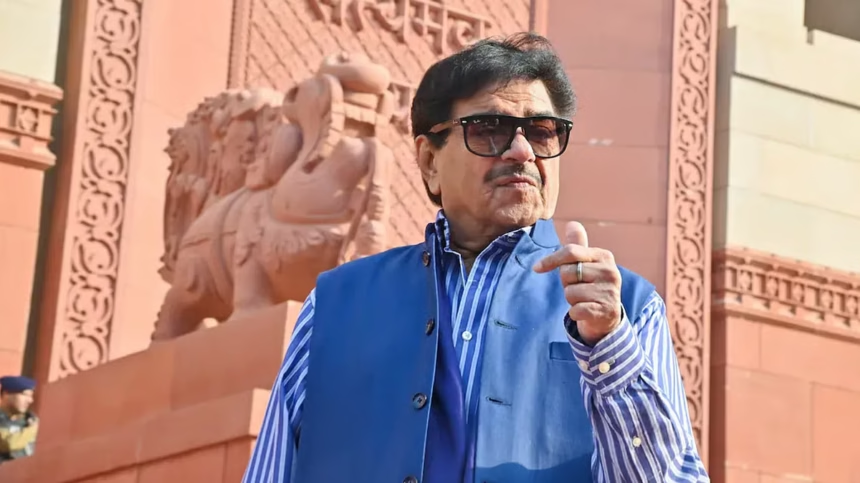
Veteran actor Shatrughan Sinha, whose iconic dialogue “Khamosh” still echoes in the minds of Bollywood fans, has scored a significant legal victory. The Bombay High Court has ruled that the signature dialogue is exclusively associated with his persona and cannot be used without his permission.
In an important interim order, the court also directed websites and social media platforms to remove unauthorised content using his name, image, voice, and other personal attributes. The decision comes as a strong message about protecting celebrity personality rights in the digital age.
The order was passed by Justice Sharmila Deshmukh on February 16, with the detailed copy made available on February 21. The court observed that the expression “Khamosh,” delivered in Sinha’s unique style in one of his films, is exclusively linked to his identity.
According to the court, the way Sinha says “Khamosh” is not just a dialogue — it is part of his personality. The judge noted that the actor has a distinct style of dialogue delivery, and this particular word has become inseparable from his public image.
The High Court was of the prima facie opinion that Sinha’s name, likeness, image, and persona deserve legal protection. It found that the material presented by the actor showed infringement of his personality and publicity rights, as well as a violation of privacy.
Immediate Take-Down Orders Issued
The court did not stop at recognising his rights. It issued clear directions:
- All websites and social media platforms must take down unauthorised content using Sinha’s name, image, or dialogue.
- Future uploading of such content without his consent is prohibited.
- The case has been listed for further hearing on March 30.
The petition was filed by Sinha through Advocate Hiren Kamod. He sought a permanent injunction against the misuse of his identity, including his famous punchline “Khamosh,” which means silence in Hindi.
Why “Khamosh” Matters So Much
For many movie lovers, Shatrughan Sinha and “Khamosh” go hand in hand. The dialogue became a pop culture phenomenon and a defining feature of his screen presence.
A Style That Became a Signature
In Bollywood, many actors are remembered for their unique dialogue delivery. But in Sinha’s case, “Khamosh” became more than just a word. It turned into a brand in itself.
The court acknowledged this uniqueness. It recognised that Sinha’s distinct manner of saying the word gave it a special identity linked directly to him.
This recognition is important because it establishes that personality is not limited to a face or a name. It includes voice, style, expressions, and even specific words when they are strongly associated with a person.
Understanding Personality Rights
What Are Personality Rights?
Personality rights, also known as publicity rights, give individuals control over the commercial use of their identity. This includes:
- Name
- Image
- Voice
- Signature style
- Distinctive expressions
For celebrities, these rights are crucial. Their identity often carries commercial value, and unauthorised use can lead to financial loss and reputational harm.
Why the Issue Is Growing in the Digital Era
The High Court observed that personality rights have gained importance because of the rise of digital platforms. With social media, artificial intelligence, and content creation tools, it has become easier than ever to create and circulate content using someone’s likeness or voice.
The court also mentioned digital forgeries and AI-generated content as growing concerns. These technologies can replicate voices and images, making it difficult to distinguish real from fake.
In such a scenario, legal protection becomes essential.
The Digital Misuse Problem
In recent years, many celebrities have faced issues related to:
- Deepfake videos
- Edited clips using their dialogue
- AI-generated voice imitations
- Fake endorsements
Such content often spreads quickly online, sometimes for commercial gain.
Sinha’s petition highlighted the misuse of his name, image, and famous dialogue in online content. The court found enough evidence to grant interim relief.
This case reflects a broader trend: celebrities are increasingly turning to courts to protect their identity in the digital world.
A Strong Message for Content Creators
The High Court’s order sends a clear signal to content creators and digital platforms.
Using a celebrity’s identity without permission — even something as seemingly simple as a catchphrase — can lead to legal consequences.
This is particularly important in an age where memes, reels, and edited clips are widely shared. While many creators may see such usage as harmless fun, the legal implications can be serious if it infringes on personality rights.
Why This Victory Is Significant for Bollywood
Shatrughan Sinha’s legal win could have wider implications for the film industry.
Setting a Precedent
By recognising that a dialogue like “Khamosh” is exclusively associated with an actor’s persona, the court has strengthened the scope of personality rights.
This could encourage other celebrities to take similar action if their identity is misused online.
Protecting Artistic Identity
An actor’s dialogue delivery is part of their craft. When a particular word or style becomes iconic, it represents years of hard work and brand building.
This ruling acknowledges that artistic expression and personality are assets worthy of protection.
Shatrughan Sinha: More Than Just a Dialogue
While “Khamosh” may be his most famous punchline, Shatrughan Sinha has had a long and successful career in Indian cinema. Known for his powerful voice and commanding screen presence, he carved out a unique space in Bollywood.
Over the years, he became one of the most recognisable faces in Hindi films, later transitioning into politics as well.
The High Court’s order reinforces the idea that his identity — built over decades — cannot be casually used for digital content without his consent.
The Road Ahead
The case will be heard again on March 30. For now, the interim relief ensures that unauthorised content must be taken down.
As technology continues to evolve, legal systems are adapting to address new challenges. The Bombay High Court’s order reflects this shift.
It recognises that in the digital era, personality is property — and that property deserves protection.
Shatrughan Sinha’s iconic “Khamosh” has entertained audiences for decades. Now, it has also become the centre of an important legal development.
The Bombay High Court’s ruling makes it clear that a celebrity’s name, image, voice, and signature style cannot be exploited without permission. In doing so, it has strengthened the framework around personality rights in India.
For fans, “Khamosh” will always be a memorable dialogue. But legally speaking, it now stands as something more — a protected part of Shatrughan Sinha’s identity.