Introduction:
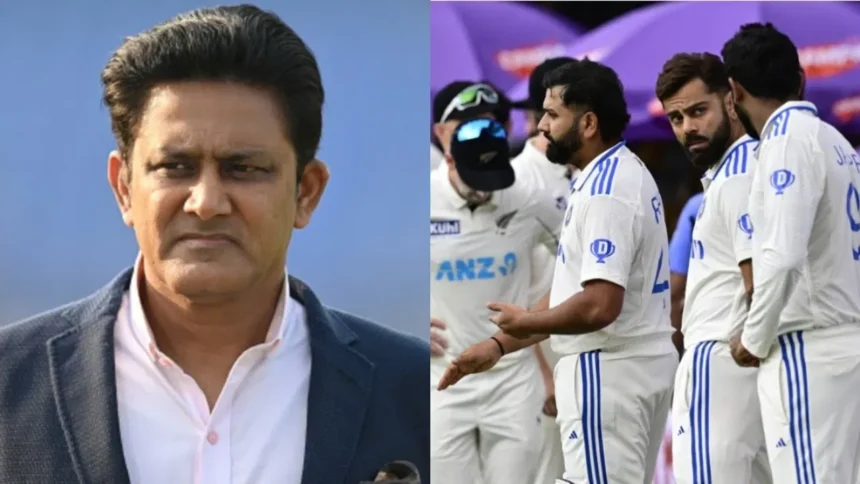
As Team India prepares for the high-stakes Border-Gavaskar Trophy against Australia, legendary spinner Anil Kumble has voiced serious concerns over a decision made by the Board of Control for Cricket in India (BCCI). After India’s shocking 3-0 Test series loss to New Zealand, Kumble is particularly upset by the BCCI’s choice to cancel the team’s scheduled practice match in Perth, just days before the series begins on November 22. With India’s World Test Championship (WTC) hopes on the line, Kumble believes the team is missing a golden opportunity for crucial preparation.
Here’s why Kumble thinks the decision could hurt India’s chances in the upcoming series.
BCCI’s Decision to Cancel Practice Match Raises Eyebrows
The cancellation of the planned practice match in Perth has left many, including Kumble, questioning the preparation strategy ahead of one of India’s toughest overseas challenges. In an appearance on JioCinema, Kumble didn’t hold back, calling the move a “blunder” that could cost India in the upcoming Border-Gavaskar Trophy.
The series against Australia is not just another Test series—it’s crucial for India’s chances in the World Test Championship. To stay in contention for the WTC final, India needs to win the series by at least 4-0, making every bit of preparation even more important. Kumble, a former Indian captain and coach, strongly believes that a practice match against India A would have been the perfect way to acclimatize to Australian conditions, especially for players making their first tour Down Under.
“I’m a bit surprised that India doesn’t have a practice match going into the first Test,” Kumble said. “That would have been an ideal preparation.”
Why Practice Matches Are Crucial for Overseas Tours
Kumble’s criticism centers on one key point: the difference between net practice and a real match situation. While net sessions are useful, they can’t replicate the intensity of a live match against quality opposition, especially on foreign soil. “Going out in the middle and facing a few bowlers in the match is totally different,” Kumble added, highlighting that players need more than just technical practice—they need game-time experience in the middle.
In previous tours, practice matches have allowed Indian players to adjust to the local conditions, whether it’s the bouncy Australian pitches or the swing-friendly conditions in England. For players who are unfamiliar with Australia’s fast, bouncy tracks, a practice match would have been the perfect opportunity to test their skills in a game scenario, fine-tune their techniques, and adapt to the local conditions.
Without this experience, players risk stepping into the first Test match without being fully prepared for the challenges that await them, particularly against Australia’s world-class bowling attack.
Rohit Sharma’s Response: Why No Practice Match?
While Kumble is vocal about the missed opportunity, Indian captain Rohit Sharma defended the decision, explaining the team’s alternative preparation strategy. Sharma said that instead of a traditional practice match, the team will undergo intensive match simulations at the WACA ground in Perth.
According to Sharma, the team management believes match simulations will give players more time in the middle, allowing them to get used to the conditions without the constraints of a full-fledged game. “We are traveling with a squad of 19 players, and only three days were allotted to us. I don’t know how much workload we can get in those three days,” Sharma explained. He further added that in match simulations, players can be rotated in and out of the middle more efficiently, maximizing the training potential within a limited time frame.
While this approach certainly has its merits, Kumble believes it’s not enough. In his opinion, facing Australia’s first-class bowlers in a real match would be more beneficial than a controlled simulation.
India’s Loss to New Zealand: A Wake-Up Call
India’s recent 3-0 defeat at home against New Zealand was a wake-up call for the team and raised questions about their readiness for the upcoming series. The loss ended India’s 12-year undefeated streak on home soil, and it exposed several weaknesses, particularly in the batting department, where players struggled under pressure.
As India heads to Australia, they will need to address these issues quickly. The Border-Gavaskar Trophy is not only about competing for the series but also about recovering from the New Zealand debacle and re-establishing confidence. The team must adapt to the fast, bouncy conditions of Australia, and this requires more than just theoretical knowledge—it demands practical exposure, something a practice match would have provided.
KL Rahul and Dhruv Jurel’s Role in Preparing for the Series
While most of the Indian squad is missing out on the practice match, two players—KL Rahul and Dhruv Jurel—are heading to Australia early to gain some much-needed game-time. Both players will join the India A squad for a four-day match against Australia A at the Melbourne Cricket Ground (MCG).
For Rahul, who has had limited appearances in recent matches, this game will be crucial for regaining form and getting acclimatized to the Australian conditions. Jurel, who is yet to make his Test debut, will benefit from the exposure against quality bowlers in a match situation.
Kumble believes that while Rahul and Jurel’s participation is valuable, the entire squad could have benefitted from a similar opportunity. Facing Australia’s first-class bowlers in a proper match would have given the entire team the exposure they need before the first Test.
The Way Forward: Can India Overcome These Challenges?
As the Border-Gavaskar Trophy draws closer, the pressure is mounting on the Indian team. While the cancellation of the practice match may seem like a minor issue to some, it could have long-term implications for India’s performance in the series. With Australia’s fiery bowling attack awaiting them, India needs to be fully prepared to face the challenges that come with playing on foreign soil.
Kumble’s concerns are valid, and with the added pressure of the World Test Championship hanging over the series, every bit of preparation counts. Whether the team can make up for the lost opportunity remains to be seen, but one thing is clear: the next few weeks will be crucial for Team India.
Conclusion: Will India Regret Missing the Practice Match?
As the countdown to the Border-Gavaskar Trophy continues, Anil Kumble’s critique of the BCCI’s decision is one that shouldn’t be taken lightly. India’s preparation for the series against Australia could make or break their hopes of staying in the World Test Championship race. While Rohit Sharma and the team management have their strategy in place, Kumble’s call for a practice match is a timely reminder that real match situations cannot be simulated.
With both teams set to clash in Perth on November 22, India will have to make the most of the next few days to ensure they’re fully prepared for the toughest challenge in international cricket.