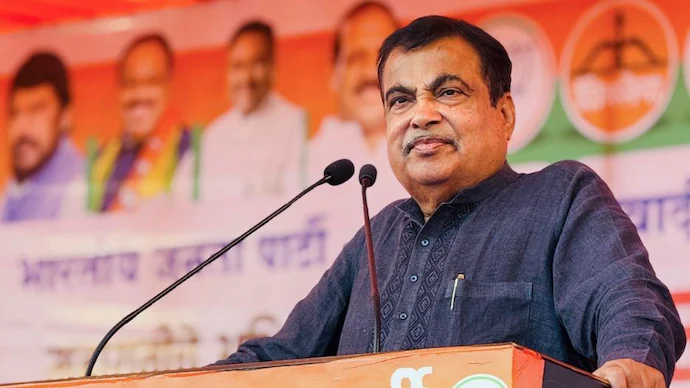
India’s ambition to be a USD 5 trillion economy is not merely a statistical aspiration—it is a roadmap that demands strategic investments, strong policy reforms, and a balanced strategy towards growth. Underlying this vision is a powerful thrust to develop world-class infrastructure and eliminate logistical inefficiencies. Union Road Transport and Highways Minister Nitin Gadkari, one of the chief drivers of these aspirations, recently highlighted the crucial role that infrastructure and logistics can play in the economic growth of India while also bringing into focus the immediate environmental challenges.
Constructing the Pillars of a $5 Trillion Economy
As per Gadkari, for India to become a $5 trillion economy, the nation will have to invest heavily in infrastructure across transport, power, water, and communications sectors. “World-class infrastructure is the only way if we want to boost productivity, encourage investment, and enhance the quality of life,” he stated. This vision sits well with the overall national agenda of enhancing ease of doing business, enhancing exports, and ensuring quicker movement of goods and people.
One of the biggest challenges in this process has been India’s logistics cost, which stands at 14 to 16 per cent of GDP. China does this for only 8 per cent, while America and the EU keep floating between 12 per cent. Gadkari announced that the government is working towards taking India’s logistics cost to a single digit. “By January next year, logistics cost will be reduced to 9 per cent from 16 per cent,” he promised. If successful, this may be a game-changer for Indian exports and manufacturing, which will become much more competitive on the world market.
The Pollution Challenge: An Expensive Externality
While infrastructure building continues to be the focus area, Gadkari did not hesitate to take up the challenge of the environmental impact of uncontrolled urbanization and auto emissions. His blunt observations about Delhi’s spiraling pollution rates have set environmental degradation in Indian cities back to the center stage of public discussion. “If you live in Delhi for three days, you will contract some infection,” he cautioned, drawing on medical research that suggests possible 10-year loss of life expectancy due to long-term exposure to the air in the capital.
This isn’t the first time Gadkari has expressed concern over Delhi’s air quality. Last December, he mentioned how he often fell ill after visiting the city and preferred avoiding it altogether due to pollution. “I don’t feel like coming to Delhi anymore,” he had said. His recent reiteration further underlines the urgency for a holistic solution.
Gadkari highlighted that Delhi and Mumbai are currently in the “red zone” as far as pollution goes. “We have not handled the environmental challenge seriously. Ecology and ethics should be given as much importance as economy and infrastructure,” he added at an event in Mumbai.
Infrastructure as a Tool for Environmental Healing
Even while emphasizing the green crisis, Gadkari further implied that if done properly, infrastructure development need not be part of the solution but also can be. He emphasized that good road networks and minimizing traffic congestion can go a long way to cut emissions.
“Traffic congestion is one of the biggest causes of pollution. Improved roads, quicker transport, and de-bottlenecking will cut fuel usage and emissions,” he added. Gadkari is also a staunch supporter of alternative fuels and has been insisting on phasing out petrol and diesel-powered transport. He highlighted that India imports close to Rs 22 lakh crore worth of fossil fuels every year, much of which goes towards vehicular pollution.
“Let’s save that Rs 22 lakh crore and rather divert Rs 10-12 lakh crore in the pockets of farmers through encouragement of biofuels, ethanol, and green substitutes. I am favoring alternative fuels as a crusader,” he said. The policy also deals with pollution, as well as increase rural incomes, through providing an added market to farmers’ products for usage in making biofuel.
The Way Forward: Balancing Growth with Sustainability
India’s road to a $5 trillion economy is both promising and complex. While infrastructure and reduced logistics costs are non-negotiable pillars of this journey, the environmental red flags cannot be ignored. Gadkari’s statements highlight a crucial inflection point for India—one where the country must align its economic ambitions with its environmental responsibilities.
The government’s commitment to reducing logistics costs, creating greener infrastructure, and moving towards cleaner fuels is in the right direction. These initiatives, however, need to be accompanied by rigorous implementation of environmental standards, increased investment in public transport, and universal coverage of clean energy technologies.
In addition, urban planning must change with a long-term perspective that incorporates sustainability into the very fabric of economic planning. Public consciousness, corporate responsibility, and cooperative governance among the center, states, and local governments will also be instrumental in crafting a cleaner, more efficient, and economically thriving India.
Finally, the road to a $5 trillion economy has to be paved with highways and industry corridors but also shaded by green projects and clean air. Gadkari succinctly put it when he said, “Ecology and ethics should be treated with the same priority as economy and infrastructure.” The message is simple—India needs to grow, but not at the expense of its people’s health or the future of the earth.