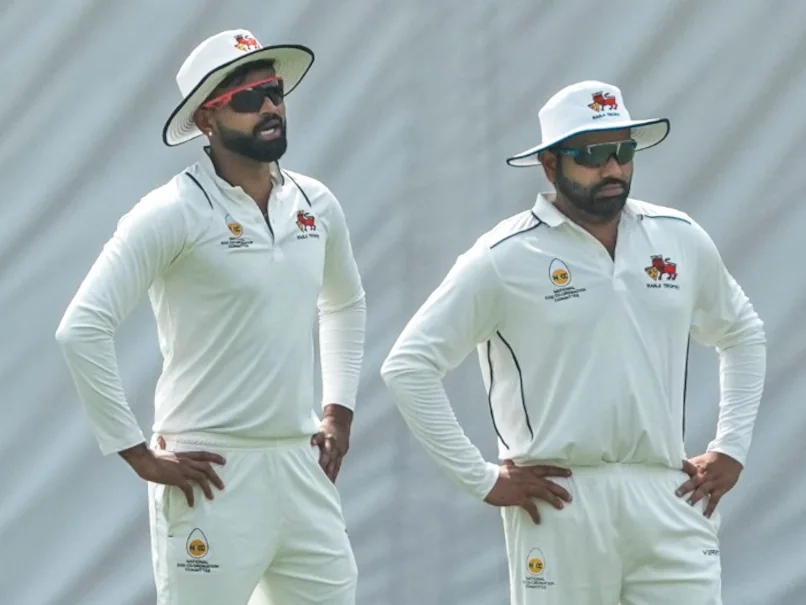
The recent Ranji Trophy rounds saw a major shift in Indian cricket. Several big names of the Indian team – Virat Kohli, Rohit Sharma, Rishabh Pant, KL Rahul, and Ravindra Jadeja- came back to domestic cricket owing to the mandate of the BCCI. Yet, except Jadeja, all these players have not been too impactful. Return of these cricketers raised a debate. Mumbai’s chief selector Sanjay Patil complained that this could be a minus for the up-and-coming talent.
The Return of Star Players
The BCCI has made domestic cricket compulsory, and players who were absent from the Ranji Trophy due to international commitments had to participate. Their presence was expected to enhance the quality of the tournament, but their performances did not meet expectations. Mumbai, with stars like Rohit Sharma and Yashasvi Jaiswal, suffered an unexpected defeat against Jammu & Kashmir.
Mumbai’s upcoming quarter-final against Haryana will see the inclusion of Suryakumar Yadav and Shivam Dube, two established cricketers who have been asked to deliver significant performances to ensure Mumbai’s success. Patil’s remarks underline the concern that accommodating international players could hinder the growth of emerging talents.
Sanjay Patil’s Perspective
Before the quarter-final, Mumbai selector Sanjay Patil felt that performance, not mere participation, was of paramount importance. He said, “Mumbai’s defeat at the hands of J&K, where they had six international players, is one of the worst defeats in recent times. Yadav and Dube have to contribute for the team well for the team, which would make Mumbai’s legacy of competitive cricket continue.
One area where Patil was very stern was the poor opportunities for youth cricketers. Players such as opener Ayush Mhatre had to be benched to make room for Indian cricketers. According to Patil, such a move negates the old Mumbai tradition of developing young cricketing talent while encouraging a results-oriented culture.

Experience vs. Young Talent is the Debate:
The debate has always surrounded this issue of integrating international players into domestic cricket without sidelining the young prospects. While, on one hand, the presence of top players increases the level of competition and enables young players to learn from experienced professionals, this prevents real potential from more understated cricketers from getting good opportunities.
Mumbai’s team for the quarter-final consists of a mix of veterans and new faces. The team will be led by captain Ajinkya Rahane with Angkrish Raghuvanshi and Amogh Bhatkal as some of the new faces while Suryakumar Yadav and Shardul Thakur are some of the experienced ones. The seniors will have to prove their selection right with performances that make a difference.
The Future of Mumbai Cricket
The team is looking to gear up for the knockout match against Haryana. The experience of Yadav and Dube will be important, but opportunities must be provided to young talent. It would be interesting to see how experience and youth would balance each other in Mumbai’s success.
The debate around Rohit Sharma’s inclusion in the Ranji Trophy is reflective of the much larger issue related to player management in Indian cricket. Ensuring a pathway for young cricketers while trying to integrate international stars into domestic cricket will continue to be the biggest challenge that selectors and team management face.
FAQs
Why did BCCI make Ranji Trophy participation compulsory for Indian players?
The BCCI made it compulsory for the Indian players to participate in Ranji Trophy so that domestic cricket is strengthened and Indian players remain in touch with red-ball cricket. This will also help to bridge the gap between international and domestic formats.
Why did Mumbai’s selector criticize Rohit Sharma’s return?
Mumbai’s chief selector Sanjay Patil expressed concern that accommodating senior players in the team led to young talents missing out on opportunities. He stressed that international players should contribute significantly rather than just participate.
How was Mumbai in their performance, especially with big stars in their lineup?
Rohit Sharma and Yashasvi Jaiswal, for instance, as well as the rest of the Indian internationals, but they lost surprisingly to Jammu & Kashmir and have been considered not to affect much in general team performance.
Who are the important players for Mumbai, ahead of the quarter final?
Experienced players form the backbone of Mumbai, with names like Ajinkya Rahane, Suryakumar Yadav, and Shardul Thakur along with young guns such as Angkrish Raghuvanshi and Amogh Bhatkal.
What is the major concern with the return of international players to domestic cricket?
The main crux is that the young cricketers lost opportunities to prove themselves while older players took places in the playing XI. It is difficult to strike a delicate balance between providing opportunities to emerging talent and getting the best out of experienced players.
The return of Indian top cricketers to Ranji Trophy has been a huge move, but it has also generated debates over the development of young players. The presence of stars like Rohit Sharma and Suryakumar Yadav does add value to domestic cricket, but their performances must justify their inclusion. The quarter-final will be a test for the experienced players of Mumbai, as well as the young talents trying to make a mark.