PM Modi Vows Revenge Will Pursue Terrorists to the Ends of the Earth
Homes of Lashkar Terrorists Behind Pahalgam Attack Destroyed in Explosions
Massive Action in Kashmir as India Cracks Down After Deadly Tourist Attack That Killed 26
Terrorists’ Homes Blown Up in J&K Night Operation
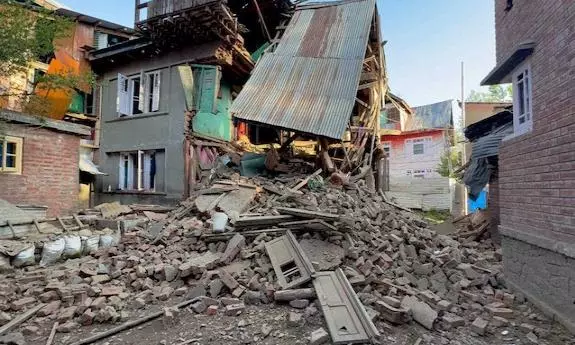
In a powerful retaliation to the deadly Pahalgam terror attack that killed 26 people, the homes of two Lashkar-e-Taiba (LeT) terrorists were destroyed in separate explosions in Jammu and Kashmir on Thursday night.
The two terrorists – Adil Hussain Thoker of Anantnag and Asif Sheikh of Pulwama – were believed to be key conspirators in the April 22 massacre in Baisaran, Pahalgam, a popular tourist destination dubbed “Mini Switzerland” for its scenic beauty.
Explosives Found in Terrorists’ Homes
Sources confirmed that explosives were stored inside both homes, which led to the powerful blasts. It is not yet confirmed whether the explosions were triggered deliberately or accidentally, but both properties were completely destroyed.
Who Are the Terrorists?
Adil Hussain Thoker
-
Resident of Anantnag
-
Identified as one of the main attackers in the Pahalgam incident
-
His sketch was recently released by Anantnag Police
Asif Sheikh
-
Resident of Pulwama
-
Believed to have played a key role in planning the massacre
Both men are linked to the Pakistan-based terror outfit Lashkar-e-Taiba, known for orchestrating deadly attacks in Jammu and Kashmir.
Police Release Sketches of More Suspects
On Thursday, police released sketches of three suspects involved in the Pahalgam attack – Adil Thoker and two Pakistani nationals:
-
Hashim Musa alias Suleman
-
Ali Bhai alias Talha Bhai
The two foreigners are also believed to be LeT operatives, and a reward of ₹20 lakh has been announced for any credible information leading to their capture. Police have appealed to the public to stay vigilant and share any leads via social media or helpline numbers.
About the Pahalgam Attack: 26 Killed in Meadow Massacre
The horrifying attack took place in Baisaran, a meadow in Pahalgam, on Tuesday (April 22). The terrorists opened fire on unarmed civilians and tourists, killing 25 Indian citizens and one Nepali national.
The area is known for its breathtaking Himalayan views, pine forests, and tourist crowds – making it a soft target for terrorists.
This is one of the deadliest terror strikes on civilians in Jammu and Kashmir in recent years.
PM Modi: “We Will Hunt Down Every Terrorist”
In his first public remarks after the attack, Prime Minister Narendra Modi delivered a strong message from Madhubani, Bihar, saying:
“India will identify, track, and punish every terrorist and their backers. We will pursue them to the ends of the earth.”
Modi said the time has come to completely dismantle terrorist networks in Kashmir and send a message that India will not tolerate terrorism on its soil.
“Terrorism will not go unpunished,” he said.
In a direct warning to Pakistan, Modi added:
“The will of 140 crore Indians will break the back of the masters of terror.”
India’s Tough Measures Against Pakistan
In response to the attack and evidence of cross-border links, India has announced severe diplomatic and strategic steps, including:
-
Expulsion of Pakistani military attaches
-
Suspension of the Indus Waters Treaty (signed in 1960)
-
Immediate closure of the Attari land border crossing
These moves signal a major shift in India’s Pakistan policy, aiming to increase pressure on Islamabad to crack down on groups like Lashkar-e-Taiba and Jaish-e-Mohammed.
What Happens Next?
Investigation, International Pressure, and More Raids
-
Indian intelligence agencies are actively tracking more suspects, including foreign handlers.
-
More counter-terrorism raids are expected in South Kashmir in the coming days.
-
New international pressure may mount on Pakistan as India builds its case with proof of LeT’s involvement.
Security has been heightened in tourist zones across Kashmir, and army presence has increased in Anantnag, Pulwama, and nearby districts.
Kashmir Caught Between Beauty and Bloodshed
The Pahalgam attack and the destruction of terrorists’ homes mark another chapter in the decades-long conflict in Kashmir. The tragedy in Baisaran underscores how innocent lives are still at risk, even in peaceful tourist spots.
But India’s swift response, strong political will, and public anger show that the country is ready to turn the tide against terrorism—with force, if necessary.