From Fear to Freedom: Government’s Final Deadline to End Naxal Terror
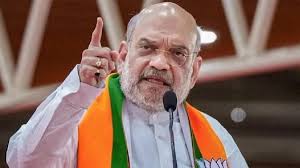
In a resolute declaration, Union Home Minister Amit Shah has set a definitive timeline for eradicating Naxalism from India, aiming for complete elimination by March 2026. This announcement underscores the government’s unwavering commitment to addressing the longstanding Maoist insurgency that has affected various regions of the country.
Amit Shah’s Bold Commitment: A Naxal-Free India by March 2026
During his visit to Chhattisgarh, a state significantly impacted by Naxal activities, Amit Shah emphasized the substantial progress made in countering Maoist insurgencies. He highlighted that security forces have achieved notable successes, with Naxal-related incidents now confined to only a few districts. Shah expressed confidence that, under Prime Minister Narendra Modi’s leadership, India will be completely free from Naxalism before March 31, 2026.
Significant Decline in Naxal Activities: A Statistical Overview
The Home Minister presented compelling statistics to illustrate the decline in Naxal-related incidents:
-
Reduction in Violent Incidents: From 16,463 incidents between 2004 and 2014 to 7,744 incidents from 2014 to 2024, marking a 53% decrease.
-
Decrease in Fatalities: Civilian and security personnel deaths dropped from 6,617 in the earlier decade to significantly lower numbers in recent years.
These figures reflect the effectiveness of the government’s strategies and the dedication of security forces in combating Naxalism.
Appeals for Surrender: Integrating Naxals into the Mainstream
Amit Shah extended an appeal to active Naxals, urging them to surrender and join the mainstream. He assured that the government has formulated a comprehensive rehabilitation policy to facilitate their integration into society. Shah emphasized that those who choose to abandon violence will receive support to lead a dignified life, contributing positively to the nation’s development.
Chhattisgarh’s Role: A Pivotal Front in the Anti-Naxal Campaign
Chhattisgarh has been a focal point in the battle against Naxalism. Shah commended the state’s police force for their bravery and significant achievements in recent operations. He noted that the collaborative efforts between the central and state governments have led to a substantial reduction in Naxal influence, with the problem now limited to a few districts.
Meeting with Former Naxals: Success Stories of Rehabilitation
In a significant move, Amit Shah met with approximately 30 former Naxals from states like Chhattisgarh, Maharashtra, Odisha, Andhra Pradesh, and Telangana. These individuals, who have surrendered and are now contributing to society, shared their experiences. Shah expressed his happiness over their decision to abandon violence and integrate into the mainstream, urging them to encourage others to follow suit.
The Path Forward: Strategies for a Naxal-Free India
The government’s approach to eliminating Naxalism encompasses a multi-faceted strategy:
-
Enhanced Security Operations: Continuing targeted operations to dismantle Naxal networks and ensure the safety of affected regions.
-
Development Initiatives: Investing in infrastructure, education, and healthcare in Naxal-affected areas to address underlying socio-economic issues.
-
Rehabilitation Programs: Implementing policies that facilitate the reintegration of former Naxals into society, providing them with employment opportunities and support.
By addressing both the symptoms and root causes of Naxalism, the government aims to achieve a sustainable resolution to this challenge.
A Unified Effort Towards Peace and Development
Amit Shah’s announcement reflects a decisive and strategic effort to eradicate Naxalism from India by March 2026. The combination of security measures, development programs, and rehabilitation policies demonstrates a comprehensive approach to resolving this issue. The collaboration between central and state governments, along with the active participation of local communities, is crucial in realizing the vision of a peaceful and Naxal-free India.