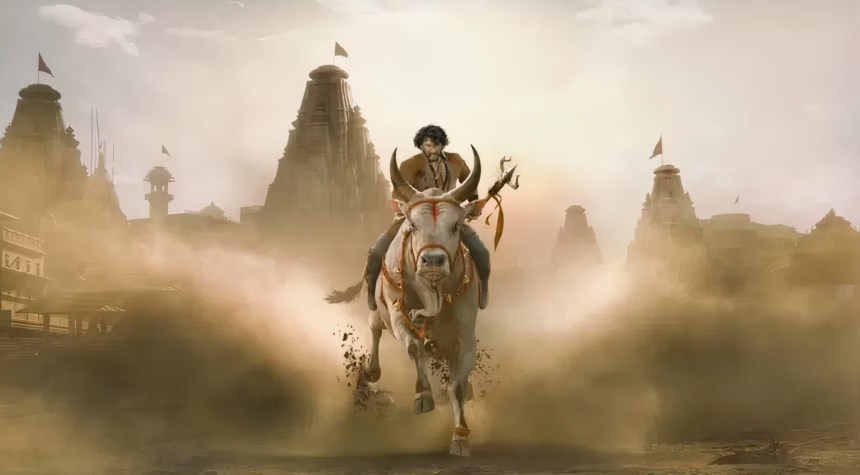
Varanasi Glimpse Triggers AI Debate, Rajamouli Team Pushes Back Strongly
Ever since SS Rajamouli unveiled the first glimpse of his much-anticipated film Varanasi, the internet hasn’t stopped talking about it. The visually rich teaser featuring Mahesh Babu, Priyanka Chopra, and Prithviraj Sukumaran instantly grabbed attention for its scale, detail, and cinematic ambition. But along with admiration came speculation, especially around one question that refuses to die down in modern cinema discussions: was artificial intelligence used to create those visuals?
As conversations around AI and filmmaking grow louder, the Varanasi teaser became a flashpoint. Some viewers praised it as a masterpiece of human artistry, while others wondered if the visuals were simply the result of advanced AI tools. Now, producer Shobu Yarlagadda and director SS Rajamouli have stepped in to firmly shut down those claims.
The Social Media Comment That Sparked a Bigger Debate
A Tweet That Crossed a Line
The controversy began when an X user reacted to Rajamouli’s earlier comments about the effort behind the Varanasi glimpse. The user suggested that by the time the film releases, AI video-generation tools would be so advanced that anyone could recreate the teaser from a laptop using upcoming platforms.
The post argued that AI would soon become the primary tool for visual effects and pre-visualisation, implying that calling something AI-generated should not be seen as an insult. While the comment may have been intended as a futuristic observation, it didn’t sit well with the people who actually worked on the film.
Shobu Yarlagadda’s Blunt Response
Baahubali producer Shobu Yarlagadda responded sharply, making it clear that such comparisons undermine the hard work of real artists. He stated that suggesting the Varanasi glimpse could be recreated by AI was not only inaccurate but deeply disrespectful to the creative professionals involved.
According to him, content generated casually through AI tools would be nowhere close to the craftsmanship seen in the teaser. He emphasized that while AI can support artists, it cannot replace their creativity, intuition, and emotional understanding of storytelling.
AI as a Tool vs AI as a Replacement
Where Shobu Agreed and Where He Drew the Line
Interestingly, Yarlagadda did not dismiss AI entirely. He acknowledged that AI could be extremely useful as a supporting tool, especially in areas like pre-visualisation, faster iterations, and technical assistance. However, he made a clear distinction between AI aiding artists and AI being credited for finished cinematic work.
In his response, he pointed out that the original tweet mixed two very different ideas in one argument. While AI may help speed up certain processes, equating it with the final artistic output of a complex film project was misleading.
Why This Distinction Matters
This debate goes beyond one film. As AI tools become more accessible, there is growing concern within creative industries about credit, authorship, and the value of human effort. For filmmakers like Rajamouli, whose work relies heavily on meticulous world-building, the idea that AI could casually replace months of labour is both inaccurate and dismissive.
SS Rajamouli Explains the Real Work Behind the Glimpse
Weeks of Relentless Effort
In an interview, SS Rajamouli addressed the rumours directly and in detail. He revealed that the process of creating the three-minute Varanasi glimpse began months before its release. Artists started sketching and designing the teaser frame by frame, investing weeks of continuous effort.
According to Rajamouli, the final few weeks were especially intense, with artists working day and night under tight deadlines. Many, he said, barely slept as they focused on perfecting every detail.
Every Frame Was Manually Crafted
Rajamouli explained that each frame of the teaser took nearly 20 hours to render. This wasn’t automated content generated at the push of a button but the result of careful planning, human judgment, and artistic skill. He described the claim that the teaser was AI-generated as a huge insult to the team’s dedication and creative intelligence.
For Rajamouli, the idea that AI could replicate this level of storytelling and emotional depth misses the essence of cinema itself.
Why Varanasi’s Visuals Feel So Real
Human Imagination at the Core
What makes the Varanasi glimpse stand out is not just technical polish but the emotional and thematic coherence of its visuals. The teaser introduces a time-travel narrative set against mythic and historical backdrops, demanding more than technical accuracy. It requires imagination, cultural understanding, and narrative sensitivity, areas where human creators still lead.
The film’s visual language reflects Rajamouli’s signature style, blending spectacle with emotional storytelling, something that cannot be generated through algorithms alone.
Artists as Storytellers, Not Just Technicians
The people behind the teaser weren’t just executing instructions. They were interpreting a vision, solving creative problems, and making aesthetic choices that evolved during the process. This human element, Rajamouli and Yarlagadda argue, is what separates meaningful cinema from generic visuals.
What We Know About Varanasi So Far
A Massive Time-Travel Epic
Varanasi stars Mahesh Babu as Rudhra, Priyanka Chopra as Mandakini, and Prithviraj Sukumaran as Kumbha. The film is described as a time-travel adventure that blends mythology, history, and futuristic storytelling, a genre combination rarely attempted at this scale in Indian cinema.
The teaser alone suggested a story that spans eras and emotions, raising expectations sky-high among fans.
Release Date and Expectations
The film is slated for a theatrical release on April 7, 2027. Given Rajamouli’s track record with Baahubali and RRR, expectations are immense. The AI debate, while controversial, has only added to the buzz surrounding the project.
The Larger Conversation Around AI and Cinema
Fear, Fascination, and the Future
The Varanasi controversy highlights a larger tension in the entertainment industry. While AI promises speed and efficiency, many creators worry about the erosion of human artistry. Filmmakers like Rajamouli are not rejecting technology but are pushing back against the idea that technology alone can replace creative labour.
This balance between innovation and respect for craftsmanship will likely define the next phase of cinema.
Why This Debate Isn’t Going Away
As AI tools continue to evolve, similar debates will surface again and again. But the response from the Varanasi team sends a clear message: technology should serve creativity, not overshadow it.
For now, Rajamouli’s team is focused on what they do best, telling ambitious stories powered by human imagination, sweat, and passion.