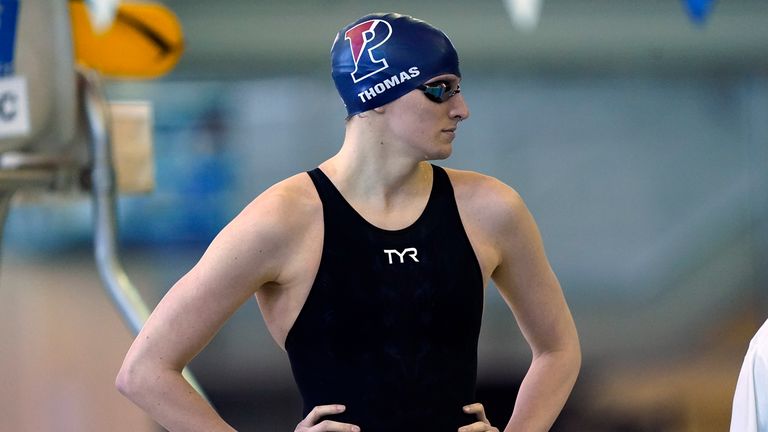
The Court of Arbitration for Sport (CAS) rejected Lia Thomas’s challenge to a rule that prohibits transgender athletes from competing in women’s events, which dealt a blow to Thomas’s hopes of qualifying for the American Olympic squad. This ruling, which was made public shortly before the American swimming team’s Olympic trials, highlights the continuous discussion over fairness and diversity in sports.


When Thomas won the women’s 500-yard freestyle NCAA individual title in 2022, the world took notice. The rules established by World Aquatics, the organization that oversees elite swimming, have caused controversy regarding her eligibility, though. Specifically, it states that athletes who have transitioned from male to female can only participate in women’s divisions if they did so before turning twelve. The foundation of this policy is concerns over the physiological advantages retained from male puberty.
In response to the policy, Thomas filed a challenge in January, arguing that it was discriminatory and contrary to the Olympic Charter’s principles of equality. Despite her efforts, CAS upheld the existing regulations, affirming World Aquatics’ position on maintaining competitive balance and fairness in women’s sports.
World Aquatics, in reaffirming its commitment to inclusivity, has proposed a third “open category” for all sexes and gender identities at future events, aiming to provide a competitive platform while accommodating diverse athletes. This initiative is seen as a step towards fostering a more inclusive environment in aquatic sports, balancing the needs of fairness with the principles of respect and equal opportunity.


The ruling comes amidst a broader societal conversation about the intersection of gender identity and athletic competition. Critics argue that allowing transgender athletes who have undergone male puberty to compete in women’s sports could create disparities in performance, potentially affecting the integrity of competitions. Proponents of inclusivity, however, contend that athletes should be judged based on their affirmed gender identity, advocating for policies that recognize and support transgender participation in sports.


Thomas continues to be a key player in the continuing discussion over transgender rights in sports, despite the fact that he has not yet made a public response to the CAS ruling. Her story serves as a reminder of the difficulties faced by sports organizations in balancing legal, ethical, and scientific concerns while developing regulations that support diversity and justice.
The decision made by CAS comes right before the U.S. Olympic swimming trials, which underscores the wider ramifications of including transgender athletes in high-profile sporting competitions. Even though Thomas is now prohibited from participating in top events by laws, her story has spurred important discussions about the need for gender inclusion in sports governance that takes a nuanced approach.
Looking forward, discussions around transgender athlete policies are likely to continue evolving as sports organizations seek to strike a balance between accommodating diverse identities and maintaining competitive integrity. The CAS ruling represents a pivotal moment in shaping future policies and practices within the realm of international sports, influencing how governing bodies worldwide approach issues of gender identity and athletic participation.
In the end, Lia Thomas’s example serves as a reminder of the value of constant discussion and careful policy formulation when tackling difficult problems at the nexus of identity and athletics. Fairness, respect, and inclusivity are three values that will be crucial in determining how competitive sports are shaped globally in the future as stakeholders work through these obstacles.