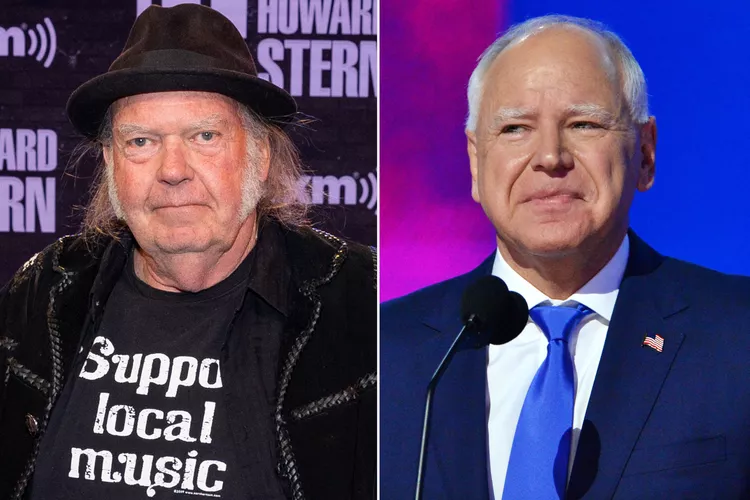
In a surprising turn of events, legendary musician Neil Young has personally approved the use of his iconic song “Rockin’ in the Free World” for Minnesota Governor Tim Walz at the Democratic National Convention (DNC). This decision comes just a few years after Young famously sued former President Donald Trump for using the same song without permission during his 2020 campaign. The move marks a significant moment in the ongoing debate over the use of music in political campaigns, as well as Young’s own stance on how his work is used to represent political messages.
A History of Controversy
Neil Young’s “Rockin’ in the Free World” has long been celebrated as an anthem of social and political commentary, with its lyrics addressing issues such as poverty, environmental destruction, and government neglect. The song has been embraced by many as a call to action, making it a popular choice for political events. However, its use in such contexts has not always been without controversy.
In 2020, Young took legal action against Donald Trump after the song was repeatedly used at Trump’s rallies without the artist’s consent. Young, a vocal critic of Trump, argued that the unauthorized use of his music was misleading and implied an endorsement that he did not give. The lawsuit became a high-profile example of artists taking a stand against the use of their work in political campaigns, particularly when it conflicts with their personal beliefs.
A Change of Tune for the DNC
Fast forward to 2024, and Neil Young has taken a different approach with Governor Tim Walz, a Democrat and fellow advocate for many of the causes Young has championed throughout his career. Walz, who has been a strong supporter of environmental protection, labor rights, and social justice, reached out to Young’s team for permission to use “Rockin’ in the Free World” during his appearance at the DNC.
To the delight of Walz’s campaign, Young gave his personal approval, marking a significant departure from his previous stance with the Trump campaign. In a statement, Young expressed his support for Walz’s values and policies, which align closely with the themes of his song.
“I’ve always believed that music has the power to bring people together and inspire change,” Young said. “Governor Walz embodies the spirit of ‘Rockin’ in the Free World,’ and I’m proud to have my song associated with his message of hope, progress, and justice.”

The Impact of Young’s Decision
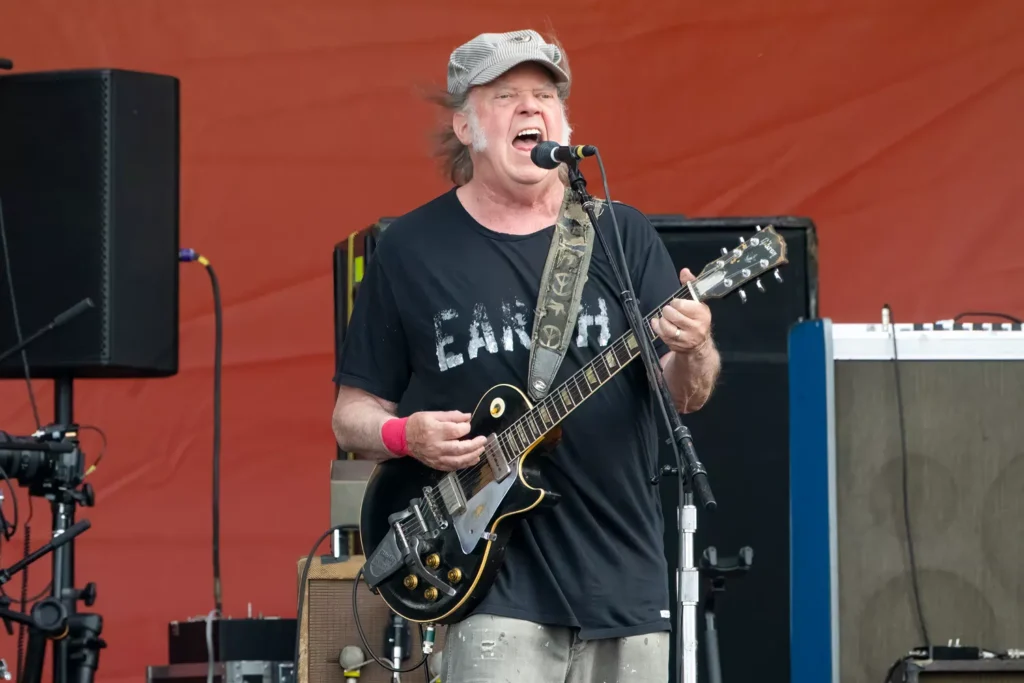
Neil Young’s decision to allow “Rockin’ in the Free World” to be used at the DNC underscores the importance of artists having control over how their work is used, especially in the political arena. By approving Walz’s request, Young is making a statement about the type of leadership and values he believes are worth endorsing.
For Tim Walz, the use of such an iconic song at the DNC is a powerful endorsement that resonates with voters who share Young’s passion for social justice and environmental activism. The song’s message, combined with Young’s public approval, adds weight to Walz’s campaign, highlighting his commitment to the issues that matter most to his constituents.
A Larger Conversation on Music and Politics
The situation also brings to light the broader conversation about the intersection of music and politics. Over the years, many artists have spoken out against the unauthorized use of their work in political campaigns, particularly when it conflicts with their personal beliefs. Young’s legal battle with Trump was just one of many instances where musicians have asserted their rights to control the context in which their music is used.
Young’s approval of “Rockin’ in the Free World” for Walz, however, demonstrates that when there is alignment between an artist’s values and a politician’s message, the use of music can be a powerful tool for advocacy and change. It also shows the importance of obtaining proper authorization and respecting the wishes of artists, who often view their work as an extension of their identity and beliefs.
Looking Forward
As the 2024 election season continues, Neil Young’s decision to support Tim Walz with the use of “Rockin’ in the Free World” will likely be remembered as a key moment in the campaign. It highlights the role that music can play in shaping political narratives and the importance of respecting artists’ rights in the process.
For Young, this approval is more than just a legal matter; it’s a reflection of his lifelong commitment to activism and the belief that music should be used to inspire positive change. For Walz, it’s an endorsement that adds a powerful layer of meaning to his campaign, helping to amplify his message as he seeks to make a difference on the national stage.