Africa boasts more than 30,500 kilometers of coastline across over 38 coastal nations, rich in biodiversity and home to critical marine ecosystems. The region is crucial for global food security, economic development, and climate resilience—but is increasingly vulnerable to threats such as illegal fishing, plastic pollution, overexploitation, and rising sea levels.
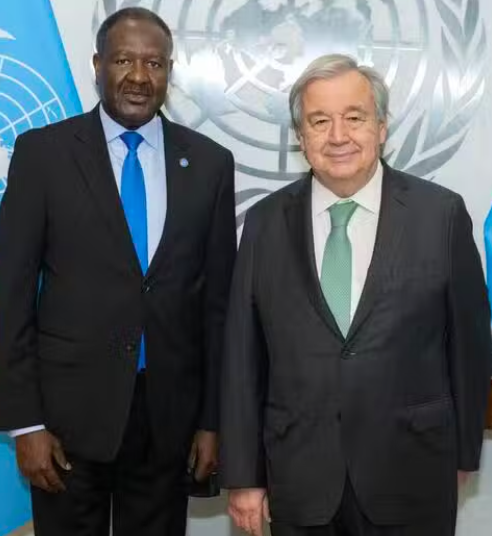
“Africa’s blue economy is a powerhouse for sustainable development,” Guterres declared. “But its future hinges on our ability to protect the marine environments that sustain millions and regulate our planet’s climate.”
According to the UN Environment Programme, nearly 25% of Africa’s population—over 300 million people—depend on the ocean for their livelihoods, through fishing, trade, and tourism. Yet, overfishing and pollution threaten food security, while climate change intensifies coastal erosion and jeopardizes low-lying communities.
The Urgency: Ocean Under Threat
The “State of the Global Ocean” report (UNESCO, 2023) revealed alarming trends: ocean temperatures are rising, coral reefs are dying, and more than 90% of the world’s fisheries are fully exploited or overfished.
“African leaders have shown remarkable resolve in advancing marine protected areas,” said Dr. Jane Dlamini, marine biologist at South Africa’s University of Cape Town. “Regional cooperation is growing. The West African subregion, for example, has pioneered joint monitoring and enforcement against illegal fishing—a model for other nations.”
According to the African Union, recent collaborations like the “Africa Blue Economy Strategy” aim to unify coastal nations to secure fisheries, combat marine litter, and promote sustainable maritime industries.
UN Secretary-General: “Africa’s Voice Matters in Global Ocean Governance”
Guterres praised recent African-led initiatives, such as the 2023 Abidjan Convention update and the expansion of marine protected areas in Mozambique and Seychelles, and urged further commitments from governments and the private sector.
“Africa’s voice is indispensable as the world negotiates a new high-seas treaty,” he said. “Global ocean health is intertwined with Africa’s prosperity and climate resilience.”
He called for increased investment in African marine science, technology transfer from advanced economies, and more equitable access to funding for ocean sustainability.
African Governments Respond
Kenya’s Cabinet Secretary for Environment, Soipan Tuya, welcomed the UN chief’s remarks: “Our communities are custodians of the ocean. We are leading on mangrove restoration and have set ambitious protection targets. But we need greater support with financing and technology.”
Representatives from Nigeria, Ghana, and Mauritius echoed calls for international cooperation, fair trade in ocean resources, and capacity-building for youth and local experts.
Challenges and Solutions: Closing the Gap
Despite progress, significant obstacles remain. Many African nations lack the infrastructure to monitor illegal fishing, while limited scientific resources and weak enforcement hamper conservation.
“Funding is a critical barrier,” said Dr. Kamau Mwangangi of the African Marine Conservation Society. “We need both public and private funding, as well as partnerships with global organizations, to scale our efforts.”
Several experts highlight the importance of empowering local fishing communities with modern tools and sustainable practices. New partnerships, like the Africa Blue Ports Initiative, are being piloted to improve port management, reduce pollution, and foster clean shipping corridors.
The Broader Impact: Africa and the Global Ocean Agenda
As the UN Ocean Decade (2021-2030) gains momentum, Africa’s involvement is widely seen as a linchpin for success. Environmental advocates stress that sustainable management of African waters is not only vital for Africa, but for the planet’s survival.
“From Ghana’s Gulf of Guinea to Madagascar’s coral reefs, Africa offers hope and innovation,” said Elizabeth Okello, executive director of the Pan-African Blue Economy Initiative. “But this potential will only be realized if international partnerships prioritize African leadership.”