In a shocking escalation of his government’s trade stance, United States President Donald Trump has sent a fresh warning to the BRICS countries, threatening a blanket 10% tariff on all members—Brazil, Russia, India, China, and South Africa. Referring to what he perceives as a concerted attempt by the bloc to erode the supremacy of the U.S. dollar, Trump indicated that no country—not even long-standing ally India—would be left out of these penalties.
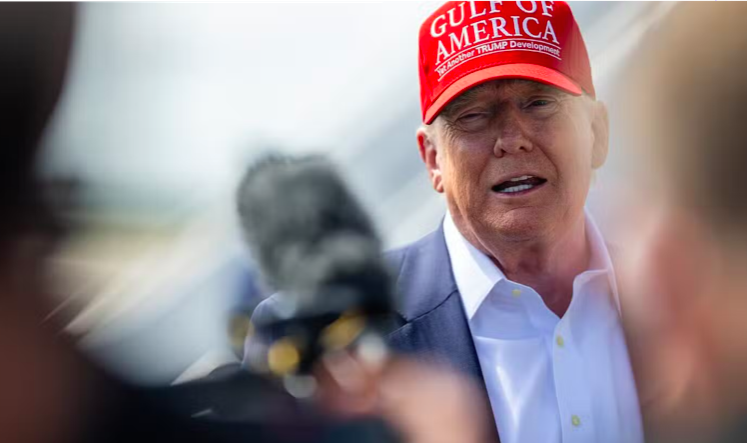
In a Cabinet meeting at the White House, Trump reiterated that the tariff action is definitive and was designed to protect American economic interests. “BRICS is going to get hit with a 10% charge quite soon,” Trump stated, insisting that the bloc was “established to hurt us.” The statement comes as there are increasing fears in the Trump administration that BRICS is increasingly gaining influence, with its attempts at building alternative financial systems outside of the dollar.
Trump’s Message: BRICS Will Not Be Spared
The President of the U.S. did not hold his tongue as he elaborated on his government’s position. Trump accused the BRICS bloc of using all their energy to destabilize the dollar by building alternative trade networks and advocating for currency diversification in international trade. “They are trying to kill the dollar,” Trump stated. “But that’s not going to happen under my watch.”
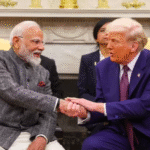
He reaffirmed that India, even though it has strong trade and diplomatic relations with America, will have to pay 10% tariffs if it remains a proactive member of BRICS. “India will definitely have to pay 10% if they are in BRICS,” Trump clarified, putting an end to all expectations of special treatment. “No exceptions. We are safeguarding our economy.
This hardline stance is in line with Trump’s overall “America First” strategy that he promoted in his previous tenure. It indicates a new effort to take on multilateral arrangements and international institutions as perceived challenges to American economic dominance.
A Broader Strategy to Defend the Dollar
Trump’s move is happening just when BRICS is becoming increasingly bold in championing a multipolar world order. The bloc has freely talked of establishing a BRICS currency to supplant the dollar in international trade, especially in energy transactions. With Russia and China already settling bilateral trade in local currencies, and Brazil and India looking at similar mechanisms, the challenge to dollar supremacy is real even if still nascent.
By threatening retaliatory tariffs, Trump is issuing a warning to BRICS and other trade partners alike: efforts to circumvent or subvert the American financial system will be costly. He has cast this conflict as economic war on a global scale, one where the dollar must remain, in his phrase, “the king.”
Though most experts contend that BRICS is not yet at the stage where it can dislodge the dollar, Trump’s rhetoric put extra tension in global trade talks and elicited scathing responses from foreign policy experts.
India Caught in the Crossfire
India’s role in this global chessboard is precarious. Being both a leading BRICS member and a crucial U.S. ally in the Indo-Pacific, New Delhi now walks a tightrope. Though Trump’s administration has been beaming with praise for India’s strategic partner status, the tariff declaration indicates that such admiration will not be reflected in tariff waivers.
Despite the looming threat of tariffs, President Trump also expressed optimism about the ongoing trade discussions with India. “We’re close to making a deal with India,” he said, referring to an anticipated interim or mini trade agreement. Negotiations between the two nations have been ongoing for months, with discussions touching on market access, digital trade, agricultural exports, and tariffs on American goods.
Indian officials, who returned recently from high-level parleys in Washington, have signaled that some headway is being made. But tricky subjects—particularly agriculture and dairy—are still contentious. Sources say that India has communicated its stand, and “the ball is now in the U.S. court.”
The success or failure of these trade talks can shape the course of India-U.S. relations in the next few years. If the anticipated tariffs are implemented as scheduled, they are likely to overshadow bilateral cooperation in other sectors like defense, energy, and technology.
Tariff Deadline: August 1, 2025
The Trump administration has provided BRICS countries and other impacted nations until August 1, 2025, to negotiate or else they will have to endure the new tariff regime. In a statement issued on social media, Trump confirmed: “All money will be due and payable starting August 1, 2025 – no extensions will be granted.”
It came after sending formal letters to 14 countries detailing tariff raises which can be as high as 40% for others. The action provides countries with a tight window to review their trade affiliations and negotiate with Washington in last-minute diplomacy.
Experts maintain that Trump’s aggressive stand will send ripple effects worldwide, impacting supply chains, trade flows, and investor confidence. India and Brazil, with high exposures to U.S. markets, will have to consider whether participation in BRICS is worth the economic costs.
Global responses to Trump’s threat have been immediate. Although BRICS officials have not yet made official statements, sources indicate that urgent consultations are already in progress. The BRICS bloc, which has been trying to expand its reach and include new members, would view Trump’s action as an act of provocation to destabilize its momentum.
At the same time, economists caution that the world economy—already suffering from inflationary pressures and unstable recovery—will face additional destabilization if trade tensions escalate. The action would also open the door to retaliatory tariffs,