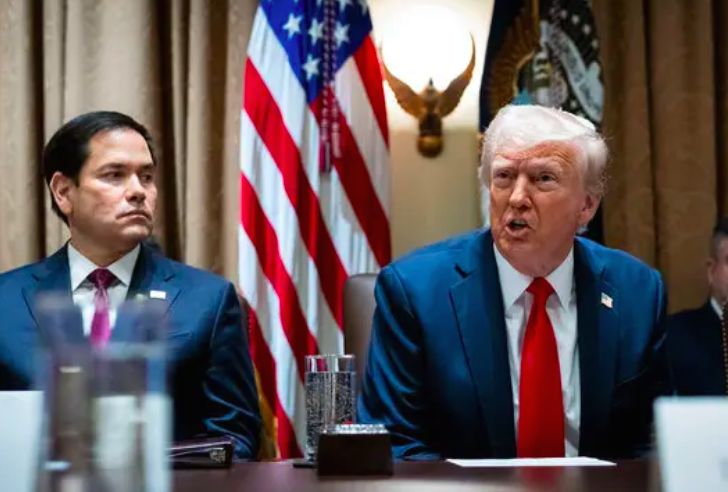
In a bid to re-engineer international trade dynamics, US President Donald Trump said his government will publish seven additional official letters regarding tariff hikes to different countries. Those letters are to be sent on Wednesday, July 9, as part of his larger campaign to impose what he terms “reciprocal trade.” The news came through his social media site, Truth Social, where Trump teased that several more nations would be included on the expanding list of American trading partners subject to drastic new tariffs on imports.
This confrontational approach to tariffs is timely, as there is an August 1 deadline to impose a fresh round of retaliatory tariffs. Trump’s warning has heightened speculation regarding which countries are next on the list and what transatlantic economic implications are to follow.
A Wave of Tariff Letters on the Rise
Trump’s recent push follows the issuance of tariff letters to 14 nations last month. The first set of targets aimed at a broad range of countries, ranging from economic giants to up-and-coming economies. South Korea and Japan each got 25% import tariffs. Myanmar and Laos were hit with some of the highest at 40%, and South Africa is being slapped with a 30% tariff. Tariffs of between 25% and 36% will be imposed on other nations like Malaysia and Kazakhstan.
These rates are intended to indicate what the Trump administration considers to be years of unequal, non-reciprocal trade policy by U.S. partners, senior administration officials say. Trump is seeking to set right what he sees as one-sided relationships that treat American workers and businesses unfairly by imposing high tariffs on imports.
Trump posted in his Truth Social post, “Grateful for the attention this issue is finally receiving. We are not backing down. More countries will be added this afternoon, and America will no longer be taken advantage of.”
“Non-Reciprocal” Trade and a Warning to Retaliators
One of the pillars of Trump’s trade approach has been to renegotiate agreements he feels disadvantage the U.S. He reaffirmed in his recent statement that retaliatory actions by other nations would be met with additional tariff hikes. For instance, if a targeted nation making a 25% tariff tries to push back with identical taxes on American goods, the administration will increase the duty even more, essentially imposing a second round of sanctions.
But Trump did leave a door open for negotiation. He said that if nations step up with more agreeable trade terms, the U.S. might reconsider or roll back the tariffs. This two-track approach—strong tariffs but possibilities for negotiation—tells us about Trump’s typical “deal-making” style.
“Fair trade agreements are always of interest to us. But until that occurs, we will employ every mechanism that exists to defend American interests,” said U.S. Trade Representative Kevin Hassett during a press conference on Monday.
Whispers of the China Trade War—but Wider
Trump’s recent tariff actions are a throwback to 2018–2019’s trade war against China, one of the hallmark characteristics of his first term. Experts note that this initiative is much more expansive in its scope. Whereas the tariffs against China primarily targeted a single economic competitor, this round of actions targets nations throughout Asia, Africa, and Eastern Europe.
Japan’s Prime Minister Shigeru Ishiba reacted strongly, stating, “We