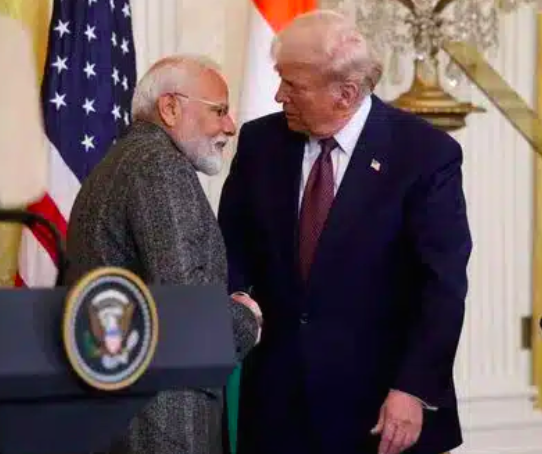
In the delicate ballet of international economics and diplomacy, the India-US trade agreement is one of the most closely followed developments of 2025. Begun under the initiative of U.S. President Donald Trump and Indian Prime Minister Narendra Modi, the deal—initially made public with great fanfare in February—was to be completed by fall. But with summer nearly done, the accord is still incomplete, held up by disputes over prolonged negotiations, unresolved tariffs issues, and pivotal sectoral differences.
Now, there are indications of a breakthrough. People close to the issue indicate Trump’s administration is seeking to bring down intended tariffs to below 20%–a significant revision from the previous 26% level. If accomplished, the action could reset the course of India-US trade and infuse new vigor into a relationship that has fluctuated among tension and cooperation in the last few years.
Why This Trade Deal Matters
The U.S. and India are two of the globe’s leading economies. Between them, bilateral trade was around $190 billion in 2024 and has hopes on both sides to drive that figure well over $300 billion in the coming few years. A balanced, reciprocal trade arrangement can give India more robust access to American markets and vice versa—particularly in strategic areas such as defense, technology, pharma, and agriculture.
For the United States, the agreement would be about projecting its influence in the Indo-Pacific region and balancing China’s expanding economic reach. For India, it would be about increased investment flows, job creation, and export opportunities, especially for SMEs.
But beyond commerce, this agreement is a geopolitical message. Both countries want to demonstrate that democratic economies can succeed through open and strategic partnerships.
Tariff Talks: Can the Two Sides Meet in the Middle?
One of the main points of contention during the negotiations has been tariffs, especially on agricultural products and inputs for manufacture. Trump’s decision to reduce the base tariff rate to less than 20% is a smart move. A rate below 20% would enable Indian exports to stay competitive in U.S. markets and possibly enhance America’s own export streams to India.
Although Trump’s latest trade talk has generally tilted toward protectionism, this shift towards India seems a deliberate one—one that recognizes India’s strategic and economic significance. His government is eager to sign at least an interim deal by the end of 2025, particularly keeping the next U.S. elections in mind. It provides Trump with a diplomatic victory and a clean line for voters to trot out.
On the Indian side, there is cautiously optimistic optimism. India has been willing to engage but has insisted on guarding its interests—especially in sensitive areas such as dairy and agriculture. Past American demands that genetically modified crops be permitted into the Indian market have been a big red flag for New Delhi.
Indian Delegation Heads to Washington
In an attempt to drive negotiations forward, India is sending a delegation headed by chief trade negotiator Rajesh Agrawal to Washington next week. This trip comes on the heels of last month’s first round of talks and is likely to gain momentum towards an interim pact.
Sources state that the Indian side will concentrate on major deliverables that can be quickly signed off on—tariff caps, product-specific access provisions, and enforcement timelines. But India is taking advantage of this moment to negotiate the foundation of an even more extensive bilateral trade agreement in the future.
Commerce Minister Piyush Goyal has indicated categorically that India will not yield to pressure or be held hostage to any artificial timelines. His insistence that India is “only interested in a deal that benefits our people and respects our economic priorities” has rung out particularly loudly within policy circles in New Delhi.
The Bigger Hurdles Still Remain
Even so, a number of nettlesome issues remain. They include:
Dairy Sector Safeguards: India is still averse to opening up its dairy market to American players on the pretext of livelihood of millions of small farmers.
Steel & Aluminum Tariffs: The earlier Section 232 tariff imposition by the Trump administration continues to hurt India. Delhi wishes these to be lifted as part of any substantial agreement.
Automotive Trade & EV Policies: Both countries have varying electric vehicle manufacturing roadmaps and policy convergence remains a task.
IPR and Digital Trade: America’s efforts at greater intellectual property rights (IPR) enforcement and digital trade norms are bound to be controversial.
In addition, pharma regulatory alignment, export subsidies, and data localization policies keep on making the negotiations more complex.
Trump’s Pitch and the Political Calculus
President Trump’s recent public statements on the deal have been optimistic. Calling the U.S. the “greatest, most successful country ever,” Trump positioned the proposed trade pact as part of an overall American renaissance under his stewardship.
But political watchers point out that much of this is intended to bolster his reputation at home. With the 2026 midterm elections and his own possible re-election campaign looming, bringing back a successful international trade deal—particularly with a major partner like India—would be a showpiece victory.
What’s Next?
Though optimism about an interim deal is high, both governments remain cautious. India’s insistence on defending its agriculture and small industries indicates that anything rushed is not on the cards. But with both governments showing mutual respect and commitment, there is hope that progress can be made—step by step.
The Washington round ahead will be crucial. If the negotiators are able to seal a deal below 20% tariffs, it may lead to an even larger, more transformative economic relationship down the road.
Either which way, the India-US trade agreement is about more than tariffs. It’s about faith, convergence, and a common vision of global economic leadership. And in the constantly changing landscape of international politics, that’s a compelling offer.