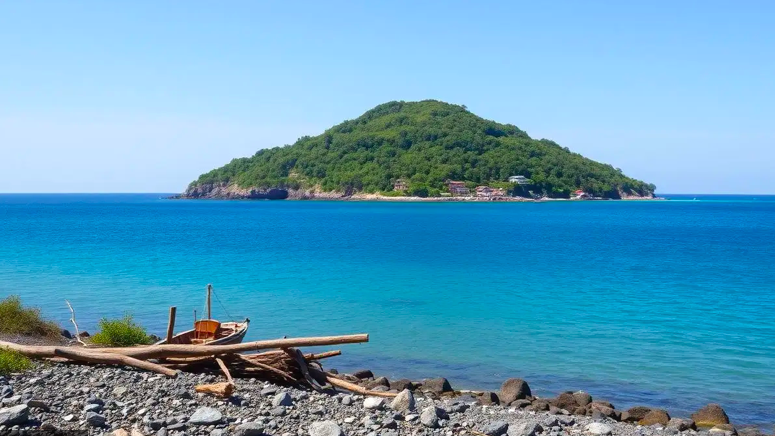
The Tokara Islands are part of the Ryukyu volcanic arc, and the region is no stranger to seismic swarms. Suwanosejima, one of Japan’s most active volcanoes, has been erupting intermittently for decades. The current wave of earthquakes has not led to any immediate signs of a large volcanic eruption. Still, the JMA and local disaster authorities remain on high alert.
“Swarms of this magnitude can indicate movement of magma or tectonic shifts,” said Dr. Yuko Takahashi, a seismologist at Kagoshima University. “While no significant surface changes have been detected, vigilance is warranted due to the area’s volcanic history.”
Last week, the JMA raised the volcano alert level for Suwanosejima to Level 2, which restricts approach to the crater area. Authorities have also conducted regular flyovers and satellite monitoring for any ground deformation or thermal anomalies, but no major changes have been detected as of yet.
Emergency Measures and Community Preparedness
Local officials have been working to keep residents informed through loudspeaker announcements, community meetings, and updates on municipal websites. Emergency shelters have been restocked, and evacuation plans revised in coordination with national and prefectural agencies.
“We’re used to some tremors here, but the sheer number over the last fortnight is unprecedented in recent years,” stated Miki Matsuda, a teacher from Akuseki Island. “We’re ready to leave if officials tell us to, but hope it won’t come to that.”
Officials emphasize that evacuation is not yet necessary but urge residents to stay prepared and heed official guidance. The Japan Coast Guard and regional ferry operators have been placed on alert in case a rapid evacuation becomes necessary.
Experts Urge Continued Vigilance
Seismic swarms are not unusual for volcanic zones, and not all lead to significant eruptions or stronger quakes. However, experts warn that the situation can change rapidly in such an active region.
“The key is to remain cautious, not complacent,” advised Dr. Takahashi. “Continued monitoring is essential to ensure the safety of islanders and nearby sea traffic.”
Japan averages more than 1,500 felt earthquakes annually as it sits atop four tectonic plates. Still, swarms of this scale, concentrated in such a short timeframe, demand extra caution and collaboration.
Government Response and Future Outlook
Japan’s Cabinet Office has pledged support to local authorities and stands ready to deploy additional resources if needed. The Ministry of Land, Infrastructure, Transport and Tourism (MLIT) has sent experts to the region, while the JMA continues to provide daily updates.
No major disruptions to transportation or infrastructure have been reported, but fishing and tourism activities have slowed due to concerns over further seismic or volcanic events.
With the current swarm still ongoing, experts recommend ongoing vigilance, additional studies of the archipelago’s geological activity, and continued public education.