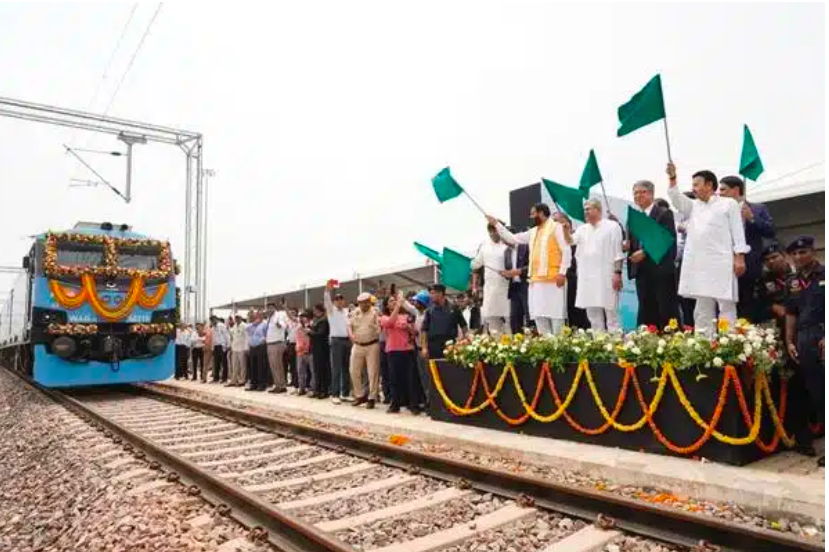
India’s automobile industry is experiencing a period of rapid expansion, with passenger vehicle production exceeding 24 million units in FY2023–24, according to the Society of Indian Automobile Manufacturers (SIAM). To address logistics bottlenecks and leverage rail for green, large-scale transport, Indian Railways has expanded its network of vehicle loading hubs, with Shalimar at the forefront.
The Shalimar hub’s inauguration was jointly announced by Indian Railways officials and representatives from major automakers including Maruti Suzuki, Hyundai, and Tata Motors, who are already among the largest rail freight users for vehicle transport. “This facility marks a new chapter for automotive logistics in India and provides an eco-friendly, efficient alternative to road transport,” said S.K. Pathak, Executive Director (Freight Marketing), Indian Railways.
Advanced Features: Efficiency and Capacity at Scale
Most Modern Facility of Its Kind in India
The Shalimar hub boasts multiple lines dedicated for vehicle carrier rakes, cutting-edge loading docks, CCTV surveillance, and automated gate systems for streamlined access and security. At peak, the hub is designed to handle up to 120,000 units annually — a 35% increase compared to previous facilities.
“Indian Railways’ massive investments in such modern terminals are essential for us to keep our supply chain agile and sustainable,” noted Anil Sharma, Supply Chain Head, Maruti Suzuki, during the launch.
Boost for Domestic and Export Markets
Located close to Kolkata port and major highways, the hub allows seamless transshipment of vehicles to Southeast Asia and across India’s northeastern and eastern regions. Rail logistics provide up to 50% lower emissions per unit transported compared to traditional trucking, underscoring the facility’s role in India’s decarbonization drive.
Industry Impacts: Growth, Costs, and Sustainability
Key Players Welcome the Move
Leading automakers welcomed the move, pointing to increased manufacturing capacities and the need for dependable logistics. “Rail is now the backbone of our domestic dispatches. With the new hub, we anticipate at least a 20% uptick in shipments by rail versus last year,” said Ramesh Suri, Logistics Head at Tata Motors.
The Confederation of Indian Industry (CII) lauded Indian Railways for its investment, noting that shifting auto logistics to rail reduces road congestion, logistics costs, and supply chain risks. Industry analysts estimate that the hub could shave up to two days off average shipment times to the eastern and northeastern states.
Challenges and Perspectives
Not all experts agree that rail will immediately eclipse road transport for cars and two-wheelers. “While rail is becoming more attractive, last-mile delivery and infrastructure at destination points can be bottlenecks. Further investments in feeder infrastructure will be just as important,” cautioned S. Mitra, an independent logistics analyst and columnist for The Economic Times.
Policy, Strategy, and the Road Ahead
Indian Railways aims to increase its share in automobile logistics from the current 20% to 30% by 2027. The Ministry of Railways has rolled out incentives such as discounted freight rates for automakers, dedicated rakes, and streamlined booking processes.
This initiative is also aligned with India’s National Logistics Policy, which seeks to bring down logistics costs as a percentage of GDP from 13% to single digits. “Facilities like Shalimar are critical to making Indian industry globally competitive,” said Ajay Bhalla, Secretary, Department for Promotion of Industry and Internal Trade.