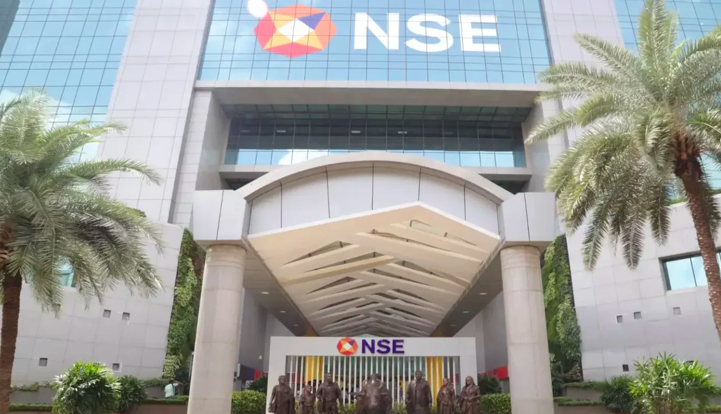
The NSE’s planned electricity futures contracts will enable buyers and sellers to hedge price risks in the highly volatile power market, a first for India’s organized financial markets. According to NSE officials, this initiative is part of a broader push to deepen the country’s commodity derivatives segment and align with global market practices.
“We are on the verge of introducing electricity futures, subject to regulatory approval,” said Vikram Limaye, NSE CEO, during an industry conference in Mumbai on Monday. “This product will offer much-needed hedging instruments for all stakeholders—power producers, distributors, industrial consumers, and traders.”
What Are Electricity Futures and Why Are They Important?
Electricity futures are standardized contracts that allow participants to buy or sell a specified quantity of power at a predetermined price for delivery at a future date. Unlike traditional physical trading on power exchanges, such as the Indian Energy Exchange (IEX), these futures contracts are financially settled and do not require physical delivery of electricity.
Key Benefits:
Price Discovery: Futures contracts provide transparent market-driven pricing, reflecting anticipated supply and demand dynamics.
Risk Management: Generators and large consumers can lock in energy prices, protecting themselves from market volatility.
Liquidity: Attracting new categories of participants, such as institutional investors and speculators, can deepen market liquidity.
Background: India’s Power Market Evolution
India’s electricity consumption has surged over the past decade, driven by rapid industrialization, urbanization, and government electrification drives. According to Central Electricity Authority (CEA) data, peak power demand touched a record 243 GW in May 2024.
Currently, most spot electricity trading occurs on the IEX and Power Exchange India Limited (PXIL). However, the lack of forward contracts limits hedging options for stakeholders, leaving them vulnerable to volatile daily prices. Industry observers argue that introducing exchange-traded electricity futures could unlock efficiencies similar to those seen in global energy markets.
“Having a robust futures market will create a benchmark for power pricing and encourage investments in generation capacity,” explained Sandip Das, Head of Energy Research at CareEdge Ratings. “It’s a long-awaited move for India’s evolving power sector.”
Regulatory Framework and Market Readiness
The Securities and Exchange Board of India (SEBI), which regulates commodity derivatives, is currently reviewing the NSE’s proposal. Sources familiar with the matter indicated that final approval could come as early as Q3 2024.
The Indian government, through the Ministry of Power, has long advocated for market reforms and greater adoption of financial derivatives in electricity. The finance minister’s Budget 2024 speech highlighted the need for innovative financial instruments to support the country’s energy transition and integrate renewable sources.
Industry Perspectives: Opportunities and Challenges
The move has drawn cautious optimism from sector participants and analysts:
- Power Producers: “Futures trading will help us mitigate market risks, especially as we expand renewable capacity,” said Preeti Malhotra, CFO of Tata Power.
- Industrial Consumers: “Large manufacturers will be able to stabilize their energy costs, improving budgeting and competitiveness,” noted Rajiv Kumar, President of the Federation of Indian Chambers of Commerce and Industry (FICCI).
- Market Watchers: “Ensuring sufficient liquidity and guarding against market manipulation will be critical for the success of electricity futures,” cautioned Saurabh Bhatnagar, an independent energy consultant.
Potential challenges include regulatory alignment, ensuring active participation, and educating stakeholders about risk management tools.
Global Context: Lessons From Other Markets
Several countries—including the US, UK, and Australia—have successfully implemented electricity futures markets, resulting in improved price stability, investment signals, and operational efficiency. Experts suggest that India can learn from these experiences to address issues of contract design, market surveillance, and clearing mechanisms.
What’s Next?
While the exact launch date is yet to be confirmed, NSE has begun investor awareness campaigns and is finalizing contract specifications in consultation with industry experts and regulators. Early contracts are expected to cover major regional electricity grids, with expansion to more granular products in the future.
“The launch of electricity futures will be a pivotal milestone for India’s power market, supporting the country’s ambitions for a modern, resilient, and transparent energy ecosystem,” concluded Limaye.
As the country readies itself for this transformative step, all eyes are on the regulatory green light and the immediate impact on the pricing, investment, and management of electricity—a sector at the heart of India’s economic growth story.