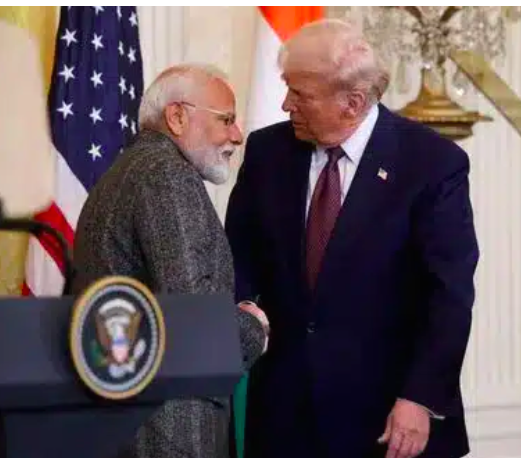
A fresh round of high-stakes trade talks between India and the US is under way in Washington with both sides attempting to reach a deal that has the potential to redefine economic ties between the world’s biggest democracies. At the heart of the talks is the effort to agree on a tariff rate acceptable to both sides—preferably below 20%—that has the potential to create new business opportunities in the two nations.
With U.S. President Donald Trump seeking another term and hoping to cement his foreign trade legacy, India is looking to use its strategic location in the Indo-Pacific to gain a more advantageous deal than the U.S. recently signed with Southeast Asian nations such as Indonesia and Vietnam.
India Aims For Sub-20% Tariffs
Indian negotiators are looking to achieve a ambitious goal: achieving tariff rates below 20%, and closer to 10% if possible. This will put India on a par with regional counterparts like Indonesia, which has just agreed to a 19% tariff level, and Vietnam, which has offered a 20% rate.
The Indian team of senior trade and commerce representatives is in Washington aggressively seeking a more favorable framework. The sources, knowledgeable about the issue, say India is not only coming forth as a transshipment center, as some Southeast Asian economies have done, but as a strategic and significant consumer and manufacturing base worthy of special consideration.
India has apparently agreed to remove or lower tariffs on some of the most important U.S. industrial imports as a part of a mutual framework. It has also made a higher level of access available for some American farm products and threatened to increase its purchase of American-made Boeing aircraft—a gesture that would make the package more attractive to Washington.
Trump’s Broader Trade Game Plan
President Trump’s trade philosophy has centered on redefining America’s international trade relationships by prioritizing reciprocal tariffs and expanded market access. Over the past few months, the Trump administration signed or renegotiated deals with the United Kingdom, Indonesia, and Vietnam. The Indonesian deal features multi-billion-dollar commitments to buy American agriculture and energy products, making it the model that can be emulated by other nations seeking to strengthen trade with the U.S.
Trump has also sent tariff letters to more than 20 nations, informing them of fresh reciprocal tariffs that will take effect on August 1, 2025. The letters are viewed as a bargaining chip to drive better deals from the trading partners, including India. Based on trade analysts, the administration seems at ease with tariff levels of 15% to 20%, and though India’s sub-10% goal is ambitious, it is certainly not ruled out—particularly if India can provide concessions elsewhere.
“Trump is playing a game of strategy,” says Rajeev Kumar, a senior fellow at the Centre for Policy Research. “He is making the threat of tariffs in order to get the trading partners to the table, and in most instances, it’s succeeding.”
India’s Strong Stand on Agriculture
Even though it has shown a willingness to make concessions on industrial goods and aircraft sales, India has drawn a clear red line around its agriculture and dairy industries. Politically and economically sensitive since time immemorial, these industries have employed millions and provided a backbone for rural economies. Indian officials have been adamant that opening up the sector to American imports—particularly dairy—could unsettle local livelihoods and result in domestic blowback.
Soumya Kanti Ghosh, the Chief Economist at the State Bank of India, avers, “While India is willing to open up trade in carefully chosen areas, agriculture is a protected sector. Giving a major concession there can initiate political repercussions, which this current government is not willing to take a chance on.
Instead, India is suggesting new avenues of cooperation: relaxing barriers to the entry of U.S. electronics and defense producers, opening up greater U.S. participation in infrastructure development, and collaborating on digital trade frameworks. These have the potential to create new economic opportunities without compromising sensitive domestic sectors.
Strategic Stakes Beyond Trade
Though economics dominates the negotiations, there is also a more overarching strategic subtext. Both countries share common interests in limiting China’s expanding regional presence and maintaining Indo-Pacific stability. Bolstering trade relations would serve to cement the alliance beyond defense and diplomacy.
From Washington’s perspective, deeper engagement with India offers not only economic benefits but also a way to secure an alternative production base to China. For India, a favorable deal would support Prime Minister Narendra Modi’s “Make in India” and “Viksit Bharat” missions, which aim to transform India into a global manufacturing hub and developed economy by 2047.
Road Ahead: High Hopes, Tough Talks
Even with a common interest in closing a deal, however, there are still many obstacles in the way. Chief among them are conflicts over tariff levels, digital trade standards, and intellectual property protections. Moreover, the tight schedule—since Trump had imposed on himself an August 1 deadline for tariffs—hurries negotiators to reach agreement hastily.
Both sides are optimistic nonetheless. That negotiations have gone on for several rounds and have engaged high-level officials is a good sign that an agreement is reachable.
“Trade agreements like these are always a matter of give and take,” says Neha Joshi, a former Indian trade diplomat. “India has a good case for better terms, and the U.S. has strategic interests to be flexible. It’s now about finding that middle ground.”
As talks go on in Washington, everyone is looking to see if this economic flirting will materialize in a historic agreement—a one that could not only define the future of Indo-U.S. trade but also send a loud message about the depth and resilience of their strategic relationship.