India and Pakistan find themselves once more at the focal point of rising tensions, with the two nations embroiled in a series of armed confrontations that risk escalating into a full-scale conflict. The most recent flashpoint centers on India’s allegations of successful armed attacks against Pakistani military installations, an allegation which Pakistan has firmly rejected, leaving the situation bathed in uncertainty and danger.
Charge of Military Aggression
The fighting started when India claimed that its troops had foiled a Pakistani bid to attack three of its military installations in Jammu, Udhampur, and Pathankot. Indian officials reported hearing explosions in Jammu city on Thursday evening, during a power outage, which they blamed on Pakistani missile and drone attacks. Pakistan’s Defence Minister, Khawaja Asif, was quick to refute these claims, saying, “We deny it, we have not mounted anything so far,” strongly denying the Indian Army’s claims.
The charges have created a vicious circle of retaliation. India has also claimed to have carried out airstrikes on Pakistan’s air defenses, incapacitating various threats directed against its military installations. The airstrikes have been claimed to have hit Pakistani airstrips and installations in Pakistan-administered Kashmir. Pakistan’s army has denounced these operations, referring to them as belligerent and affirming that India has initiated the provocations.
The conflicts between the two nuclear powers are not new, and the global community has moved fast to raise concern regarding the likelihood of an all-out war. The conflict between the two parties is one of the biggest in the past few years, with the two governments strongly dug in.
Casualties and Humanitarian Concerns
As the situation worsens, both countries have seen casualties, with civilians being the majority to suffer in the ongoing violence. Pakistan has verified 31 fatalities and 57 injuries from Indian airstrikes and cross-border firing since the clashes escalated early on Wednesday morning. On the Indian side, the Army says that at least 16 individuals, including children and women, have died due to Pakistani shelling in the disputed Kashmir territory.
The violence is also spilling over to civilians in other border regions, where evacuation has been ordered due to the stepped-up shelling. It is worst in the Jammu region, where the explosions and subsequent power cut left many in fear and confusion.
The mounting death count and the suffering of innocent people have compounded the already volatile humanitarian crisis, making it more challenging for peace efforts. Both nations have claimed the Kashmir valley as their own, and the long-standing animosity between the two nations has continued to feed the war. The Kashmir conflict has killed thousands of people over the years, and the most recent flare-up risks exacerbating the already volatile scenario.
International Reactions and Appeals for Restraint
The international community has expressed serious concerns over the conflict and its possible implications on regional stability. The United Nations and major world powers have appealed to both India and Pakistan to exercise restraint and reduce tensions to prevent more bloodshed.
Whereas India maintains its military actions as defensive in nature, intended to neutralize Pakistan’s aggression, Pakistan’s military spokesperson has accused Indian drones of launching provocative attacks. The accusations of drones have also invited further speculation, with both sides accusing each other of exploiting cutting-edge technology for military provocation. Verification of these incidents by third parties, however, remains elusive, with both governments offering conflicting accounts.
Apart from the UN, other major players internationally have cautioned that the use of force would result in disastrous consequences, calling for both nations to go back to the negotiating table and eschew further military confrontations. The international community is still greatly concerned with the potential of the conflict escalating across the borders of the two nations.
Future Implications and Continuing Tensions
As the war continues, the situation for regional security and peace is serious. Pakistan’s Prime Minister, Shehbaz Sharif, has threatened to retaliate against Indian attacks, just fueling the fire. The armed attacks exchange has left people fearing an all-out war, with both countries set for additional military aggression.
The tension is compounded by the long-standing grievances and distrust between India and Pakistan, who have been rooted in their own narratives for decades. The violence comes after an attack on Indian-administered Kashmir tourists that India blamed on the Pakistan-based militant group Lashkar-e-Taiba. Pakistan denies involvement in the attack, further raising tensions.
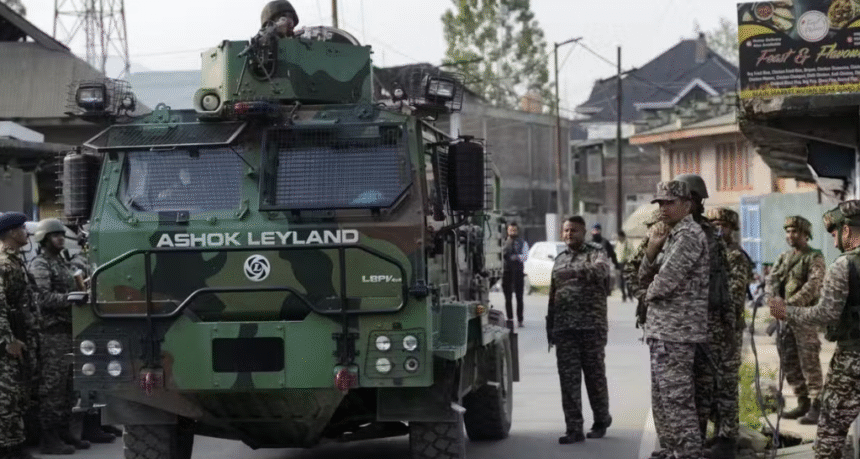
Both countries are currently on high alert, with military operations continuing on both sides of the border. As the region braces for further escalation, the international community continues to monitor the situation closely, hoping for a resolution before the conflict spirals beyond control.
The stakes are high, and the threat of widespread violence hangs in the balance as India and Pakistan go on with their reciprocal accusations and military attacks. With nuclear weapons on the table and civilians being used as human shields, the rest of the world waits anxiously for a de-escalation of this precarious situation.