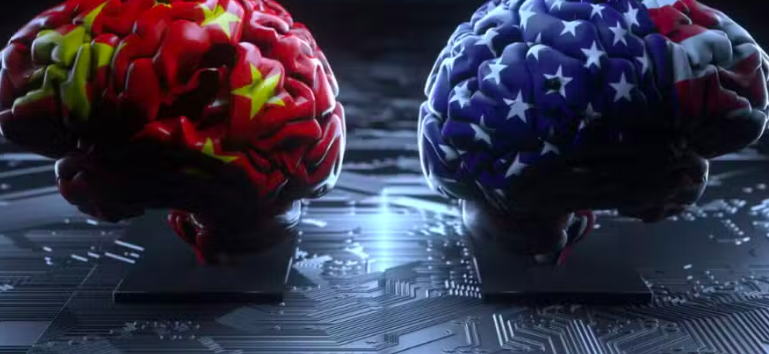
The ongoing diplomatic tensions between China and the United States are increasingly impacting Chinese international students pursuing education at American colleges and universities. As bilateral relations strain over issues like trade, technology, and national security, Chinese students in the U.S. are encountering new visa restrictions, increased scrutiny, and uncertainty about their academic and professional futures.
Heightened Scrutiny and Visa Complications
For the estimated 290,000 Chinese students currently enrolled in U.S. institutions, recent policy shifts have made their status more precarious. In April 2024, the U.S. State Department introduced more stringent background checks and limited access to certain research fields, citing national security concerns about technology transfer.
“International students now have to provide additional documentation and clear more hurdles for their visa renewals,” said Rachel Hadley, director of international affairs at the University of California, Berkeley. “We’ve witnessed a noticeable uptick in delayed or denied applications for our students from China.”
These challenges have disrupted career plans for many students, some of whom are struggling to complete research projects, attend conferences abroad, or seek internships due to fears of being barred from reentering the U.S.
Increased Anxiety and Cultural Pressures
In addition to practical obstacles, Chinese students are also reporting heightened anxiety and cultural pressures stemming from the political climate. Some feel they are viewed with suspicion by classmates and faculty, especially in STEM fields closely scrutinized by U.S. authorities.
“Sometimes it feels like I have to constantly prove I am just a student, not a threat,” said Liu Qi, a doctoral candidate in engineering at MIT. “The political situation makes it challenging to focus on my studies and plan for the future.”
Mental health services on campuses, such as those at New York University and Stanford, have responded by expanding support programs specifically for international students. “We recognize the unique stressors faced by this community, amplified by current world events,” said Dr. Megan Liu, a counselor at NYU’s International Student Center.
Policy Shifts and Political Rhetoric
Analysts say U.S. federal policy toward international students, particularly from China, has hardened in recent years. After incidents of alleged intellectual property theft and accusations of espionage, federal agencies have intensified monitoring of student activities, especially in sensitive academic disciplines.
According to a 2024 report by the National Association of Foreign Student Advisers (NAFSA), there has been a 17% drop in new enrollments by Chinese students since 2022. Tensions escalated further when, in May 2024, several Chinese graduate students at a prominent California university were denied visa extensions without clear explanation.
Chinese officials have also publicly expressed concern. “We urge the United States to stop unfair restrictions and discriminatory practices targeting Chinese students,” said a spokesperson for China’s Ministry of Foreign Affairs in early June. The ministry released a travel advisory warning students about possible risks of studying in America.
Diverse Perspectives on Security and Opportunity
Not all observers agree on the best path forward. National security experts argue that robust screening is necessary to protect sensitive technologies. “The threat of espionage is not hypothetical,” said Robert Kim, a research fellow with the Center for Strategic and International Studies. “But we must strike a balance to ensure genuine scholars are not collateral damage.”
University officials, meanwhile, warn that restrictive measures could diminish U.S. institutions’ reputations and deprive them of valuable talent. “International students enrich our campuses, drive research, and contribute significantly to local economies,” said Dr. Elaine Chen, provost at the University of Michigan.
Uncertain Futures and Calls for Clarity
Caught between two global powers, students and administrators alike are urging greater transparency and fair treatment. Many Chinese students now weigh whether to stay in the U.S., return home early, or seek opportunities in third countries like Canada or Australia.
“I hope the governments can separate politics from education,” said Yang Jie, a graduate student in computer science. “We just want to learn and contribute.”
As the U.S. and China continue to negotiate their complex relationship, the fate of thousands of students remains an open, pressing question—with profound implications for higher education, innovation, and international cooperation.