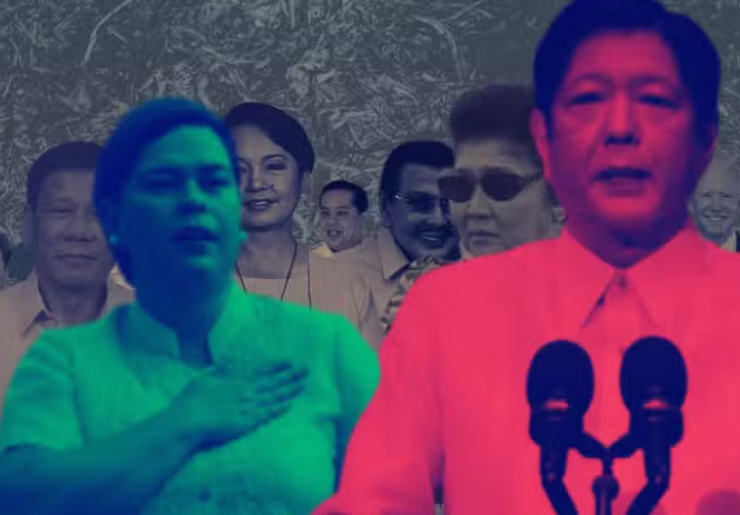
Philippine President Ferdinand Marcos Jr., also known as Bongbong, is at a critical point in his political life, with the nation preparing for midterm elections that have the potential to drastically change the balance of power in the government. The race has turned into a heated fight between Marcos and Vice President Sara Duterte, daughter of former President Rodrigo Duterte. What started as a solid partnership between the two during the 2022 elections has turned to bitter rivalry with much at stake for both leaders and the future of the Philippines’ politics.
Political Standoff: A War for the Senate
The midterm elections are a pivotal opportunity for both Sara Duterte and Bongbong Marcos, as they fight for control in a shattered alliance. The results of this election will play a major part in defining the composition of the Senate and may have ongoing impacts on their political lives. With the Senate having the potential to impeach an incumbent president, the consequences of this vote extend beyond mere power struggle—it could redefine the very basis of Philippine politics.
The three years plus Marcos has been in power are filled with pressure for him to consolidate his seat as he maneuvers the fractured relationship with Duterte. Former friends who won together in the 2022 elections, their relationship has since fractured. The failure of their partnership has resulted in a political tug-of-war, each side trying to take charge of the Senate and ultimately empower their political positions.
For Marcos, the midterm elections are a challenge to his leadership and capacity to consolidate his power. In the meantime, Duterte, who originally backed Marcos’s candidacy, has become a strong challenger, seeking to defend her political interests and make her influence in the government secure. The electoral outcome will be a defining moment for both leaders, as it will determine whether Marcos can maintain his grip on power or if Duterte’s aspirations for greater political control will materialize.
The Marcos Legacy and Bongbong’s Political Ascent
Ferdinand Marcos Jr. was born into a political dynasty. His father, Ferdinand Marcos Sr., was the 10th President of the Philippines from 1965 to 1986. Yet the elder Marcos’s presidency was tainted by accusations of corruption, human rights violations, and declaring martial law. Although the Marcoses were deposed in 1986, Bongbong Marcos has strived assiduously to redefine the public image of his family’s tarnished history.
In spite of the turbulent past, Bongbong’s political ascension has been phenomenal. Following the Marcos family’s return from exile in the 1990s, Bongbong ventured into politics, starting as a provincial governor before moving on to become a congressman and senator. His coming-out was in the 2022 presidential election, in which he registered a thumping victory with more than 31 million votes—over twice that of his nearest competitor. His election success was, in part, due to his effective use of social media, which enabled him to engage with young voters and create a more positive image of the Marcos family.
Bongbong’s tenure in office has not been without controversy, however. His government has been criticized for its response to major issues, such as foreign affairs, economic policy, and domestic governance. Significantly, Marcos has reversed the nation’s foreign policy by remapping its connection with the United States, the very opposite of the pro-China policy of the erstwhile administration. This move has resulted in fraying relations between Marcos and Duterte, particularly since he had started impeachment against the Vice President on charges of abuse of government funds.
A Strained Alliance: Marcos vs. Duterte
The political alliance between Sara Duterte and Bongbong Marcos, which was once a symbol of harmony, has broken down over the last few years. While the two leaders were partners during the 2022 elections, their aspirations have clashed. Duterte’s ambition for more power and influence in the government has created tension with Marcos’s leadership, leading to a series of public disputes and political blunders.
Central to this struggle is the fight for Senate control. The midterm elections coming up are regarded as a critical juncture for both Marcos and Duterte to gain political supremacy. With the Senate possessing the authority to impeach an incumbent president, both leaders are aware of the importance of these elections in deciding their political destinies.
With the election nearing, the fight between Marcos and Duterte has become nastier by the day. Open public clashes and backstage machinations have served only to create speculation over what could be the midterm elections outcome. The election result will not just shape the future make-up of the Senate but will also serve as a vote on whether to retain the leadership of Marcos and Duterte.
The Road Ahead: What Lies Beyond the Midterm Elections
As the Philippines prepares for the midterm elections, the political battle between Bongbong Marcos and Sara Duterte is one of the most keenly contested battles in recent years. The outcome of the elections will certainly leave a lasting mark on both leaders and their capacity to hold on to their grip of authority.
The fate is high for Marcos. He would gain in political strength and have the potential to shield his presidency from any possible impeachment through a win in the Senate election. Alternatively, if Duterte and her coalition become the dominant party in the Senate, it will be the end of an era in Philippine history, with Duterte becoming an even stronger player within the government.
Either way, political theatrics between the Duterte and Marcos families are not about to abate. As the midterm polls draw near, the result will be a pivotal make-or-break moment in this long-standing feud between these two powerful political clans. The future of Philippine politics is at stake in this intense electoral showdown, and the country will be watching intently as the politicians struggle over the Senate and their own political fates.