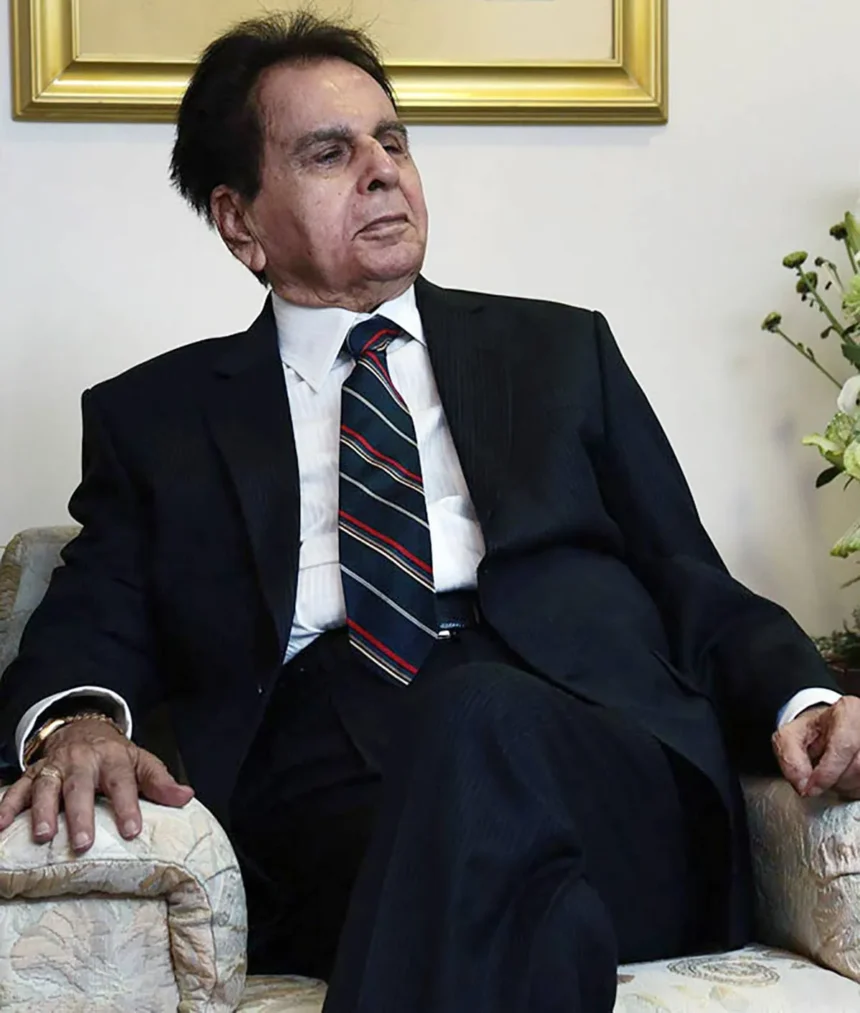
On his birth anniversary, we celebrate the unmatched cinematic legacy of Dilip Kumar, one of Bollywood’s greatest actors. Known as the ‘Tragedy King,’ his remarkable performances continue to inspire actors and film lovers around the world. Born on December 11, 1922, in Peshawar (now in Pakistan), Dilip Kumar, whose real name was Muhammad Yusuf Khan, reigned over the silver screen with his intense acting skills and emotional depth. Let’s take a closer look at the roles that defined his legacy and cemented his place as a legend of Indian cinema.
Dilip Kumar’s Iconic Roles That Defined His Career
Dilip Kumar’s career spanned over five decades, during which he brought to life characters that were deeply emotional, complex, and unforgettable. Here are some of his most iconic roles that not only made him a household name but also helped shape the golden era of Bollywood.
1. Andaz (1949): The Beginning of a Legacy
Dilip Kumar’s career took a significant leap with Andaz (1949), a film that marked his entry as the ‘Tragedy King’ of Indian cinema. In this romantic drama, Kumar shared the screen with legendary actors like Raj Kapoor and Nargis. His portrayal of a man caught in a love triangle was heart-wrenching and set the tone for many of his future roles. His ability to convey intense emotion through his performance in Andaz made him an instant star. This film is a landmark in Hindi cinema, highlighting Dilip Kumar’s immense acting prowess and his ability to capture the nuances of complex human emotions.
| Film | Role | Impact |
|---|---|---|
| Andaz (1949) | A man torn between two loves | Launched Dilip Kumar as the ‘Tragedy King’ and showcased his emotional depth |
2. Devdas (1955): The Tragic Hero
No list of Dilip Kumar’s iconic roles would be complete without mentioning Devdas (1955). Based on Sarat Chandra Chattopadhyay’s classic novel, Kumar’s portrayal of the heartbroken and self-destructive hero remains one of the most memorable performances in Indian cinema. His nuanced portrayal of a man torn by love, pride, and sorrow resonated with audiences then and continues to do so today. His heartbreaking performance in Devdas became the benchmark for future portrayals of the character, influencing generations of actors and filmmakers. Dilip Kumar’s Devdas is not just a tragic lover, but a symbol of yearning, despair, and vulnerability, making the role his own.
| Film | Role | Impact |
|---|---|---|
| Devdas (1955) | A tragic lover consumed by despair | Set the standard for the portrayal of Devdas in Indian cinema |
3. Mughal-e-Azam (1960): The Epic Romance
In Mughal-e-Azam (1960), Dilip Kumar played the role of Prince Salim, a character who defies royal tradition for the love of a courtesan, Anarkali (played by Madhubala). The film, set in the Mughal era, is a grand historical romance that remains one of the most iconic films in Bollywood’s history. Kumar’s portrayal of Salim, torn between duty and love, is both regal and deeply emotional. The film’s visual splendor, combined with Kumar’s powerful performance, made it a timeless classic. Mughal-e-Azam not only defined Dilip Kumar’s career but also revolutionized Indian cinema with its larger-than-life storytelling and unforgettable music.
| Film | Role | Impact |
|---|---|---|
| Mughal-e-Azam (1960) | Prince Salim, caught between love and duty | Cemented Dilip Kumar’s place as a Bollywood icon |
4. Ganga Jamuna (1961): The Versatile Star
Dilip Kumar proved his versatility with Ganga Jamuna (1961), where he played the role of Ganga, a man from rural India caught between love, family, and his sense of justice. The film marked his first collaboration with his brother, Nasir Khan, and featured him in a rural setting, unlike the urban roles he was known for. Ganga Jamuna showcased his ability to portray a simple man with a deep emotional core. His performance was grounded in realism, bringing to life the struggles of the common man and earning him accolades for his nuanced acting.
| Film | Role | Impact |
|---|---|---|
| Ganga Jamuna (1961) | Ganga, a rural man torn between duty and love | Displayed Dilip Kumar’s versatility in portraying rural characters |
5. Shakti (1982): The Maturity of a Star
As Dilip Kumar grew older, his roles evolved, and his portrayal of older characters became equally impactful. In Shakti (1982), he starred alongside Amitabh Bachchan, playing a tough, principled father who shares a strained relationship with his son. This film marked a turning point in his career as he transitioned to more mature, complex roles. His performance as a father, filled with regret and a sense of lost time, showcased his ability to evoke deep emotions even in later years. Shakti is considered one of the finest examples of Dilip Kumar’s ability to adapt and shine in any role, regardless of age.
| Film | Role | Impact |
|---|---|---|
| Shakti (1982) | A tough father with a strained relationship with his son | Showcased his maturity as an actor, excelling in older roles |
Dilip Kumar’s Influence on Indian Cinema
Dilip Kumar’s legacy goes beyond his unforgettable performances. He was not only a master of his craft but also a pioneer who helped elevate Indian cinema to global standards. His impeccable dialogue delivery, his ability to portray intense emotions, and his deep understanding of the human psyche set him apart from his contemporaries. He became a source of inspiration for many actors who followed in his footsteps, including Amitabh Bachchan, who has often referred to Dilip Kumar as his idol.
Beyond the screen, Dilip Kumar was known for his dignified persona and humble nature. He was a beloved figure, not just for his talent, but for the grace and humility with which he carried himself. His contributions to Indian cinema were recognized with numerous awards, including the Padma Bhushan, the Dadasaheb Phalke Award, and the Filmfare Lifetime Achievement Award.
Dilip Kumar’s Enduring Legacy
As we remember Dilip Kumar on his birth anniversary, it’s clear that his contributions to Indian cinema are beyond compare. From his tragic roles in films like Devdas and Andaz to his powerful performances in Mughal-e-Azam and Shakti, he remains a towering figure in the history of Bollywood. His legacy continues to inspire generations of actors, filmmakers, and cinephiles who admire his artistry and the timeless characters he brought to life on screen.
Even though Dilip Kumar is no longer with us, his films live on, reminding us of the emotional power of cinema and the profound impact one actor can have on an entire industry.