Ramayana Teaser Creates Buzz Worldwide
The teaser of the upcoming epic Ramayana has finally dropped, and it has already become one of the most talked-about topics online. Directed by Nitesh Tiwari, the film promises to bring one of India’s most beloved epics to life on a massive scale.
While the reaction in India has been mixed, the response from international audiences—especially in the West—has been surprisingly positive. The teaser, also known as the “Rama glimpse,” has sparked debates, praise, and criticism across social media platforms.
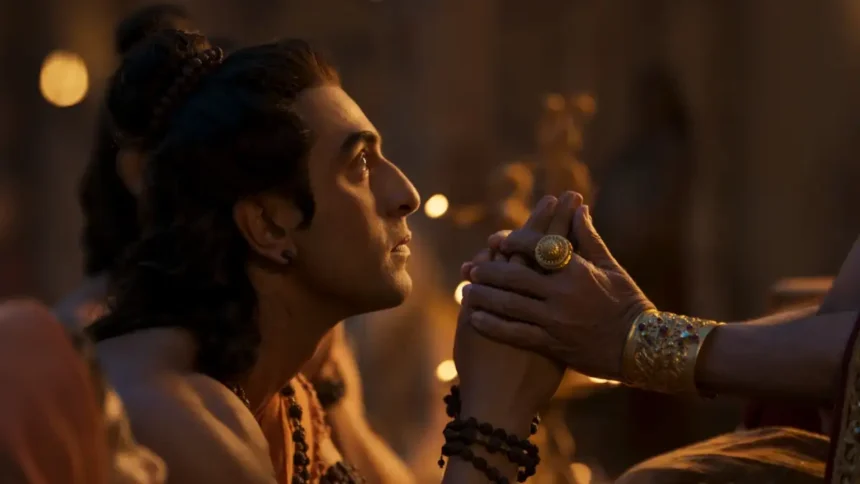
Ranbir Kapoor as Lord Rama Wins Hearts
One thing that both Indian and global audiences seem to agree on is Ranbir Kapoor’s look as Lord Rama. His calm and composed appearance in the teaser has been widely appreciated.
Fans have praised how he fits the role visually, bringing a sense of grace and seriousness that aligns with the character. Even those who had concerns about the film’s visuals admitted that his portrayal looks promising.
Why His Look Stands Out
- Simple yet powerful styling
- Strong screen presence
- Fits the traditional image of Lord Rama
- Creates curiosity for the full performance
What the Teaser Shows
The teaser gives a glimpse into the grand world the filmmakers are trying to build. It features:
Key Highlights
- Beautiful shots of Ayodhya
- A look at Ashok Vatika
- Teases of intense battle sequences
- A brief glimpse of Ravana’s Pushpak Vimana
- Quick shots of other characters like Sita and Lakshman
The overall tone of the teaser focuses on scale and visual grandeur, hinting at a larger-than-life cinematic experience.
Western Audiences Are Impressed
Interestingly, while Indian viewers have been divided, international audiences have responded more positively.
Popular global film platforms and social media pages shared the teaser, calling its visuals ambitious and visually striking. Many viewers were impressed by the level of detail and the scale of the production.
What Global Viewers Are Saying
- The visuals look grand and detailed
- The film feels ambitious and unique
- The scale rivals big Hollywood productions
- The effort put into world-building is noticeable
Some viewers even mentioned that the detailing becomes more impressive when watched closely, suggesting that the filmmakers have paid attention to even the smallest elements.
Social Media Buzz Goes Global
The teaser quickly gained traction on platforms like Instagram and film discussion forums. Comments from international users highlighted how unexpected and visually rich the project feels.
Some cinephiles compared the film’s ambition to large-scale global productions, while others said it could introduce Indian mythology to a wider audience in a new way.
There were even playful comments suggesting that the film’s visual style would appeal to fans of high-end video games or cinematic storytelling seen in global franchises.
Not Everyone Is Convinced
Despite the praise, the teaser has also received its share of criticism, both in India and abroad.
Common Concerns Raised
- Visuals appear too polished or artificial
- Some scenes look like video game graphics
- Lack of cinematic depth in certain shots
- Overuse of CGI in parts
Many viewers felt that while the detailing is impressive, the overall look sometimes feels overly digital. Some even described it as resembling a high-end video game rather than a traditional film.
The CGI Debate
The biggest talking point surrounding the teaser is its use of CGI. While some praised the visuals as groundbreaking, others felt they lacked realism.
Two Sides of the Argument
Supporters Say:
- The visuals are bold and innovative
- The scale justifies the use of heavy CGI
- It represents a new direction for Indian cinema
Critics Say:
- It feels too artificial
- Older films had more natural depth
- The visual style may not age well
This divide shows how audience expectations are changing, especially for large-scale mythological films.
A Film of Massive Scale
Ramayana is not just another film—it is one of the most ambitious projects ever attempted in Indian cinema.
Key Facts About the Film
- Made on a budget of around ₹4000 crore
- One of the most expensive films globally
- Planned as a two-part series
- Aims to retell the epic in a modern cinematic style
This level of investment has naturally raised expectations, making every detail—from casting to visuals—open to intense scrutiny.
Star-Studded Cast Adds to the Hype
The film features a strong ensemble cast, adding to the excitement.
Main Cast
- Ranbir Kapoor as Lord Rama
- Yash as Ravana
- Sai Pallavi as Sita
- Sunny Deol as Lord Hanuman
- Ravie Dubey as Lakshman
Although the teaser mainly focuses on Lord Rama, it offers brief glimpses of other characters, hinting at their roles in the larger story.
Release Timeline
The makers have planned a two-part release for the film.
Release Plan
- Part One: October 2026
- Part Two: 2027
This long-term rollout suggests that the filmmakers are aiming for a detailed and expansive storytelling approach.
Why This Film Matters
Ramayana is more than just a movie—it is an attempt to bring a deeply rooted cultural story to a global audience using modern filmmaking techniques.
What Makes It Important
- Introduces Indian mythology to international viewers
- Pushes the boundaries of Indian film production
- Combines tradition with modern technology
- Sets new benchmarks for scale and ambition
Final Thoughts
The Ramayana teaser has done exactly what it was supposed to do—get people talking. Whether it is praise for its visuals or criticism of its CGI, the film has captured attention worldwide.
While Indian audiences remain divided, the positive response from international viewers suggests that the film has strong global potential.
At this stage, it is clear that the teaser is just a small glimpse of what the filmmakers are planning. With several months left before release, there is still time for improvements and refinements.
One thing is certain: Ramayana is shaping up to be one of the biggest cinematic events in Indian film history. Whether it lives up to the hype will only be known when it finally hits the big screen.