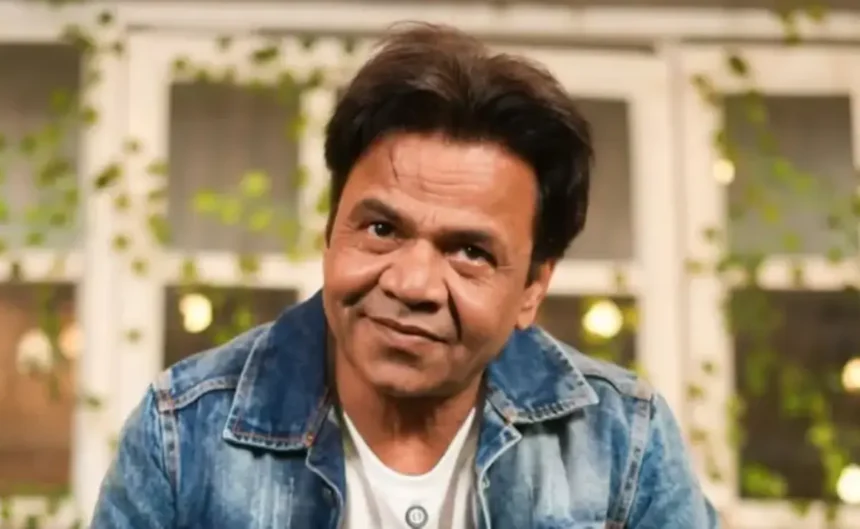
Rajpal Yadav’s Legal Trouble Deepens as Court Reserves Judgment
Actor Rajpal Yadav, known for making audiences laugh with his comic timing, is currently facing one of the toughest phases of his life. The actor has been caught in a long-running legal battle involving a cheque bounce case worth nearly ₹9 crore.
On April 2, the Delhi High Court reserved its judgment after multiple attempts to resolve the matter failed. The case saw emotional moments, sharp observations from the judge, and a complete breakdown of settlement talks.
What Happened in Court
The hearing was conducted by Justice Swarana Kanta Sharma, who appeared visibly frustrated with how the case was unfolding. The judge pointed out inconsistencies in Rajpal Yadav’s statements regarding repayment of the dues.
The court noted that earlier assurances given by the actor did not match his current stance. This raised serious concerns about his commitment to settling the matter.
Court’s Observation
The judge clearly expressed dissatisfaction, stating that the responses being provided were unclear and inconsistent. The court also warned against taking judicial leniency for granted, emphasizing that patience should not be mistaken for weakness.
Complainant’s Stand: No More Delays
The complainant company’s lawyer, Advocate Avneet Singh Sikka, strongly opposed any further relief for the actor.
Key Arguments Presented
- Rajpal Yadav had already accepted his conviction earlier
- A revision petition filed in 2024 came after a delay of over five years
- No strong justification was given for this delay
- Completing a jail sentence does not cancel financial liability
The lawyer also highlighted that despite repeated promises, the payment had not been completed, forcing the company to pursue legal action under the Negotiable Instruments Act.
Settlement Talks Fail Despite Multiple Attempts
The court made several efforts to resolve the issue amicably and avoid prolonged legal proceedings.
Settlement Offers Made
- The complainant agreed to settle the matter for ₹6 crore instead of the full ₹9 crore
- The court proposed a structured payment plan of ₹3 crore within a fixed timeline
Despite these efforts, no agreement could be reached.
Rajpal Yadav’s Emotional Plea in Court
One of the most striking moments during the hearing came when Rajpal Yadav made an emotional statement while appearing virtually.
He revealed that he had already suffered major financial losses and had to sell five of his flats to manage the situation. He also claimed to have paid a significant portion of the amount already.
In a moment of frustration and emotion, he told the court that he was ready to face jail again if needed, rather than agree to terms he could not fulfill.
What He Said
Rajpal insisted that he was not being emotional but was simply stating his reality. His statement reflected the stress and pressure he has been under due to the prolonged legal battle.
Court’s Strong Reaction
The court did not take the situation lightly. It expressed concern over the time being spent without any productive outcome.
Key Remarks by the Court
- Judicial time was being wasted
- The case had dragged on for too long
- The parties were unable to reach a practical solution
The judge also cautioned against misinterpreting a judge’s patience as weakness, making it clear that the court expected seriousness and accountability.
Background of the Case
To understand the current situation, it is important to look at how the case began.
The Beginning
- In 2010, Rajpal Yadav borrowed ₹5 crore from a Delhi-based company, Murali Projects Pvt Ltd
- The loan was taken to finance his directorial film Ata Pata Laapata, released in 2012
What Went Wrong
The film did not perform well at the box office, leading to heavy financial losses. This made it difficult for the actor to repay the loan.
Legal Journey Over the Years
The case has been ongoing for more than a decade, with several legal developments along the way.
Timeline of Events
- 2018: A magistrate court convicted Rajpal Yadav in a cheque dishonour case
- He was sentenced to six months in jail
- 2019: A sessions court upheld the conviction
- The outstanding amount grew to around ₹9 crore over time
Bail and Recent Developments
Rajpal Yadav had earlier surrendered before the authorities and was sent to Tihar Jail in connection with the case.
Interim Relief
- He was granted interim bail by the Delhi High Court
- Bail conditions included depositing money and providing a surety
- He deposited ₹1.5 crore as directed by the court
- After confirmation of payment, he was released on interim bail
However, this did not resolve the larger financial dispute, which continues to remain unsettled.
Why This Case Matters
This case highlights how financial disputes in the film industry can spiral into long legal battles.
Key Takeaways
- Loan agreements must be handled carefully
- Financial planning is crucial, especially in risky ventures like film production
- Legal consequences of cheque bounce cases can be severe and long-lasting
It also shows that even well-known public figures are not immune to financial and legal challenges.
What Happens Next
With the Delhi High Court reserving its judgment, all eyes are now on the final decision. The outcome will determine the next course of action for both Rajpal Yadav and the complainant company.
The case could set an important example for similar financial disputes in the entertainment industry.
Final Thoughts
Rajpal Yadav’s journey from being one of Bollywood’s most loved comic actors to facing a serious legal crisis is both surprising and concerning. His emotional plea in court revealed the human side of a situation often seen only through legal headlines.
While the court’s decision is still awaited, the case serves as a reminder of how quickly financial troubles can escalate. It also shows the importance of accountability, consistency, and timely resolution in legal matters.
For now, fans can only wait and hope for clarity as the court prepares to deliver its verdict in this long-standing case.