As the conflict in Ukraine grinds through its third year, French President Emmanuel Macron has issued a stark warning to Western leaders: failure to uphold promises made to Kyiv could result in a profound crisis of credibility for allied nations. Macron’s comments come at a pivotal moment, with both Ukraine and its Western partners facing mounting political, economic, and military pressures.
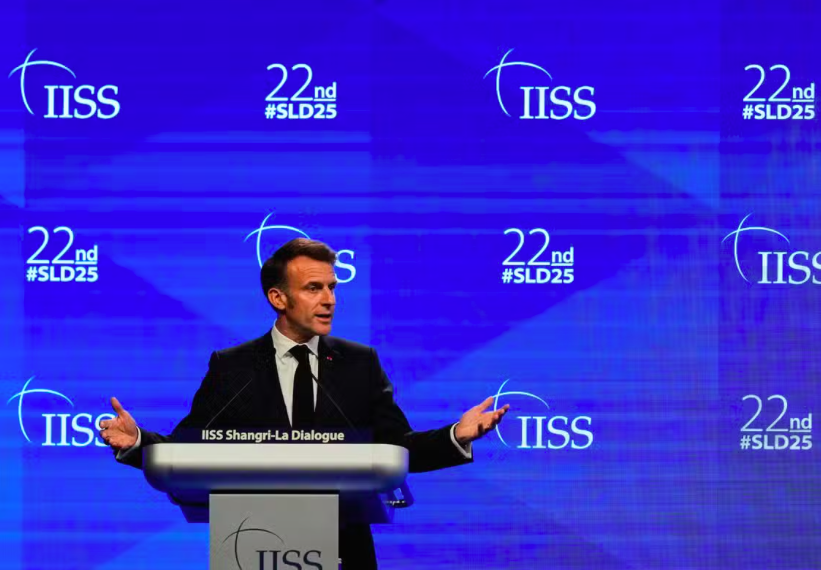
Speaking at the Élysée Palace during a joint press conference, Macron said, “Our unity and credibility are on the line. If we fail to deliver on our commitments to Ukraine, not only do we embolden aggressors, but we also risk undermining the trust that underpins our alliances and the very principles of international order.” His statement underscores mounting concerns in European capitals and Washington as the war enters a critical phase.
NATO Unity Tested by Ukraine Aid Fatigue
War of Attrition and Domestic Pressures
As Ukraine’s counteroffensive struggles to reclaim significant territory in Russian-occupied regions, Western allies have faced growing challenges in maintaining military and financial support. Political infighting within the US Congress and election cycles across Europe have slowed or complicated new aid packages, prompting heated debate over the sustainability of current strategies.
Macron, whose government has provided significant military and humanitarian aid to Ukraine, pointedly remarked that “each hesitation or delay sends a signal, not just to Moscow but to all actors weighing the resolve of democratic nations.” Analysts note that Russian President Vladimir Putin has sought to exploit such divisions, wagering that Western fatigue could tip the balance in Russia’s favor.
Growing Calls for Strategic Clarity
Security experts have echoed Macron’s concerns, emphasizing that the West’s reputation hinges on steadfastness in support of Ukraine. Ulrich Speck, a Berlin-based foreign policy analyst, told Reuters, “Every time there is wavering or ambiguity, it undermines deterrence—not just in Europe, but with adversaries globally.”
The upcoming NATO summit in Washington, scheduled for July, will be a critical juncture for alliance members to reaffirm or recalibrate their unity of purpose regarding Ukraine.
Risks of a Crisis of Credibility
Global Implications Beyond Ukraine
Macron’s warning draws parallels between current events and past conflicts, such as the 2014 annexation of Crimea and the withdrawal from Afghanistan in 2021—events that raised questions about the consistency of Western commitments. Experts argue that perceived weakness or internal disunity could have cascading effects, emboldening other authoritarian regimes and undermining democratic partnerships worldwide.
Dr. Laurence Boone, a French international relations scholar, said in an interview with Le Monde, “Credibility is the currency of global leadership. If the West fails Ukraine, it signals vulnerability to every country weighing alliances and rivalries.”
Stakes for European Security
The French president also highlighted the direct security interests at stake for the European Union. “This is not simply an issue for Ukrainians; it is a matter of our own security and values,” Macron said, pointing to Russia’s growing hybrid threats and cyber incursions targeting European infrastructure.
Varied Responses Across the West
U.S. and European Perspectives
While some leaders have echoed Macron’s sense of urgency, others have urged caution or are grappling with domestic opposition. Germany’s Chancellor Olaf Scholz stated, “Support for Ukraine is a long-term duty, but we must also ensure our own societies remain united behind this effort.” In contrast, recent polls in Italy and Hungary indicate rising public fatigue and pressure to seek diplomatic solutions.
White House Press Secretary Karine Jean-Pierre reiterated the Biden administration’s commitment to Kyiv, saying, “Our support for Ukraine remains ironclad. We will continue to work with Congress and our allies to provide Ukraine with the resources it needs.”
Unity at a Crossroads
Experts warn that even the appearance of division could have real-world consequences.
“Solidarity can be fragile,” said Amanda Sloat, Director of the US-Europe Center at the Brookings Institution. “If cracks start to show, it not only impacts the battlefield but also how future commitments are perceived by partners like Taiwan and allies in the Indo-Pacific.”