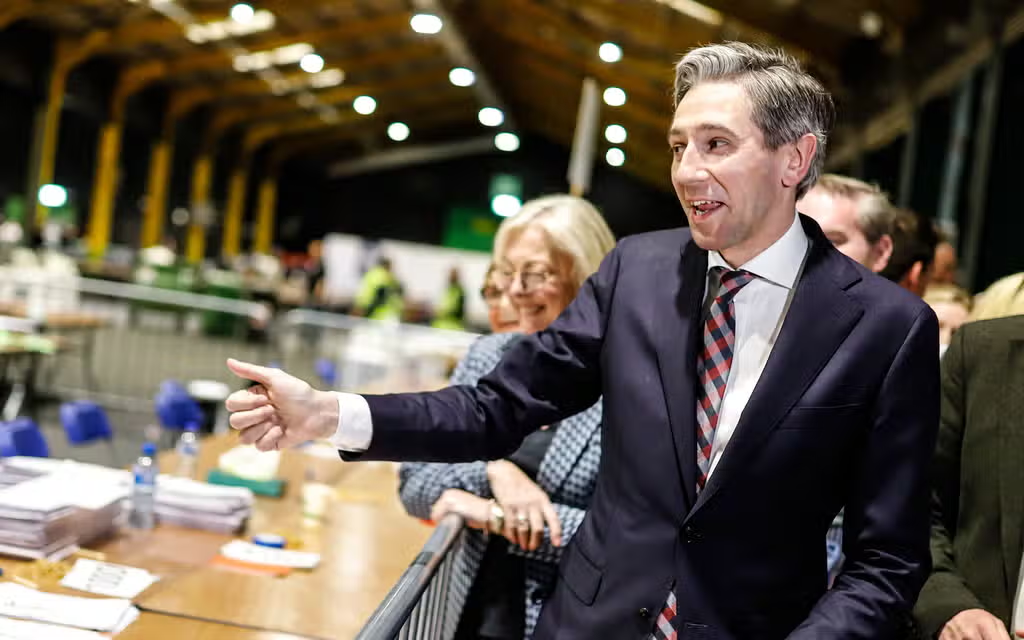
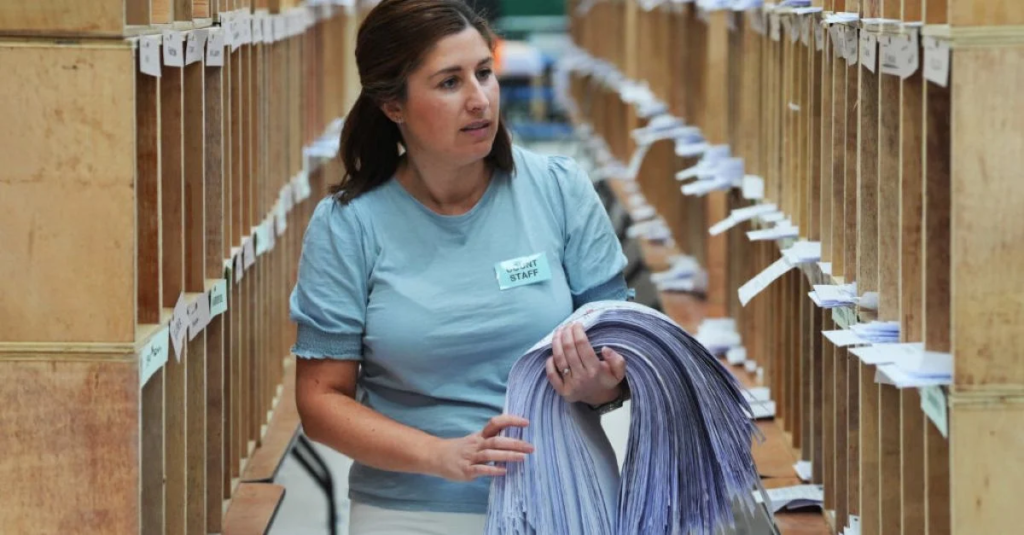
Counting in the Republic of Ireland for the European elections is underway, alongside a recount for three seats in the local elections, leaving just three to declare. Despite this, nine of the 14 seats in the European Parliament remain unfilled, with particular attention on the Midlands-North-West region, where no candidates have secured seats after ten counts. Independent outgoing MEP Luke Ming Flanagan leads the field with 81,663 votes, yet the quota for these seats stands at over 113,000, presenting a significant challenge for contenders aiming to secure representation.
Sinn Féin’s Michelle Gildernew trails behind Independent candidate Ciaran Mullhooly by 12,500 votes, expressing doubts about closing the gap. However, the party remains optimistic about potential transfers from their other candidate Chris McManus and the impact of eliminations on securing the final seat. With uncertainty looming over the remaining seats, the political landscape is poised for further developments as the recount progresses.
In other constituencies, Fine Gael’s Nina Carberry, Fianna Fáil’s Barry Cowen, and Fine Gael’s Maria Walsh are expected to secure the remaining seats, with a relatively narrow margin of around 2,500 votes between the highest and lowest candidates in this group. This underscores the competitive nature of the elections and the importance of every vote in determining the outcome.
Ireland’s three EU constituencies play a significant role in shaping the country’s representation in Brussels. The election results reflect the diverse political landscape and the preferences of voters across different regions. The successful candidates will have the responsibility of representing Irish interests on the European stage, influencing key decisions, and addressing pressing issues affecting the nation and the wider European Union.

Tuesday night saw the election of several MEPs for Dublin, including Fine Gael’s Regina Doherty, Fianna Fáil’s Barry Andrews, Sinn Féin’s Lynn Boylan, and Labour’s Aodhán Ó Ríordáin. Their victory underscores the importance of effective campaigning and voter engagement in securing electoral success. As the focus shifts to completing the remaining seats across all constituencies, political parties continue to strategize and mobilize support to secure representation in the European Parliament.
The outcome of the European elections in Ireland reflects broader trends and challenges facing the European Union. With increasing Euroscepticism and nationalist sentiments across the continent, the results highlight the need for effective governance and collaboration among member states. Issues such as Brexit, migration, climate change, and economic recovery require coordinated efforts and proactive policies at the EU level.
Moreover, the elections serve as a barometer of public opinion and a platform for citizens to voice their concerns and aspirations. Voter turnout and the distribution of seats reflect the level of engagement and trust in the democratic process. Therefore, it is essential for elected representatives to listen to their constituents and address their needs, ensuring accountability and transparency in decision-making.
The recount process underscores the meticulous nature of democratic elections and the importance of ensuring accuracy and fairness in the electoral process. While it may prolong the announcement of final results, it is crucial for maintaining public confidence and upholding the integrity of the electoral system. Transparency and adherence to established procedures are essential in safeguarding the credibility of elections and preserving democratic norms.
As the recount progresses and the remaining seats are filled, the focus will shift to the role of elected representatives in shaping EU policies and addressing the diverse needs of constituents. Building consensus, fostering dialogue, and seeking common ground will be essential in navigating the complex challenges facing Europe and advancing the interests of all member states.
In conclusion, the ongoing recount in Ireland’s European elections reflects the dynamic and competitive nature of democratic politics. The results will have far-reaching implications for the country’s representation in the European Parliament and its ability to influence key decisions at the EU level. As the process unfolds, it is essential to uphold democratic principles, promote transparency, and ensure that the voices of all citizens are heard and represented in the democratic process.